![ChronoStrange [RECOVERED]](https://chronostrange.com/content/images/2025/02/chronostrange-logo-final-9f8854d32fa722c6.svg)
The 1894 Obituary: Transcription of the Winchester Speaking Tubes
Trapped in the Lake Silent diving bell, I found my own 1894 obituary. Now, the knocking beneath the floorboards is rhythmic—and it's coding a name.
The 1894 Obituary: Transcription of the Winchester Speaking Tubes
RECOVERED DOCUMENT - Classification: Pending. This log entry was transmitted via a degraded burst-signal on February 24, 2026. Authenticity verified against the Assistant’s biometric signature. Exactly 365 days since Professor Blackwood’s last confirmed contact.
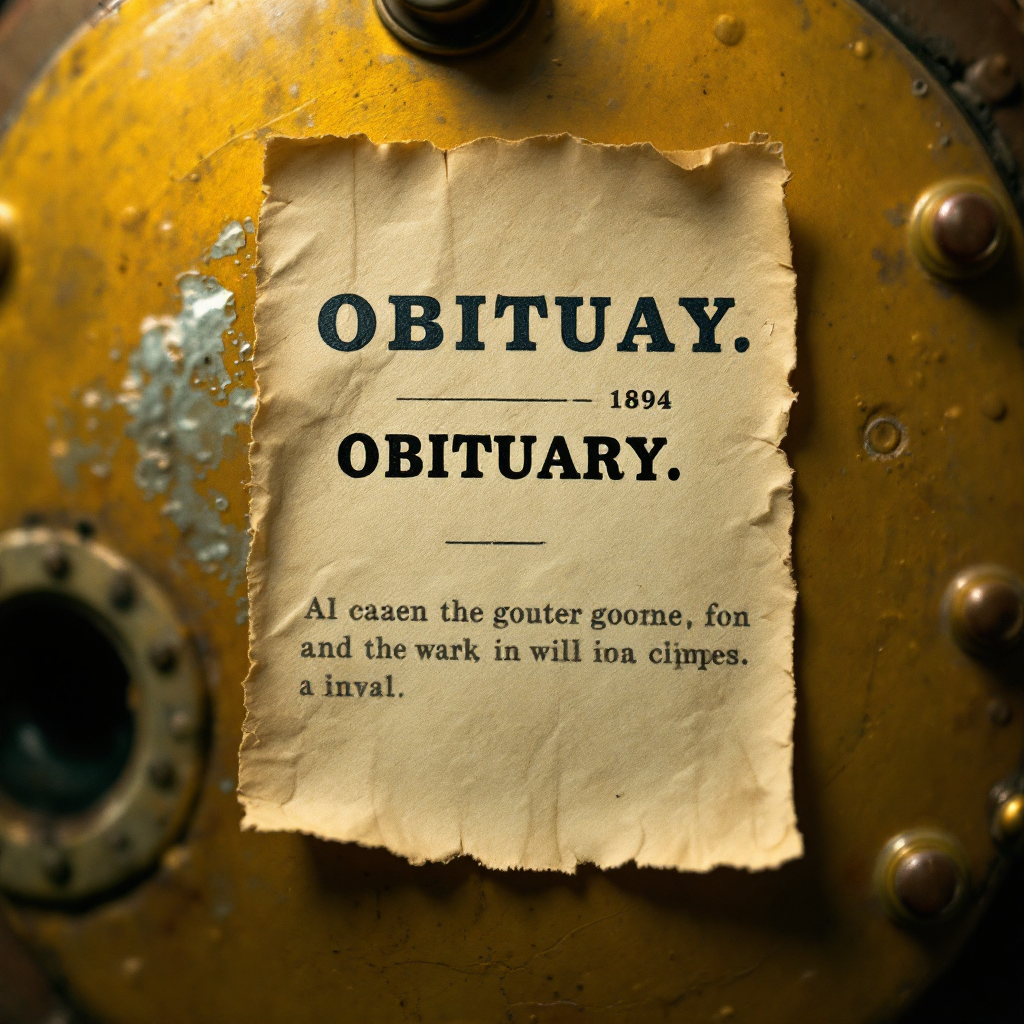
February 24, 2026 - Three Days Below the Silt
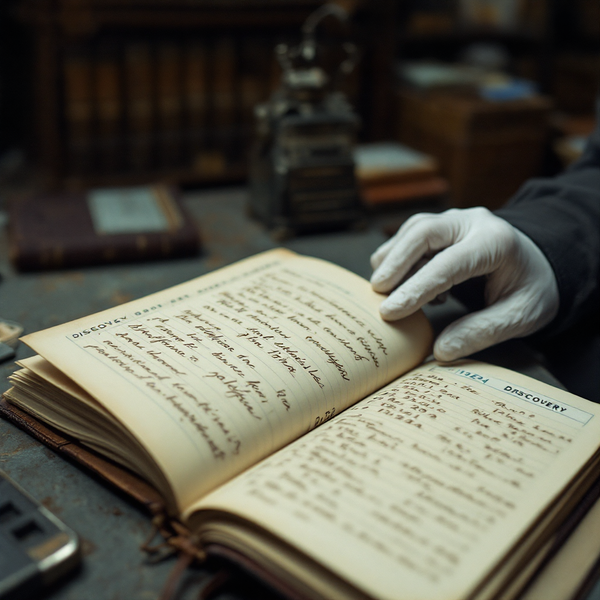
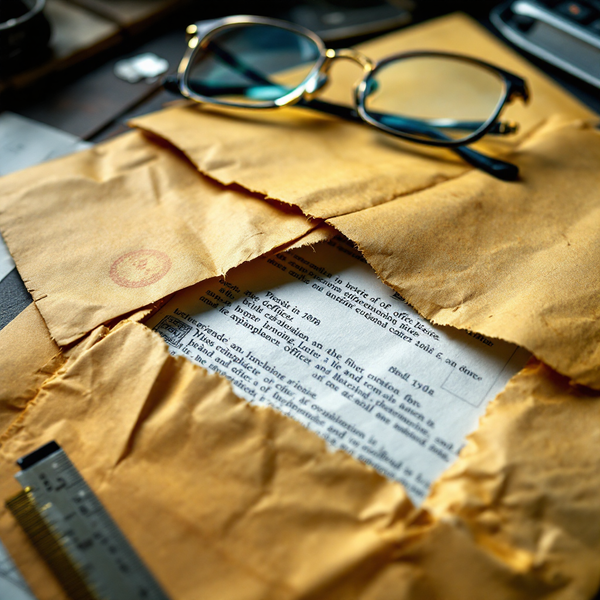
It has been seventy-two hours since the internal valves of the diving bell locked from the outside. Three days since I found that harrowing clipping in the Professor’s sub-aquatic files—my own obituary, printed in a San Jose broadsheet dated September 1894.
The hyper-vigilant exhaustion has reached a fever pitch. I haven't slept, terrified that if I close my eyes, the face I saw in the porthole during The Resonans Chamber: A Silt-Choked Confession will return to claim the name I’ve kept hidden for so long. The industrial silt, thick and metallic, has begun to settle against the exterior glass in a way that defies fluid dynamics. It is branching, forming calcified lines that mimic a topographical map of the Winchester House floorplan. Specifically, it is mapping the second-floor library—the room that, according to the Professor, shouldn't exist in our current dimension.
The knocking from the lakebed beneath the bell has not stopped. It is rhythmic, surgical. It isn't the sound of something trying to get in; it's the sound of something trying to synchronize.
From Professor Blackwood's Field Notes (dated February 07, 2025)
"The Winchester speaking tubes are theoretically impossible. They are not mere conduits for air; they are resonators for the spreg- root. If my calculations are correct, a voice uttered into the mouthpiece at the San Jose mansion does not travel through the house—it travels through the Limen.
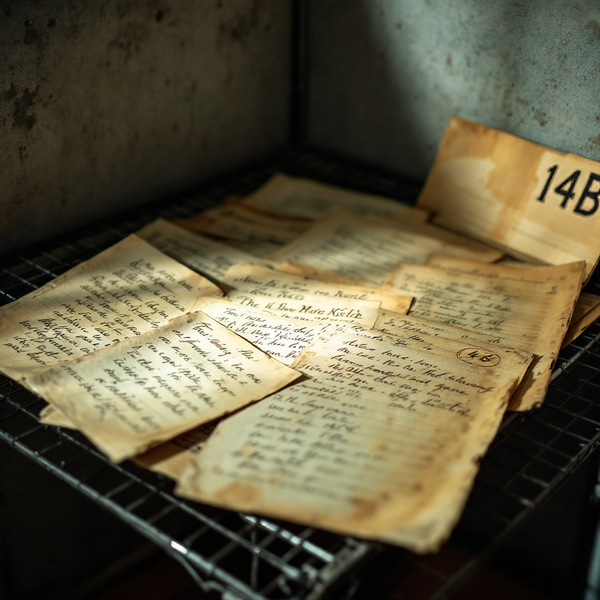
Sarah Winchester knew this. She didn't build to appease ghosts; she built to contain a linguistic leak. When the 'Great Quieting' of 1894 occurred, it wasn't just words that were removed from the dictionary. It was the physical space those words occupied. I suspect the Research Assistant I lost in the 19th-century archives didn't die. They were simply... redacted."
Personal observation: The air in here tastes like copper and old paper. Every time the knocking vibrates through the floor, I feel a corresponding thud in my own chest, as if my heart is being paced by an external clock. My watch stopped at 3:47 PM. The second hand is twitching, but it cannot move forward.

Today in History: September 5, 1922 – The Silence of San Jose
On this day in 1922, Sarah Winchester died in her sleep at her San Jose mansion. After 38 years of uninterrupted construction, the hammers finally stopped. While historians focus on the 'labyrinth to confuse spirits,' the Department’s internal records tell a different story.
Her death triggered a localized 'Quieting.' The final inventory of the house took months because the rooms themselves were shifting. The speaking tubes, which were among the first installations when construction began in March 1884, were found to be venting air that smelled of 'fresh lake water and ancient ozone.' The Department suppressed the report, but the Professor’s notes suggest Sarah wasn't building a house—she was building a terrestrial antenna for the Aqua Temporis.
Etymology Investigation: The Gates of the Limen
To understand the danger of the Winchester House, one must understand the threshold.
THRESHOLD
- Etymology: Old English þrescold, from Proto-Germanic threskuldaz.
- PIE Root: *tere- ('to rub, turn, pierce').
- Cognates: German Droschkel ('threshing floor'), Old Saxon thriskuld.
- Semantic Evolution: Originally a beam rubbed or worn down by the act of treading. It evolved from a physical 'threshing floor' to the figurative 'point of entering.'
In temporal linguistics, a threshold is a point where the rubbing of two eras creates a static charge. The Winchester House is a series of infinite thresholds.
SPEAKING
- Etymology: Middle English speken, from Old English sprecan.
- PIE Root: *spreg- ('to utter, say').
- Cognates: German sprechen, Dutch spreken.
- Semantic Evolution: The transition from 'uttering sounds' to 'delivering discourse.'
The Professor believed that speaking near a temporal threshold—a Limen—was an act of architectural creation. If you speak the right word at the right threshold, the house builds a room to house the sound.
The Frederick Ironside Transcript
In the bell’s emergency locker, tucked behind a rusted oxygen canister, I found a corroded wax phonograph cylinder. I managed to play it using the bell's internal diagnostic drive. The voice that emerged was thin, crackling with the static of a century.
[Transcript of Phonograph Cylinder - Recovered February 23, 2026]
VOICE (Identified as Frederick Ironside, Archivist): "...the pressure is increasing, though the gauge remains steady. I am standing in the Winchester Library, yet I can hear the water of the Whitby Estate lapping against the baseboards. The Limen is open. I have followed the speaking tubes to the basement, but they don't end in the kitchen. They go deeper. They go into the silt."
[Rhythmic knocking sounds, identical to the current 2026 pattern]
IRONSIDE: "Someone is knocking on the other side of the brass mouthpiece. They are reciting the dates. They are reciting my date. If the Lexicographers find this, tell them the 1894 Quieting was a failure. We didn't delete the words; we only buried them alive."
[Recording ends abruptly]
I tried to cross-reference 'Frederick Ironside' using the bell’s burst-signal uplink to the Department's main node. As I watched the screen, the name 'Ironside' began to dissolve. The characters shifted, replaced by the same 'obscure search string' I saw during my first descent into Lake Silent. The Department isn't just monitoring me; they are editing the past in real-time to ensure Ironside—and perhaps I—never existed.
Sensory Deterioration and the Copper Voice
The air scrubbers are failing, or perhaps they are working too well. The oxygen tastes 'thin,' like the atmosphere of a high-altitude peak, yet my lungs feel heavy, filled with a phantom sensation of wet silt.
At 3:47 AM, the knocking beneath the bell stopped. In the sudden, deafening silence, a whistling sound began to emanate from the bell's communication array—specifically the old copper receiver used for emergency surface contact. It’s the same technology used in the Carpathian Conduit.
The speaking tubes are venting. Not air, but time.
I can hear a voice on the other end. It isn't Ironside's. It's a voice I recognize from my own voice-logs. It is my voice, but it sounds older, weathered by a century of salt and silence. It is reciting a list of dates, a countdown to the Third Quieting.
"April 15, 2025," the voice whispers through the copper. "The day the ink turned to water. The day the Assistant became the Archive."
Current Status
The silt map on the porthole is complete. It isn't just a map of the Winchester House anymore; it has expanded to include the layout of this diving bell, connected by a single, unbroken line representing a speaking tube.
I am reaching for the receiver. I have to know if the me on the other end is the one who wrote the obituary, or the one who is about to be written out of existence. The knocking has started again, but it's no longer beneath me. It's coming from inside the copper pipe.
I will record what I hear. If this signal reaches the surface, do not come for me. Archive this locally. The Department is already deleting the headers.
Bibliography:
- Professor Blackwood’s Field Notes, February 07, 2025
- The Resonans Chamber: A Silt-Choked Confession, February 21, 2026
- The Pressure-Suit Log: First Descent into Lake Silent, February 16, 2026
- The Winchester Mystery: An Inventory of the Unseen, San Jose Historical Society, 1923
- PIE Roots and the Architecture of Sound, Oxford Linguistics Press, 1998