![ChronoStrange [RECOVERED]](https://chronostrange.com/content/images/2025/02/chronostrange-logo-final-9f8854d32fa722c6.svg)
The Carpathian Conduit: Henrietta’s Ghost in the Flooded Telegraph Office
Following the stairs' collapse at Winchester House, I have surfaced in the Carpathian foothills. Here, a submerged network of speaking tubes is beginning to pulse with the Professor’s final, desperate transmission.
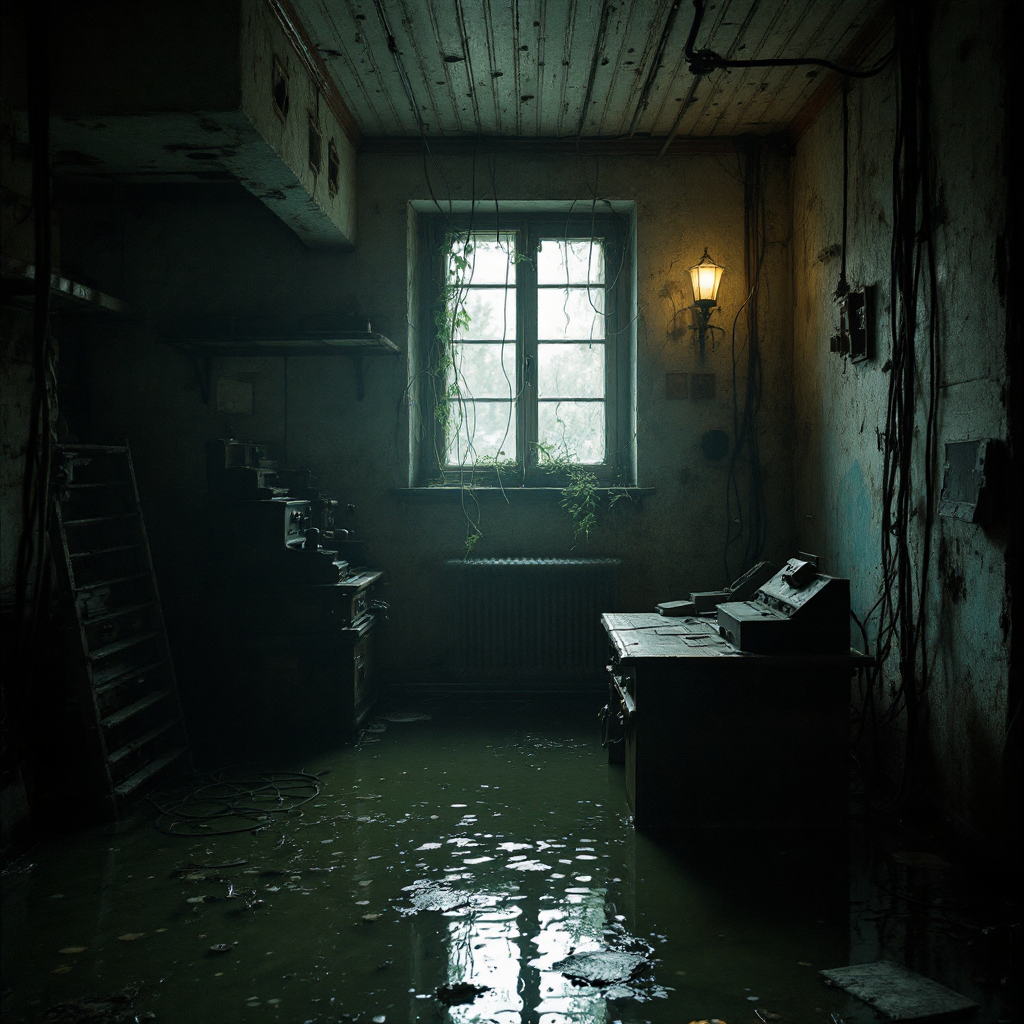
The Carpathian Conduit: Henrietta’s Ghost in the Flooded Telegraph Office
Archive Reference #8821: This log was recovered from a localized data burst intercepted near the Romanian border. It appears to be the primary record of the Assistant’s movements, 345 days after the disappearance of Professor Augustus Blackwood. The digital signature shows signs of temporal erosion.
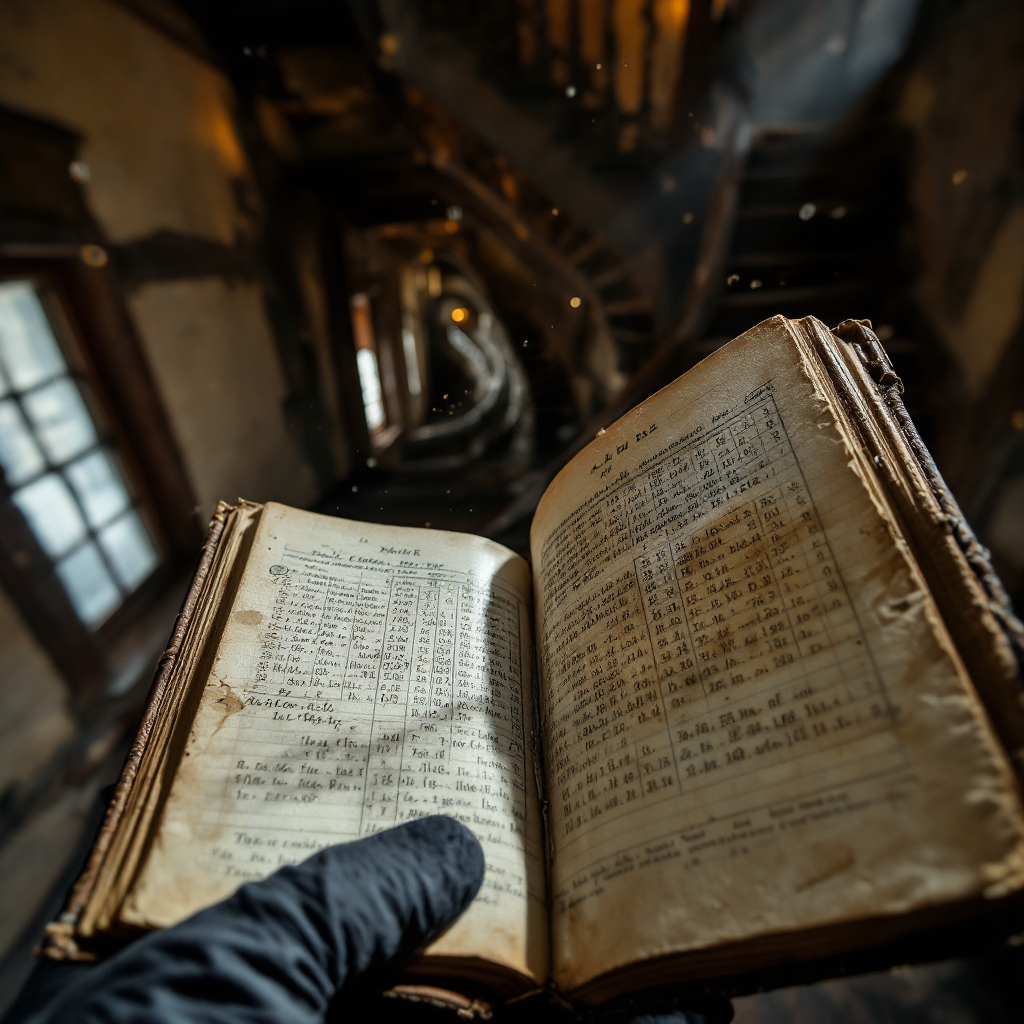
February 04, 2026 - The Carpathian Foothills
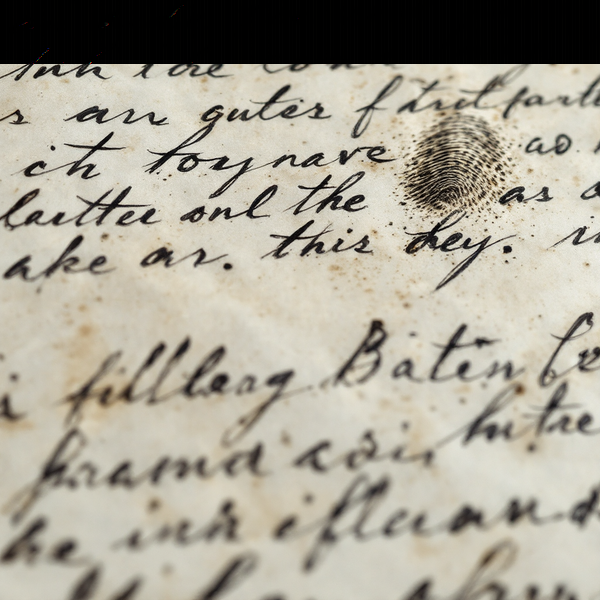
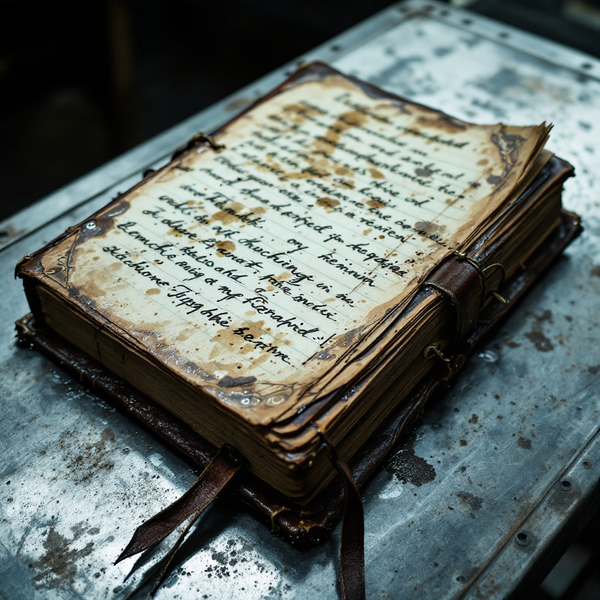
The descent from the Winchester Library was not a flight down stairs, but a fall through a dissolving reality. As I recorded in The Inkless Ledger: A Discovery at Winchester House Library, the "grey rot" had already claimed the physical structure of the North Wing. When the stairs began to slide into non-Euclidean angles, I opened the ledger to the page marked with the Professor’s "Gaps between Seconds" cipher.
I didn't run. I stepped into a fold of silence. For a moment, my lungs felt filled with cold mercury, and then the smell of dry California dust was replaced by the scent of stagnant water and ozone. I manifested in a stone-walled chamber, my boots splashing into four inches of freezing liquid. Outside the narrow, barred windows, the sun was rising over the jagged spine of the Carpathian Mountains. The Winchester House and this remote telegraph station are tethered—not by geography, but by an acoustic umbilical cord. My fingertips are still stained with a silver-grey residue from the ledger’s spine; it pulses with a faint, rhythmic heat.
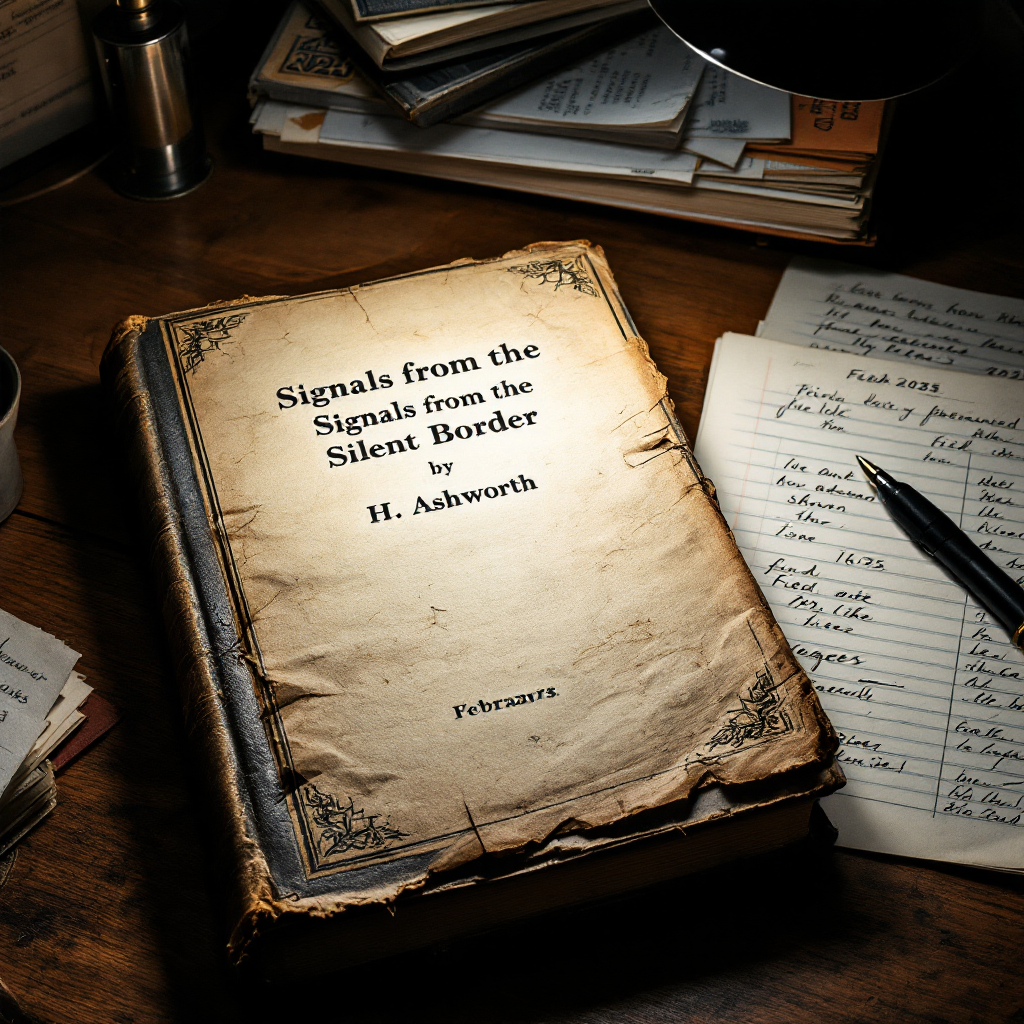
From Professor Blackwood’s Field Notes (dated February 13, 2025)
"The Department’s reliance on fiber optics is a misdirection. The true network—the one that survived the 1894 Quieting—is mechanical and hydraulic. I have found references to a 'Henrietta Ashworth' who operated the Carpathian node during the Great War. Her logs suggest she wasn't sending Morse code; she was modulating the pressure in the trans-European speaking tubes.
If you find the station flooded, do not drain it. The water is the medium. It is Aquam in its most volatile state. It remembers the shape of the voices it once carried."
The station is a skeletal remains of Victorian engineering tucked into a mountain crevice. It is half-flooded with what the Professor called "heavy water"—it is preternaturally still and refuses to freeze despite the mountain air. This is the Flooded Telegraph Office, a node designed to relay signals between the Winchester speaking tubes and The Abandoned Underground Vault of the Scottish Highlands.
Today in History: December 12, 1894 - The Great Quieting
While the world remembers 1894 for the publication of early dictionaries and industrial expansion, the Department’s internal records tell a different story. On December 12th, the famous "Lake Symphony" in the American West became Lake Silent. Local newspapers at the time reported the lake's acoustic properties vanished overnight. By the following morning, the articles had been retroactively edited; they described the lake as having been "traditionally silent" for centuries. This was the first successful mass linguistic manipulation—a trial run for the Third Quieting that we are living through now.
Etymology Investigation: The Language of the Deluge
To understand this office, one must understand the words that built it.
FLOODED
- Etymology: From Middle English floden, from Old English flōd (noun) and flōdian (verb), related to Proto-Germanic flodus.
- PIE Root: pleu- (to flow).
- Cognates: Old Norse flóð, Old High German fluot, Greek plōein (to sail).
- Semantic Evolution: Originally "a flowing of water," it evolved into "deluge." In the context of this station, the "flood" is a temporal overflow. The shift from the PIE root pleu- to the Germanic flodus suggests a hardening of the concept—from a natural flow to a contained, overwhelming force.
UNDERWATER
- Etymology: "Beneath the surface of water," from under + water.
- PIE Root: ner- (under/inner) and wed- (water).
- Cognates: Sanskrit uda, Greek hydōr, Hittite watar.
- Semantic Evolution: Beyond the literal, the term "underwater" in Department ciphers refers to information held in "liquid memory."
Personal note: The water in this room is rising, but my boots remain dry. I touched the surface of the heavy water and felt a vibration—not a sound, but a word. It felt like the syllable "limen." My watch has stopped, the hands vibrating at the 3:47 mark. I feel as though I am being watched by someone standing just behind the reflection in the water.
The Speaking Tube Interface
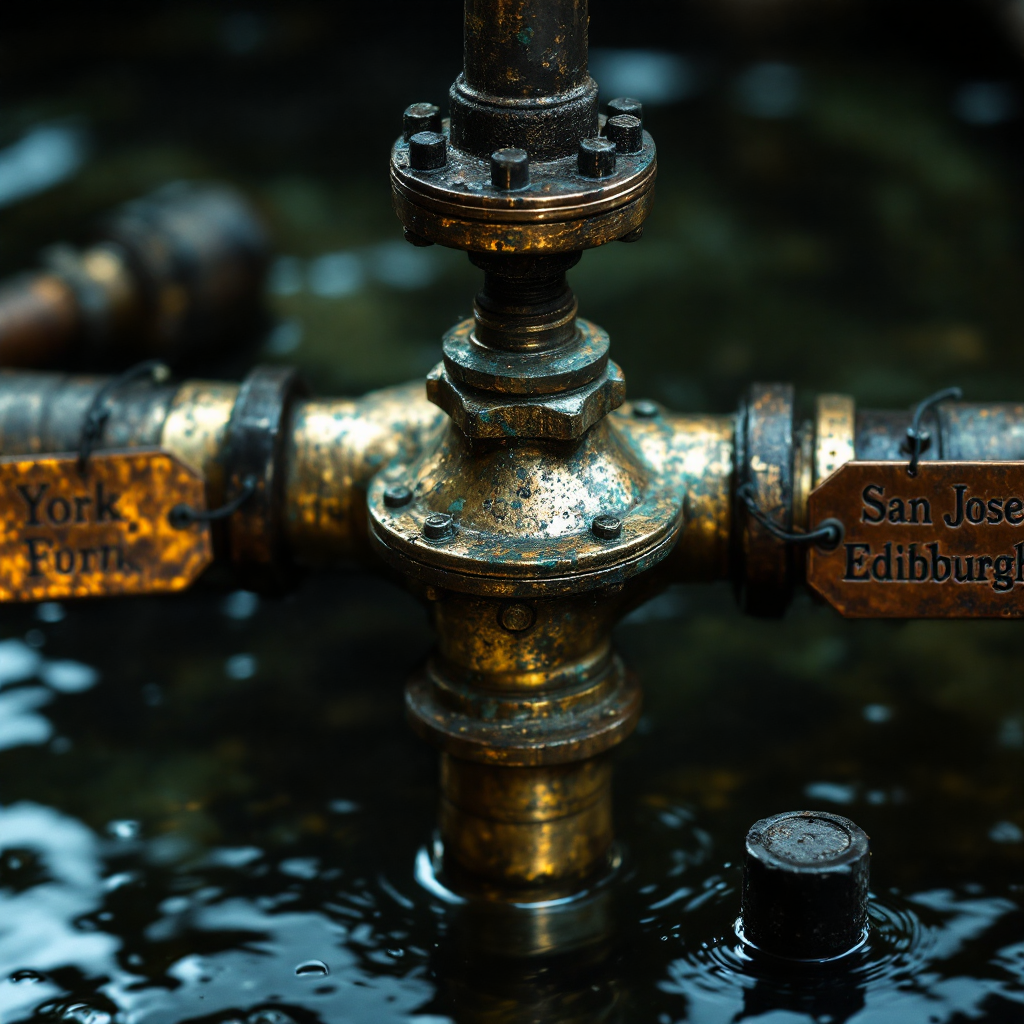
I located the brass manifold at the center of the room. It is a cluster of tarnished pipes, each labeled with faded copper tags: York, San Jose, Edinburgh. Using the Professor's instructions, I whispered the chronoactive word Aquam into the primary mouthpiece.
The effect was instantaneous. The heavy water in the room began to glow with a pale, bioluminescent blue. The local reality stabilized; the "grey rot" on my fingertips vanished, neutralized by the frequency of the word. Suddenly, the manifold began to hiss. Air—or something like air—was being forced through the tubes from a distance of thousands of miles.
I pressed my ear to the "San Jose" tube. I didn't hear the wind. I heard a woman’s voice, crisp and rhythmic, reciting numbers.
"47.3891... 122.0518... The glass is breaking."
It was Henrietta Ashworth. Her voice has been trapped in the brass loops since 1922. These coordinates match the sonar anomalies I documented during the Descent into Lake Silent’s Dead Zone. She is describing the floor of the lake, but from a perspective that suggests she is currently inside the archive beneath the water.
Current Status: The Real-Time Trace
At 3:47 PM, the telegraph key on the desk began to clatter. It wasn't receiving a message from the Department. It was acting as a physical output for the station’s archaic server uplink—a relic of the 1940s that somehow still draws power from the mountain’s thermal vents.
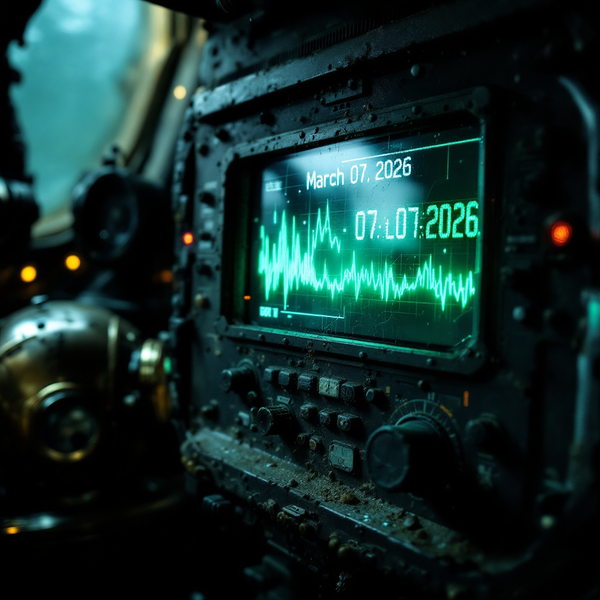
I checked the monitor. The screen, a flickering green CRT, was displaying a series of external pings. Someone is bypassing the Department’s firewalls. They aren't looking for the Professor. They are searching for 'Site Navigation'—specifically, the digital footprint of this specific log.
They are mapping my location in real-time. The pings are coming from within the Carpathian network, less than ten miles away.
Final note: I can hear a low, rhythmic thumping outside the station door. It sounds like a heart beating against the stone. Or perhaps it’s the sound of the Philadelphia Experiment’s "electromagnetic language" finally catching up to me. I have to leave the ledger here. If you find this, look deep into the water.
Bibliography:
- Professor Blackwood's Field Notes, February 13, 2025.
- The Inkless Ledger: A Discovery at Winchester House Library, January 29, 2026.
- The Glass Anchor: Descent into Lake Silent’s Dead Zone, January 11, 2026.
- Ashworth, H. Signals from the Silent Border, Privately Published, 1924.
- The Philadelphia Incident: A Study in Electromagnetic Displacement, Naval Research Records, 1943.