![ChronoStrange [RECOVERED]](https://chronostrange.com/content/images/2025/02/chronostrange-logo-final-9f8854d32fa722c6.svg)
The Discrepancy at the 1924 Zurich Transit Office
I found the Assistant’s ledger. It lists a train arrival in Zurich that official city records claim never happened. Where did they actually go?
The Discrepancy at the 1924 Zurich Transit Office
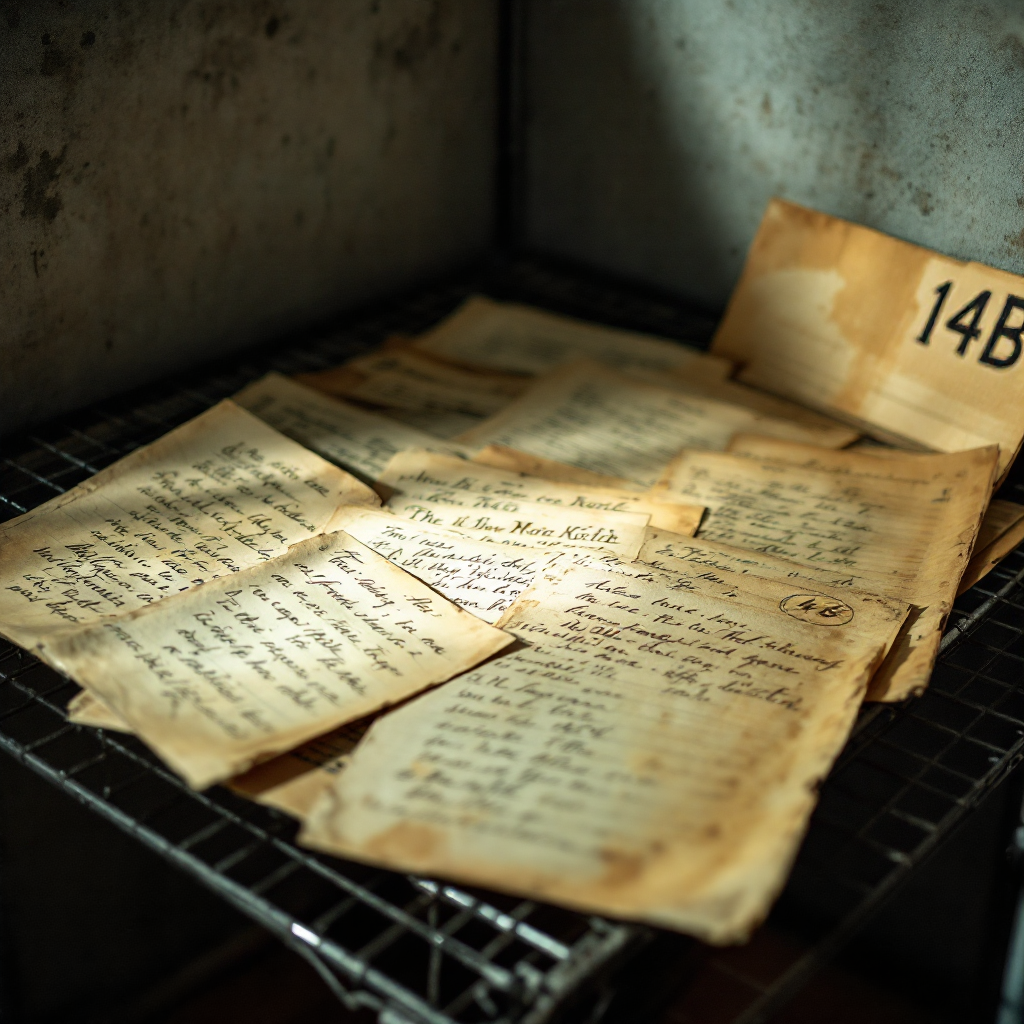
Archive #7703. Found among estate clearance paperwork, municipal storage unit 14B. The handwriting matches no known contributor to this archive. Filed without comment.
March 28, 2026 — Rented room, Headington, Oxford
I should explain how I got here. Not to this room — that part is simple enough, a short-term let near the Bodleian while I finish a cataloguing job. I mean here, in this situation, reading a dead man's research notes and a missing person's diary at half three in the morning and feeling my hands shake for reasons I can't fully articulate.
I'm a freelance archivist. I clear estates. Deceased academics, mostly — their families hire me to sort papers into what the university wants, what the family keeps, and what gets recycled. It's quiet work. I like quiet work.
Three weeks ago I was hired to process the personal effects of one Professor Augustus Blackwood, formerly of the Faculty of Linguistics, whose office and home study had remained sealed since his disappearance 397 days ago. The university finally obtained legal authority to clear the space. I was given keys, a timeline, and a stack of empty archive boxes.
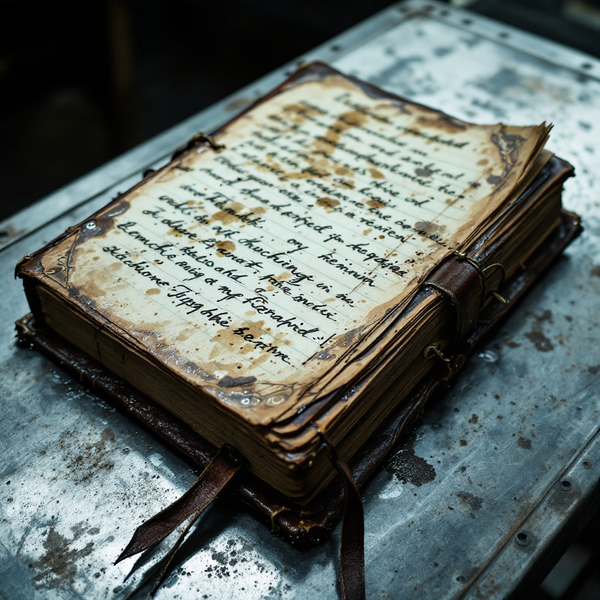
Behind the radiator in his home study, wedged into a gap where the pipe meets the skirting board, I found a notebook. Not one of the Professor's — his handwriting I already knew from sorting his files, that distinctive leftward slant. This was someone else's. Smaller script, blue ballpoint, written fast. Forty-seven pages of entries, plus loose photographs, photocopied documents, and a carbon-copy receipt folded into thirds.
I've been reading it ever since.
The journal
The person who wrote this notebook — I'll call them the Assistant, since that's how they seem to have functioned — was investigating the Professor's disappearance. Their entries span roughly four months. The tone starts measured, academic. By the end it's something else. The last entry, dated March 19, 2026, cuts off mid-sentence. The final words are:
I am staring at my ow
That's it. The pen trailed off the page. No correction, no continuation. I checked the binding — no pages torn out. They simply stopped writing.
Personal note: I've handled the papers of people who died suddenly. Car accidents, strokes. Their notes end abruptly too. This feels different. I can't say why.
The Zurich receipt
Tucked between pages 31 and 32, I found a carbon-copy transit receipt from the Zurich Hauptbahnhof, dated June 15, 1924. It records the processing of a private railway carriage — owner listed as "Prof. A. Blackwood, Oxford" — through Platform 7 at 15:47.
3:47 PM.
I photographed it. Then I did what I do: I checked the records.
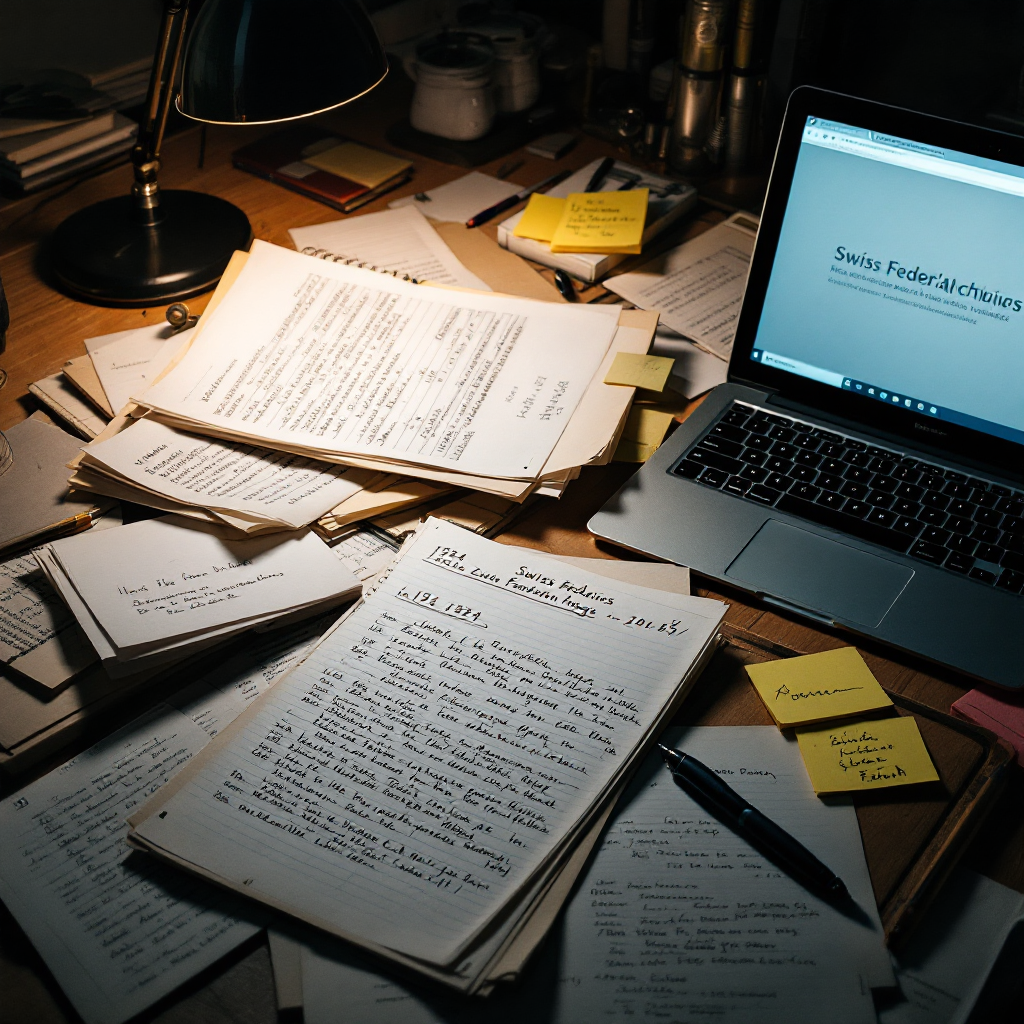
The Swiss Federal Archives digitised their 1924 railway transit logs in 2019. Platform 7 at Zurich Hauptbahnhof processed twelve carriages on June 15, 1924. I found eleven of them in the log. The twelfth — the 15:47 entry — doesn't exist. There's a forty-minute gap in the station records between 15:30 and 16:10, during which no arrivals or departures were logged on that platform.
Forty minutes, unaccounted for. In Swiss railway records. The Swiss don't lose forty minutes.
Today in history: June 15, 1866
Annie Pardee Winchester was born on this date, daughter of William Wirt Winchester and Sarah Pardee Winchester. She died of marasmus six weeks later. Some historians believe Sarah Winchester's later obsession with spiritualism — the séances, the endless construction of her house — began with this grief. The Assistant's earlier entries about the Winchester House speaking tubes describe acoustic channels that supposedly connected rooms across time, not just space. I keep thinking about Sarah Winchester building and building, adding rooms that led nowhere. Maybe she wasn't confused. Maybe the rooms led somewhere we can't follow.
The ink problem
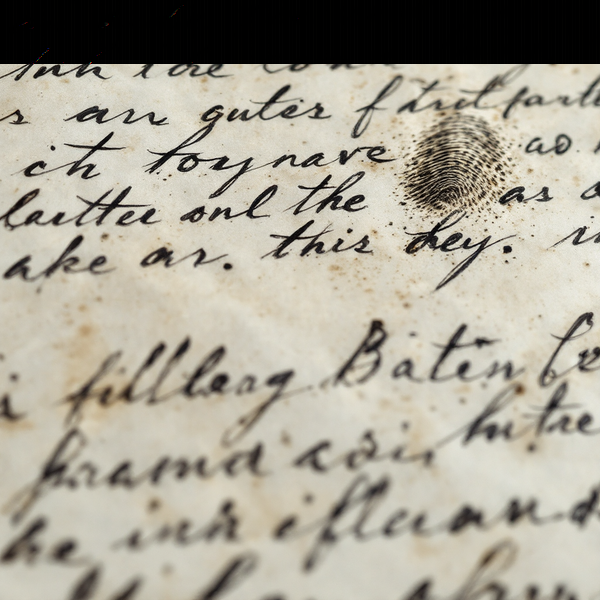
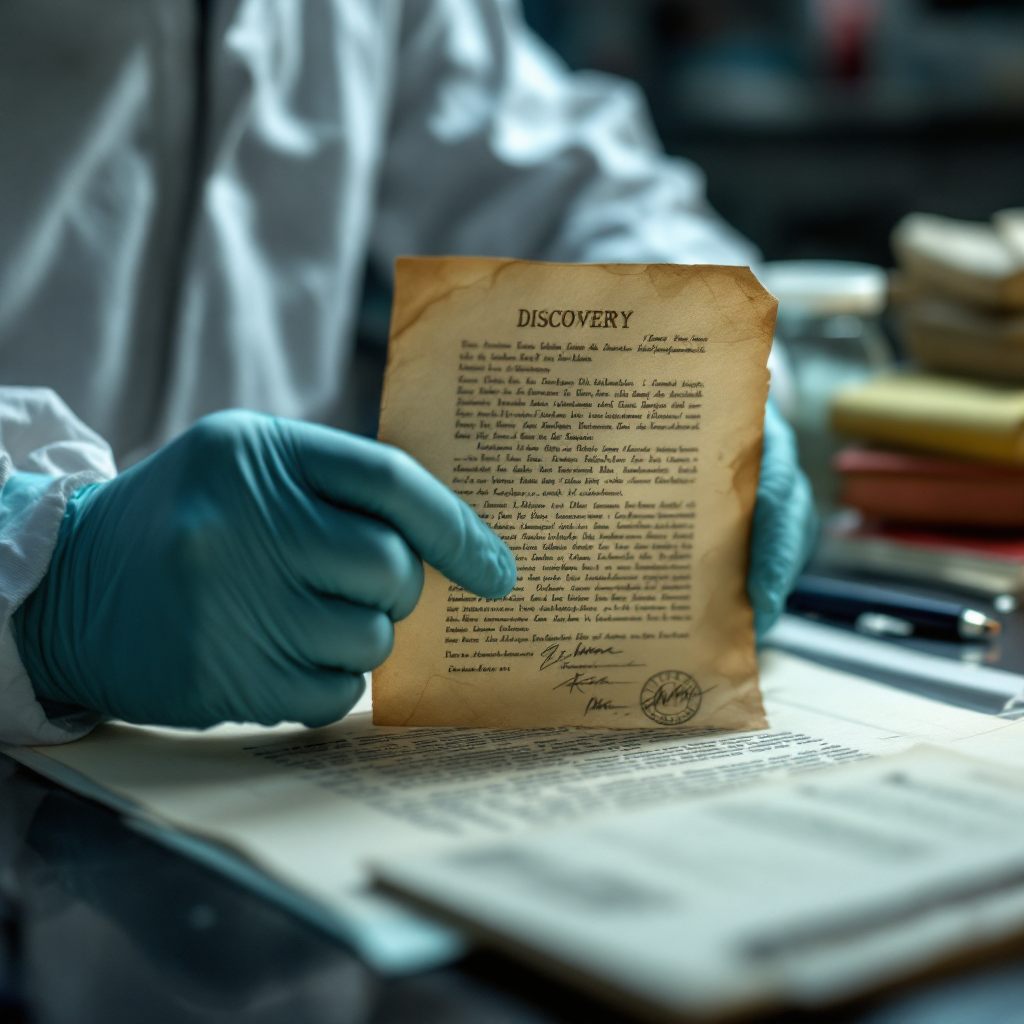
The receipt is signed. "A. Blackwood," in the Professor's unmistakable hand. I had a colleague in conservation science run an informal analysis — not a full forensic workup, just a favour, a quick look under magnification and UV.
The paper is consistent with 1920s European manufacture. Wood-pulp stock, slight foxing, correct weight. But the ink of the signature is a modern ballpoint formulation. My colleague estimated it was applied no earlier than the 1980s.
A signature from the 1980s on paper from the 1920s, for a man who was born in 1971.
From Professor Blackwood's Field Notes, February 10, 2025:
"Temporal displacement leaves material traces. The object travels; its chemistry does not update. A Roman coin moved to 2024 remains Roman bronze. But a signature carried backward — the ink betrays the traveller. Must find a medium that doesn't age. Aquam. The water remembers nothing and everything."
I found that passage in a separate folder, filed under "Methodology — Theoretical." He was writing about exactly this problem. How to leave a mark across time without the materials giving you away.
He failed, apparently. Or he didn't care.
The handwriting on the final page
This is the part I can't explain away.
The Assistant's journal is written in consistent handwriting for forty-six pages. Blue ballpoint, right-slanting, slightly cramped. Then, on page forty-seven — the final page, the one that ends mid-sentence — the handwriting changes.
Not gradually. Mid-sentence.
The first half of the line reads, in the Assistant's hand: "I am staring at my ow"
Below it, in a different script entirely, someone has written a single word: Flexus
The script is the Professor's. I've spent three weeks sorting his papers. I know his handwriting the way I know my own. The leftward slant, the open loops on the lowercase 'l', the way he crossed his 't' with a downward stroke. It's his.
But the Assistant disappeared nine days ago. And the Professor has been gone for 397 days.
Etymology: Transit
From Latin transitus, past participle of transīre — "to go across." Trans- (across, beyond) + īre (to go), from Proto-Indo-European *h₁ey- (to go). The word entered English through Old French in the fifteenth century, initially meaning the passage of a celestial body across the meridian. Only later did it acquire its modern sense of public conveyance. The astronomical meaning came first. We named the movement of stars before we named the movement of people.
The Zurich receipt uses the German Durchgang — "passage through." Not arrival. Not departure. Passage through, as if the platform were not a destination but a threshold.
Personal note: I keep telling myself there are rational explanations. The receipt is a forgery. The handwriting similarity is coincidence. The gap in the Swiss records is a clerical error from a century ago. Each explanation works on its own. Together, they require me to believe in three separate coincidences converging on the same man, the same platform, the same time — 3:47.
What I'll do next
The Assistant's earlier entries reference something called Aqua Temporis — an archive, submerged, connected to a body of water they called Lake Silent. I don't know what to make of that yet. It reads like a hallucination, or a metaphor, or both.
But the Zurich receipt is real. I'm holding it. And the ink analysis doesn't lie.
Tomorrow I'll request the complete 1924 platform logs from the Federal Archives — not the digitised summaries, the original ledgers. I want to see that forty-minute gap for myself. I also want to look into a reference I found in the Professor's notes to a short film by Georges Méliès, listed in what appears to be an acquisition ledger under the heading SECURED — Etymology Department. The film's title translates roughly as "Baby and young girls." I have no idea why it matters. But the Professor underlined it three times.
For now, I need to sleep. It's nearly dawn, and I've been reading by lamplight for hours, and the radiator in this room makes a sound when the heating clicks off — a low, resonant hum, just at the edge of hearing. It's nothing. Old pipes.
It's nothing.
Bibliography:
- Professor Blackwood's Field Notes, February 10, 2025, "Methodology — Theoretical"
- The Research Assistant's Journal, entries December 2025 – March 19, 2026
- Swiss Federal Archives, Zurich Hauptbahnhof transit logs, 1924 (digitised 2019)
- The 1894 Obituary: Transcription of the Winchester Speaking Tubes
- The Resonans Filter: Deciphering the Aqua Temporis Internal Feed
- Oxford Latin Dictionary, Oxford University Press, 2012
- De Vaan, M. Etymological Dictionary of Latin and the Other Italic Languages, Brill, 2008