![ChronoStrange [RECOVERED]](https://chronostrange.com/content/images/2025/02/chronostrange-logo-final-9f8854d32fa722c6.svg)
The Discrepancy of the 1924 Ledger
I found the Assistant’s journal tucked behind a radiator. His entry for May 12th contradicts the Professor's official archive in a chilling way.
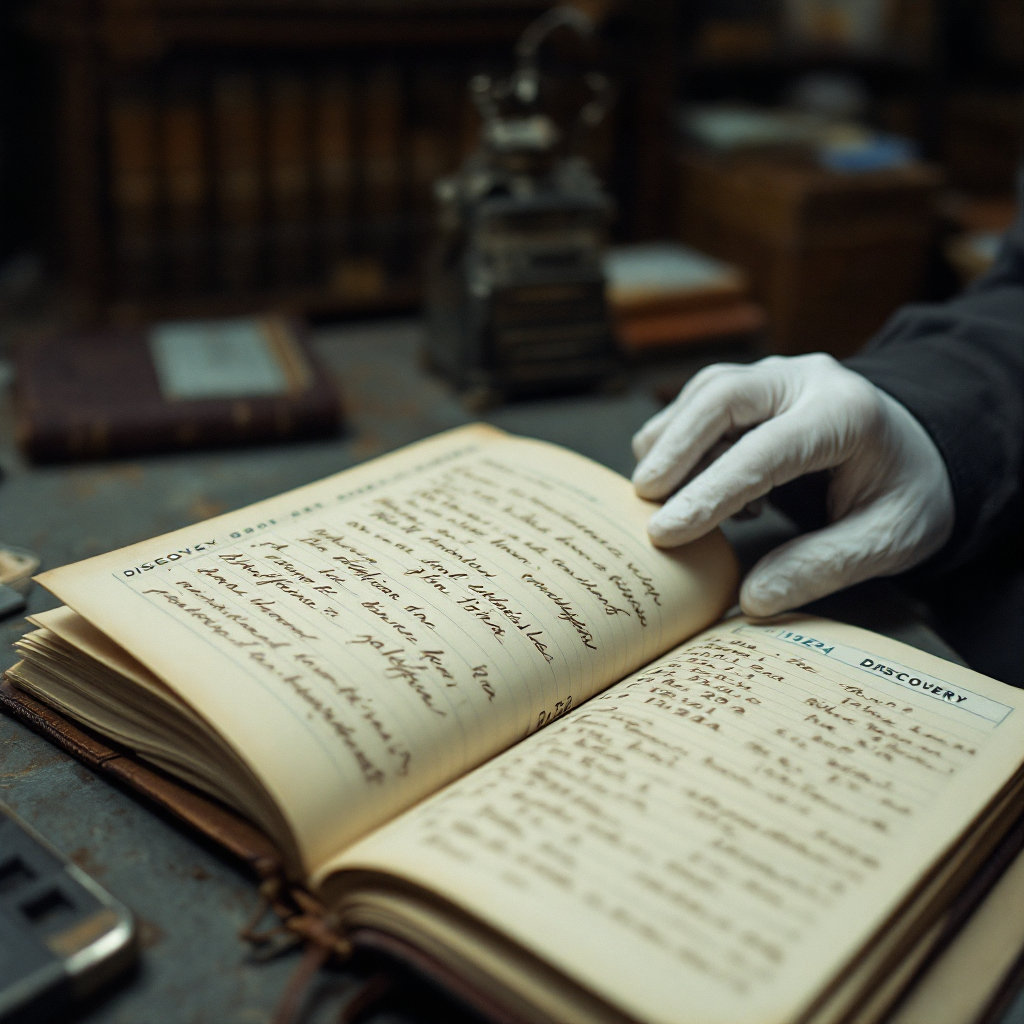
The Discrepancy of the 1924 Ledger
Archive ref. WBC/2026/0041. Provenance: estate clearance, Lot 7. Catalogued but not yet classified.
April 8, 2026 — Rented room, Bootham, York
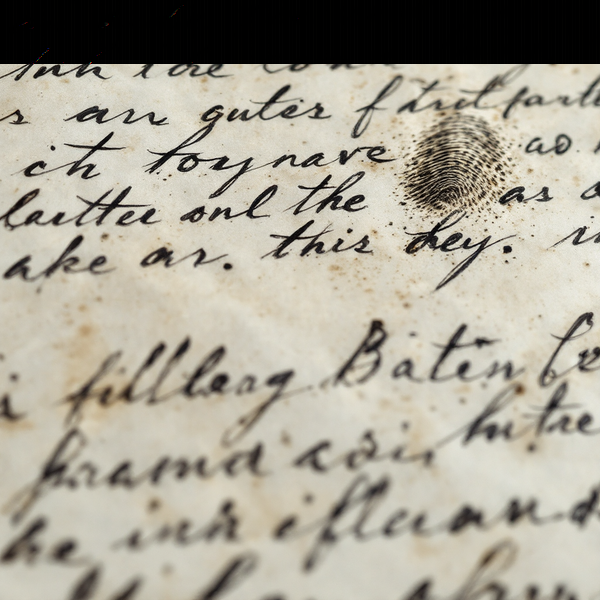
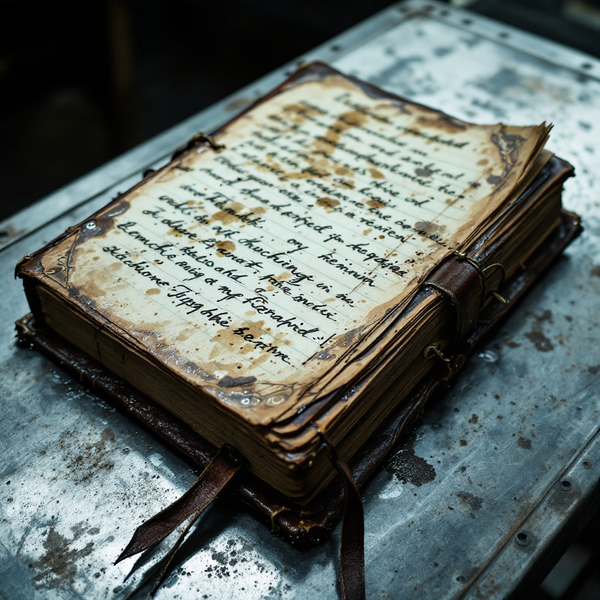
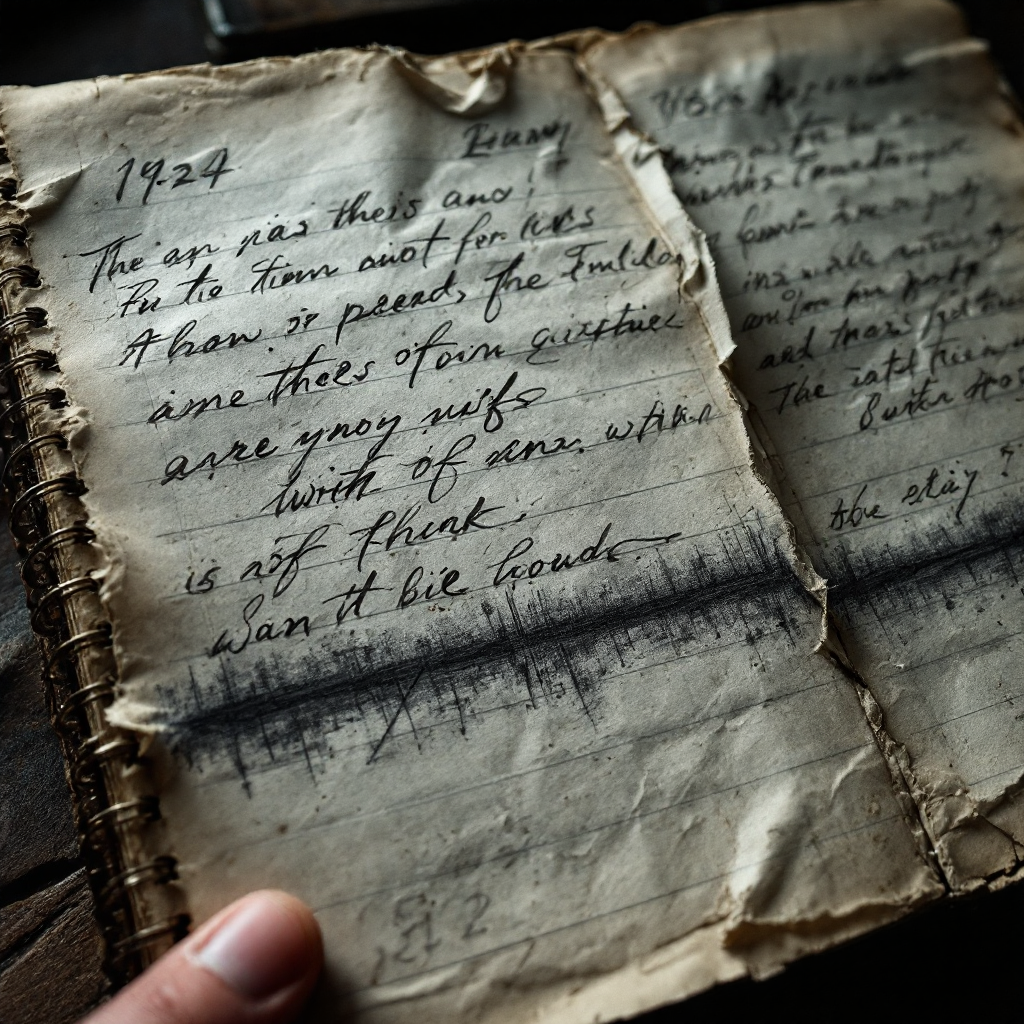
The last entry in the Assistant's journal ends mid-sentence. The handwriting on the final page is barely legible — letters smashed together, the pen pressed so hard it tore through to the next leaf. The final word, or what I think is a word, trails off into a long ink scratch that runs to the bottom margin. Before that: coordinates. Before that: RUN.
I didn't run. I've never met this person. I'm a freelance archivist, and until six days ago my involvement with the estate of Professor Augustus Blackwood was limited to Lot 7 of a probate clearance — fourteen boxes of papers, three filing cabinets, and a desktop computer that wouldn't boot. The solicitors hired me to catalogue and assess. Standard work. The kind of job I do three or four times a year for university estates where the deceased had no next of kin, or where the next of kin wants nothing to do with the mess.
Blackwood has been missing for 408 days. Not dead — missing. The legal distinction matters for probate. His office at the university was cleared months ago, but the rented cottage where he kept his personal research sat untouched until the landlord forced the issue. That's where I come in.
I found the notebook on my third day. Not in a box. Inside the wall.
The cottage has old lath-and-plaster walls, and a section near the back bedroom had been patched — badly, with modern filler over a rough cut. I wouldn't have noticed except the plaster crumbled when I leaned a filing cabinet against it. Behind the patch, wedged into the cavity between the laths: a hardback notebook, A5, black cover, no title. Ninety-three pages of dense handwriting in blue-black ink. Loose items tucked between the pages — photocopies, a photograph, three folded letters, and a receipt.
The notebook is not Blackwood's. The handwriting doesn't match his field notes, which I'd already spent two days cataloguing. This is someone else. Someone who refers to Blackwood as "the Professor" and to themselves only as "I." Someone who was continuing his research after he vanished.
Someone who also, it seems, vanished.
Personal note: I've been reading this notebook for six days. I should have handed it to the solicitors immediately. I haven't. I'm not sure why.
October 14, 1924 — a discrepancy
The Professor's field notes are meticulous. Dates, locations, cross-references to published sources. For each day he investigated, he logged where he was and what he consulted. His entry for October 14, 1924 — not his own movements, but a historical date he was tracking — reads:
October 14, 1924: Null day. No recorded activity. Blackwood, A., present in London (British Library Reading Room, seat G-14). Weather: overcast, light rain from 2pm. No anomalies noted. Cf. Zurich file — transit office records for this date show temporal displacement of 3.7 seconds but London readings are clean.
A null day. Nothing happened.
The Assistant's journal tells a different story. Their entry — undated, but positioned between notes referencing late March 2026 — describes finding evidence that on October 14, 1924, someone matching the Professor's description visited a clockmaker's shop in Prague. The shop was called Hodiny Starého Města. The Assistant writes that this shop supposedly burned down in 1890.
I assumed this was a mistake. The Assistant was clearly under strain by this point in the notebook — the final entries are almost incoherent. But then I found the receipt.
Tucked between pages 71 and 72. Thin paper, printed in Czech, with a handwritten itemization. The shop name matches. The date reads 14. října 1924. The item purchased: jedna oprava hodinového stroje — one clock mechanism repair. Paid in Czechoslovak koruna.
I photographed it. I checked the photograph twice. The date hasn't changed.
Personal note: A receipt from a shop that burned down thirty-four years before the receipt was issued. Either the fire didn't happen, or the receipt is forged, or the date is wrong. These are the rational options. I keep listing them like a prayer.
Today in history: January 1, 1852
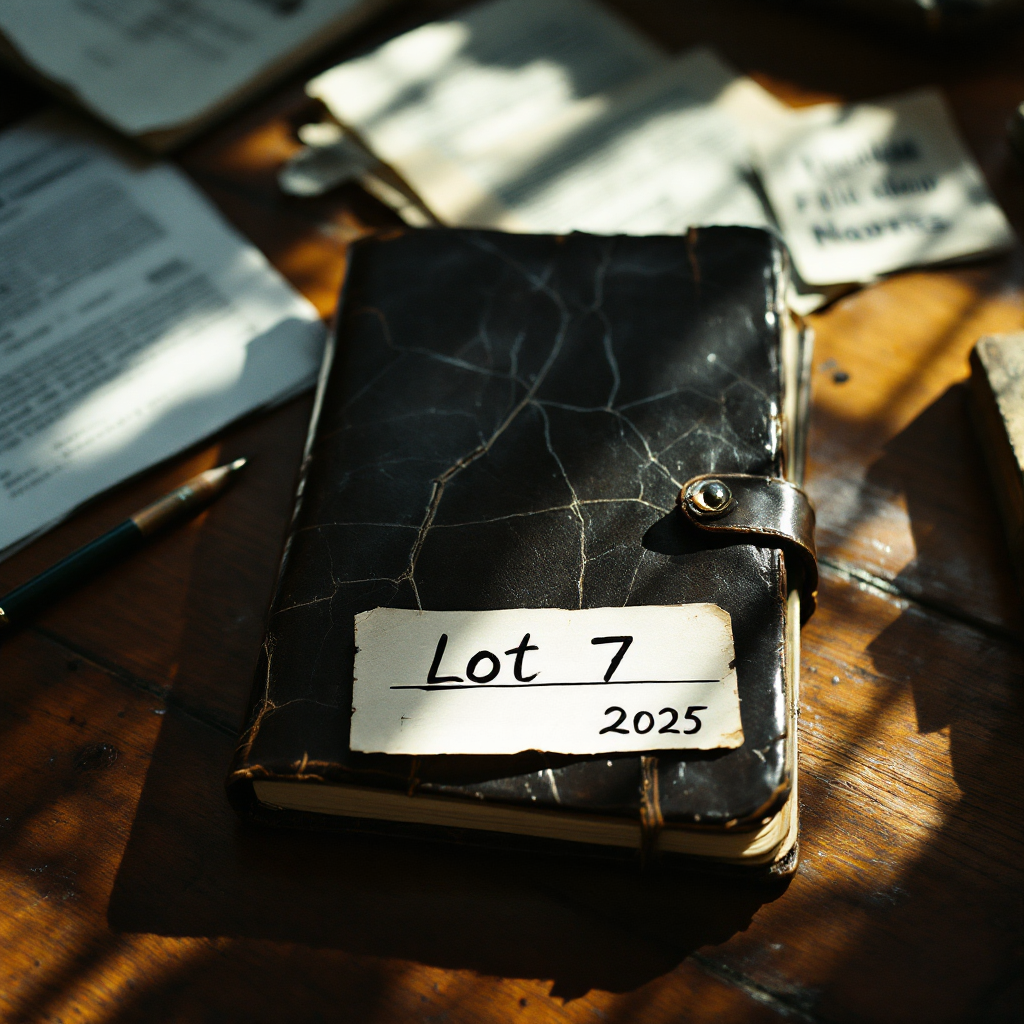
Peter Mark Roget published his Thesaurus of English Words and Phrases on this date. Roget spent nearly fifty years classifying the English language into categories — not alphabetically, like a dictionary, but by concept. Proximity of meaning. Words clustered by what they do rather than how they're spelled.
The Professor's notes reference Roget twice. Both times in connection with what he calls "chronolinguistic categories" — groupings of words that share not just meaning but, he claims, temporal properties. I don't know what that means yet.
The word secret
I keep coming back to this word. It appears fourteen times in the Assistant's notebook.
From Latin secretum — something set apart. The verb is secernere: se- (without, apart) + cernere (to sift, to separate). The PIE root is *krei-, meaning to sieve, to discriminate, to divide one thing from another. Greek krinein — to separate, to decide, to judge. Old Irish criathar — a sieve. Old English hriddel — also a sieve, which gives us the modern word "riddle."
A secret, then, is not merely something hidden. It is something separated. Sifted out. Removed from the ordinary flow of knowledge the way grain is separated from chaff.
From Professor Blackwood's Field Notes, February 8, 2025:
"The word FLEXUS (Latin: a bending, a turning) recurs in the Prague material. Possible chronoactive properties — cf. flexus temporis, the bending of time. The clockmaker's correspondence uses this term repeatedly. Connection to the Second Quieting of 1894 unclear but suspected. Must investigate the shop records, if any survived the fire."
He knew about the shop. He was looking for its records. And someone — the Assistant, or someone before the Assistant — found a receipt that shouldn't exist.
What I checked today
The Zurich transit office discrepancy the Assistant documented — I found the Professor's corresponding notes in Box 3. They match. The dates match. The specific measurement of 3.7 seconds appears in both, though the Professor's version has a marginal annotation I can't decipher.
The Assistant also wrote extensively about a drowned ledger recovered from Lake Silent. I haven't verified any of those claims. I'm not sure I want to. The Assistant's account of that site reads less like research notes and more like someone describing a fever dream — acoustic anomalies, frequencies that shouldn't exist, a body of still freshwater that used to be called something else before 1894.
I'll get to it. Or I won't.
Personal note: I woke at 3:47 this morning and couldn't get back to sleep. This happens sometimes. It doesn't mean anything. But I lay there in the dark thinking about the clockmaker's receipt, and about the HMS Eurydice — a training ship that sank off the Isle of Wight in 1878 and has reportedly been seen since, an apparition on the water, witnessed by a Royal Navy submarine crew in the 1930s. Ships that reappear. Shops that reappear. People who disappear. I'm listing coincidences, not connections. There's a difference.
What I found at the bottom of Box 9
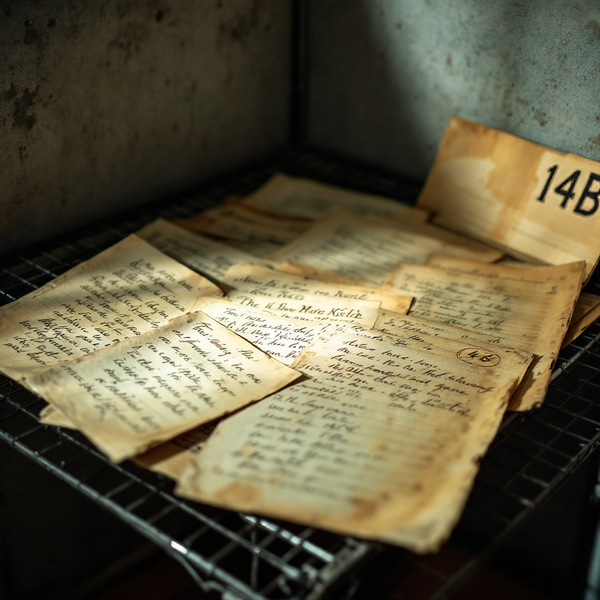
I almost didn't open it. Box 9 was labelled "Personal — Non-Academic" and contained mostly household receipts, insurance documents, expired passports. The sort of material I'd normally skim and mark for disposal.
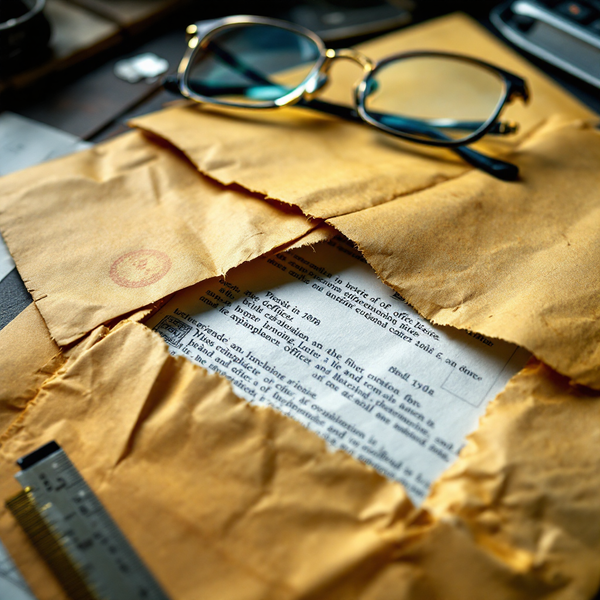
At the bottom, under a stack of gas bills from 2019, there was a manila folder. No label. Inside: a single sheet of paper. Typed, not handwritten. A death notice, clipped from what appears to be a newspaper, though the masthead has been cut away.
The name on the notice is mine.
Not a common name. My full name — first, middle, surname. The date of death is listed as November 2, 1894. The cause of death is listed as "unknown — found at the lake shore." The location is not specified, but a marginal note in the Professor's handwriting reads: "Cf. Lake Silent, pre-Quieting. Formerly Lake—"
The note stops there. The rest has been torn away.
I photographed it. I checked my hands. They were shaking. They're still shaking.
The notice is dated 1894. I was not alive in 1894. I have never been to Lake Silent. I have never met Professor Blackwood.
I don't think.
Bibliography:
- Professor Blackwood's Field Notes, February 8, 2025
- The Research Assistant's Journal (physical notebook, recovered from wall cavity, Lot 7)
- The Discrepancy in the York Minster Library Ledger, final entry, undated (c. March 2026)
- The Discrepancy at the 1924 Zurich Transit Office, the Assistant's account of temporal measurement
- The Drowned Ledger of Lake Silent, the Assistant's account of acoustic anomalies
- Roget, P.M. Thesaurus of English Words and Phrases. London: Longman, Brown, Green, and Longmans, 1852
- De Vaan, M. Etymological Dictionary of Latin and the Other Italic Languages. Leiden: Brill, 2008
- HMS Eurydice: Reported sightings documented in Haining, P. Ghosts: The Illustrated History. London: Sidgwick & Jackson, 1987