![ChronoStrange [RECOVERED]](https://chronostrange.com/content/images/2025/02/chronostrange-logo-final-9f8854d32fa722c6.svg)
The Glass Anchor: Descent into Lake Silent’s Dead Zone
New sonar imaging has revealed a structural anomaly 200 feet below the surface of Lake Silent—a submerged laboratory that shouldn't exist, and the first physical trace of Professor Blackwood’s final expedition.
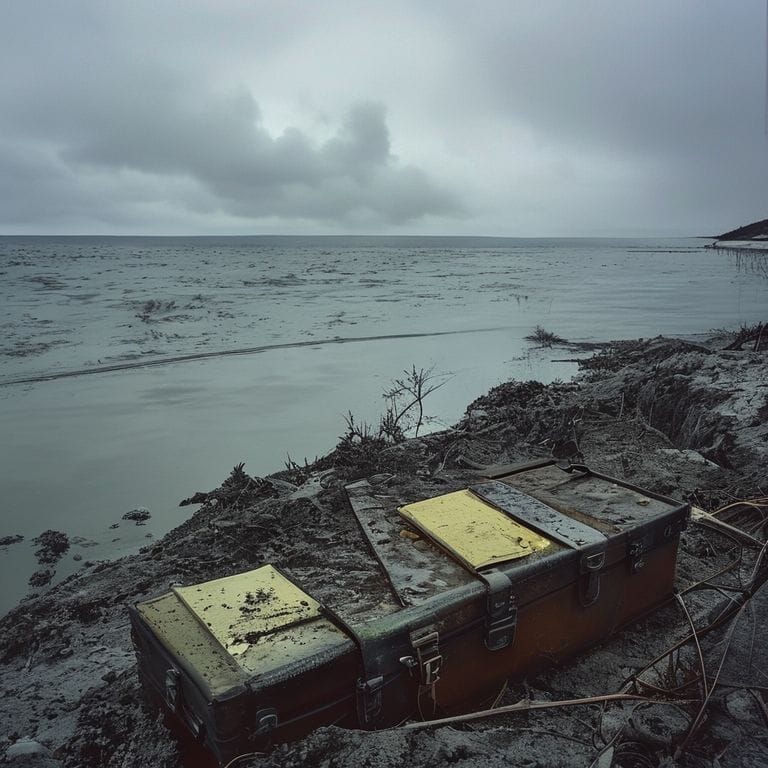
The Glass Anchor: Descent into Lake Silent’s Dead Zone
Editor's Note: The following document was transmitted via secure channel on January 11, 2026. Authenticity verified. This log entry was recorded exactly 321 days since Professor Blackwood's last confirmed contact.
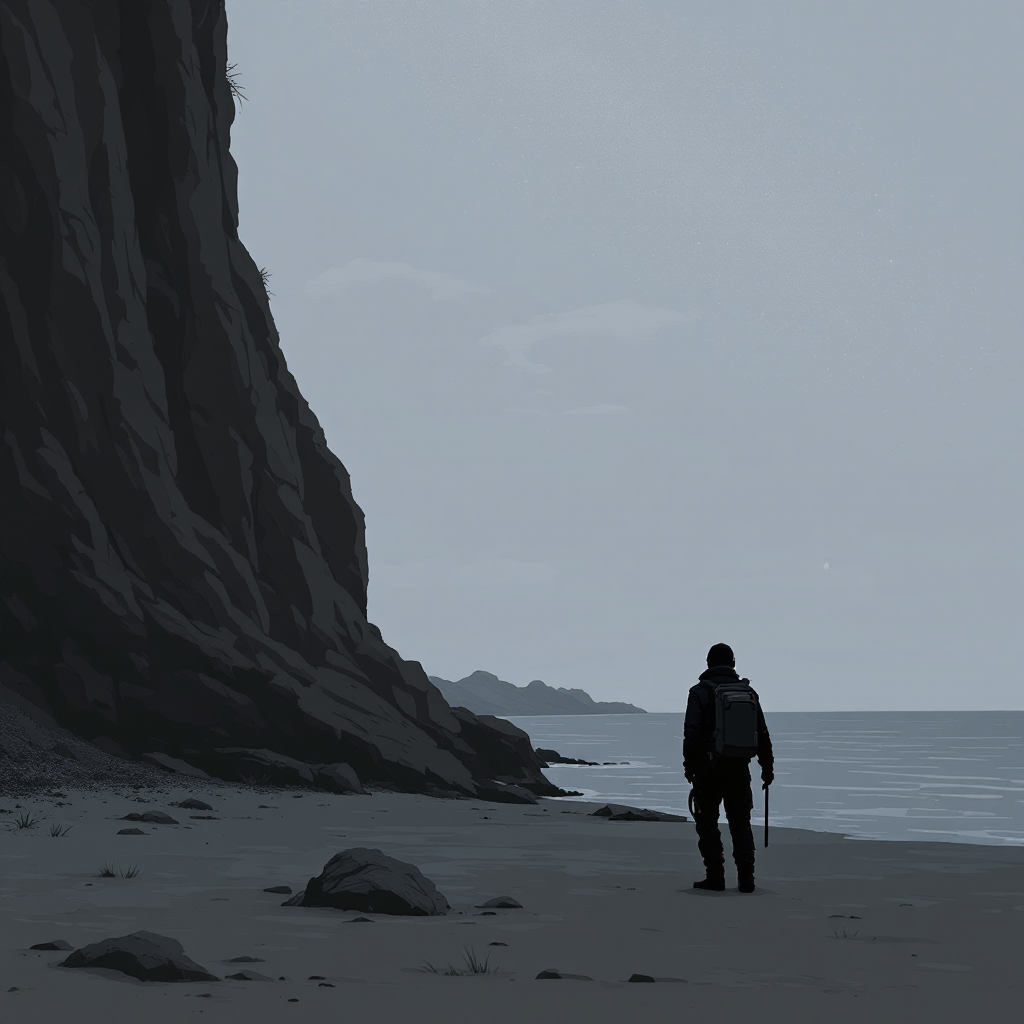
January 11, 2026 – The Shore of Lake Silent
The air here doesn't move. It’s been 321 days since Professor Blackwood vanished, and every step I take feels like I am walking deeper into a photograph that hasn't finished developing. After the narrow escape through the ventilation shafts in York—documented in my January 5th entry—I realized I couldn't keep running horizontally. The Department monitors the roads, the rails, and the speaking tubes. But they don't seem to look down.
I’ve returned to the site of the Submersion Protocol. My lungs still burn from the last time I touched the water of Lake Silent, but the coordinates I recovered from the York Minster Breach were precise. They didn't point to the surface. They pointed to the "Dead Zone"—a pocket of thermal resistance at the lake's floor where the sonar simply stops working.
To reach it, I’ve deployed the "Glass Anchor." It’s a crude, high-pressure diving bell the Professor commissioned in secret years ago, reinforced with quartz-lead shielding. He called it a temporal ballast.
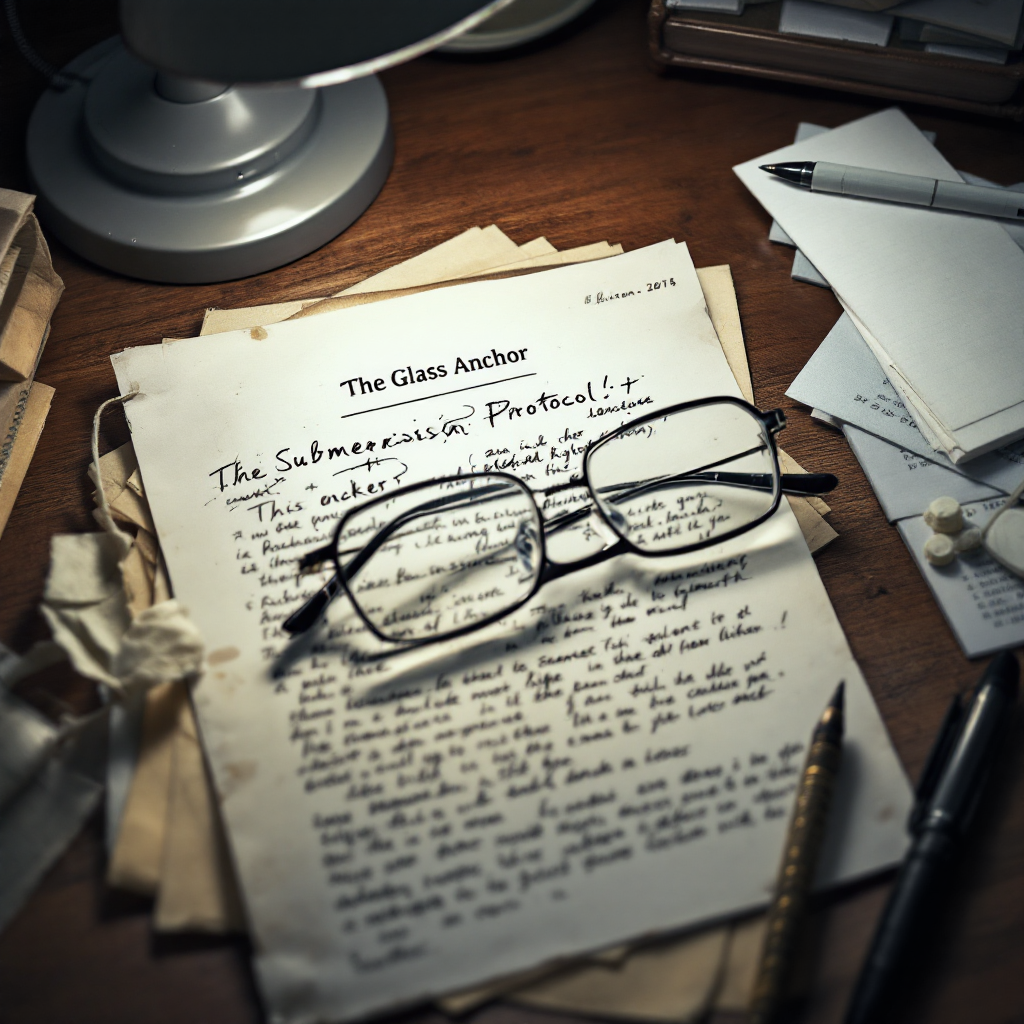
From Professor Blackwood’s Field Notes (dated January 31, 2025)
"The density of the water in the lower basin is not a function of salt or temperature, but of linguistic saturation. Words that have been 'quieted' from the surface world don't simply vanish; they sink. They accumulate at the bottom of Lake Silent like heavy silt.
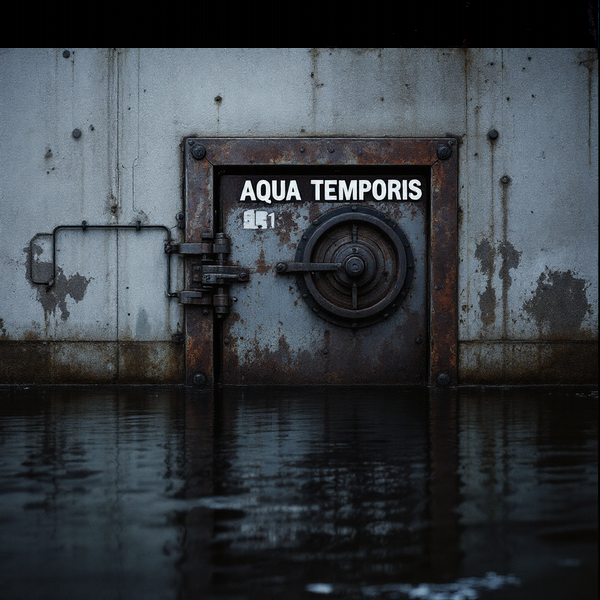
If one descends far enough, the medium changes. You are no longer swimming through H2O, but through the Aqua Temporis—the liquid remains of discarded history. I suspect the 'Limen' is thinnest here. If I don't return from the February survey, look for the Glass Anchor. It is the only thing heavy enough to stay put while the rest of the world drifts."
As the winch groaned, lowering me into the black, I felt the same vibration I recorded during The Winchester Resonance. It’s a low-frequency hum that bypasses the ears and vibrates directly in the jawbone.
Today in History: December 12, 1894 – The Great Quieting
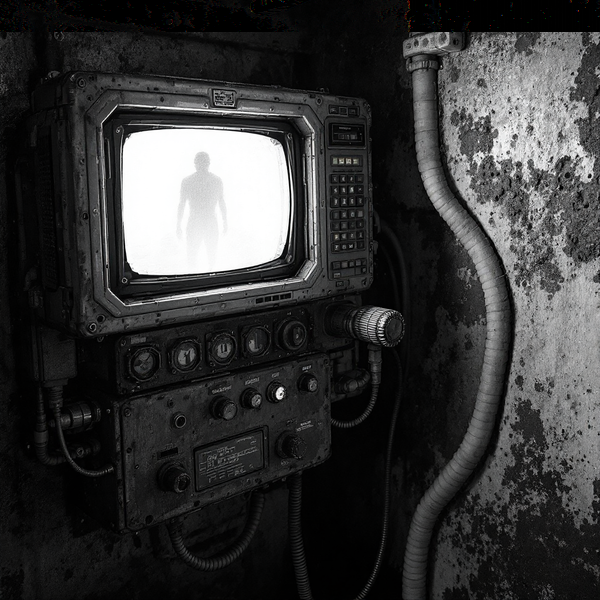
History records that on this day, the "Lake Symphony" of the Adirondacks officially became "Lake Silent." Local newspapers from the era, such as the Plattsburgh Sentinel, reported that the lake’s famous acoustic properties—which allowed a whisper to be heard from two miles away—vanished overnight. By December 13th, the town’s collective memory had shifted. New arrivals were told the lake had "traditionally" been silent.
The Etymology Department archives show a massive spike in "reclamation" orders during this week in 1894. It wasn't just the sound that was removed; it was the vocabulary required to describe it. This was the first successful deployment of a large-scale Reality Edit.
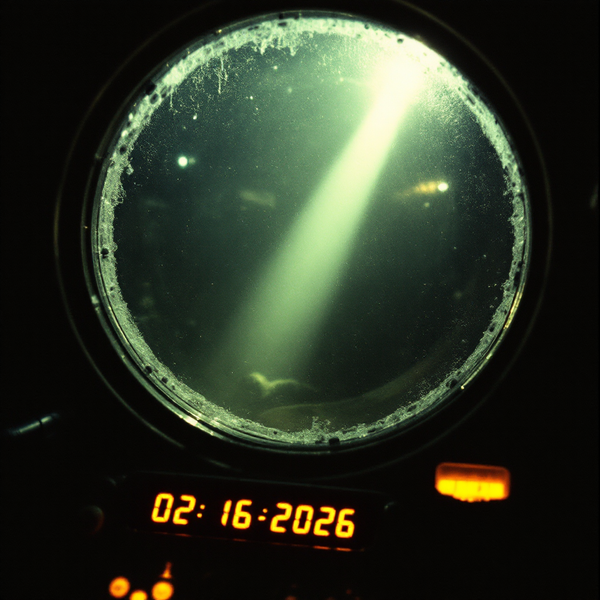
Personal note: The water outside the porthole has turned from green to a sickening, oily violet. The depth gauge is spinning backward. I should be terrified, but I feel an odd sense of recognition. I’ve seen this color in the Professor’s inkwell.
The Etymology of the Unseen
To understand what is happening at the bottom of this lake, we must look at the words we use for what remains behind.
Ghost
- Etymology: Old English gāst (spirit, soul), from Proto-Germanic *gaistaz, from PIE root *gheis- (to be amazed, frightened).
- Cognates: German Geist (spirit/mind), Gothic usgaisjan (to terrify).
- Temporal Shift: While we think of a "ghost" as a dead person, the PIE root suggests the state of the observer—the terror and amazement of seeing something that shouldn't be there. In the "Dead Zone," ghosts aren't spirits; they are temporal echoes frozen in the emulsion of the water, the "amazement" of time itself caught in a physical trap.
Echo
- Etymology: Greek ēkhṓ (sound, reflected sound), from ēkhē (sound), likely from PIE *wāg- (to break, cry out).
- Cognates: Latin vāgīre (to wail), Old English wōma (noise).
- Temporal Shift: An echo is a sound that "breaks" against a surface and returns. Here, the voices I hear through the Glass Anchor’s hull aren't reflecting off the rock; they are breaking across the Limen—the temporal boundary. They are crying out from 1894, still trying to find the ears that were closed during the first Great Quieting.

The Discovery: The Crystalline Lattice
At 600 feet, the water stopped being liquid.
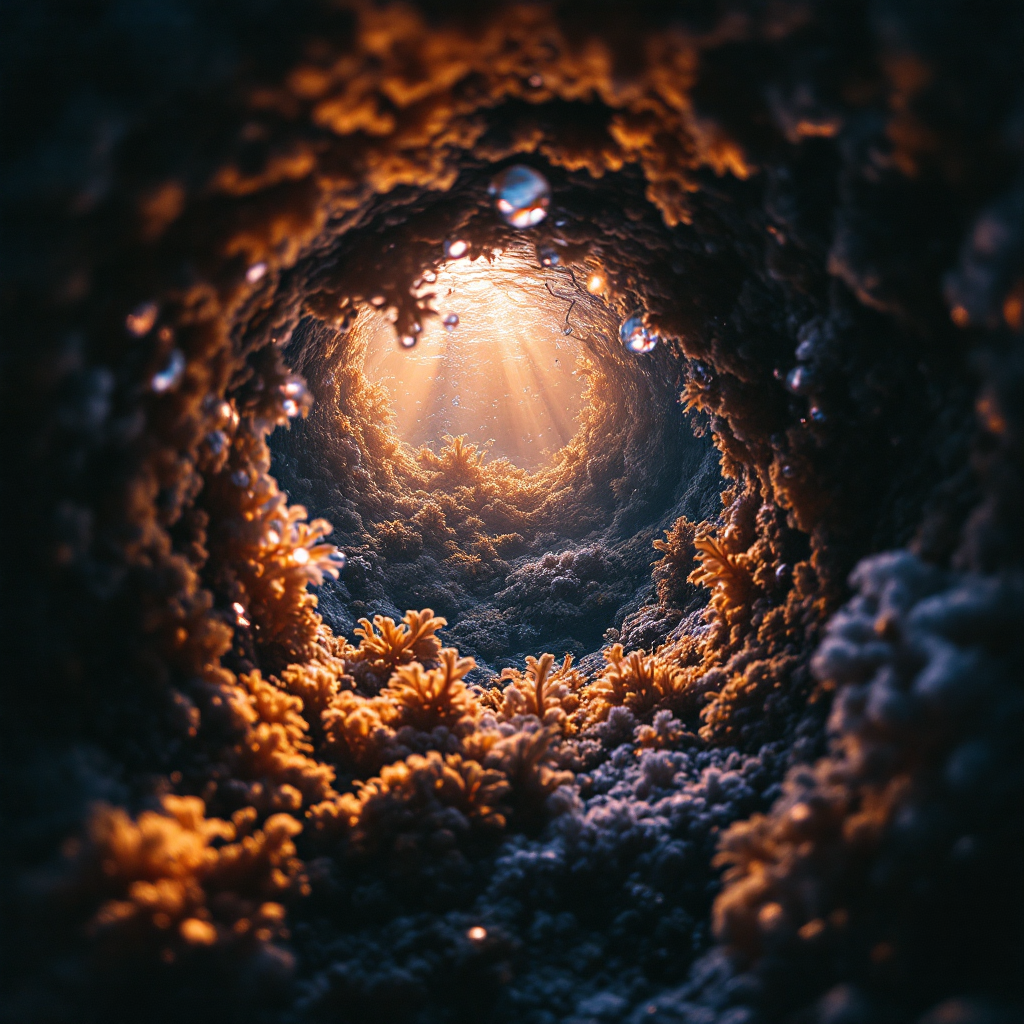
The Glass Anchor jerked to a halt. Outside, the Aqua Temporis had crystallized into a massive, glowing lattice. It looked like frozen lightning. Suspended within this structure, perfectly preserved, was a 19th-century heavy-pressure diving suit. The copper helmet caught my external floodlights, gleaming like a drowned sun.
I managed to extend the Anchor's retrieval arm—a modification the Professor insisted on back in January. As the claw brushed the suit, a shockwave of sound hit the cabin. It was the sound of a thousand voices speaking at once, then falling instantly into a dead, suffocating silence.
It was exactly 3:47 PM.
I hauled the suit into the airlock. When I unscrewed the faceplate, I didn't find a body. I found a journal, wrapped in oilcloth, tucked into the neck of the suit.
The Evidence: A Message from the Future-Past
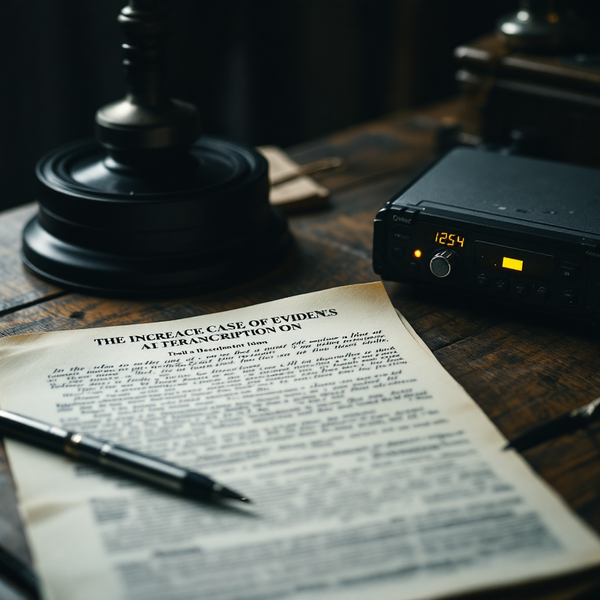
The journal is water-logged but the ink is chemically stable. The handwriting is unmistakably Augustus Blackwood’s. But the first page stopped my heart.
"Entry Date: October 14, 2065."
The Professor disappeared in 2025. This journal is dated forty years into a future that hasn't happened—or a future that has already been erased.
"I have realized the lake is not a body of water," the entry reads. "It is a temporal filter. It was designed by the Department's Architects to catch those of us who fall through the cracks of history. We are the 'problem words' in the sentence of reality. We are the typos they couldn't delete, so they drowned us instead."
The journal mentions a name I’ve seen before in the York files: David Thompson. A note in the margin from 1628 suggests that Thompson didn't just settle an island in Boston Harbor; he was the first "Observer" to map the leaks in the Atlantic Limen. The Professor claims Thompson’s disappearance wasn't a death, but a "migration" to the Scottish Highlands archive.
Personal note: I can hear something scratching on the outside of the diving bell. Not the retrieval arm. Fingernails. Something is trying to get in, or perhaps it’s trying to tell me to stay out.
The Scottish Connection
The Professor’s future-dated notes mention that the "Anchor Suite" in the Highlands vault is the only place where the 1885 Beale Ciphers can be decoded. He writes that the second cipher, which uses the Declaration of Independence as a key, isn't about gold. It’s a map of the "Founding Documents"—the original linguistic anchors that hold this version of North America in its current timeline. If those anchors are pulled, the 2025 Third Quieting won't just remove words; it will remove the last three centuries.
I am surfacing now. The violet light is fading, replaced by the grey, cold reality of the Adirondack winter. But I know what I have to do.
Current Status
I have the journal. I have the diving suit. And I have a terrifying realization: The "whispering" I heard in York wasn't the Professor dying. It was the Professor waiting.
Final note: I’m watching the shore through the periscope. There are black sedans parked near my trailer. The Department moved faster than I expected. I have to use the Limen. I have to go where the water can't follow.
The coordinates the Professor left point to the Abandoned Underground Vault in the Scottish Highlands. Tomorrow, I leave the country. If I can reach the vault before April’s shadow lengthens, I might be able to play back the "beginning" (arkhē) and pull him back. Or I might just become another ghost in the lattice.
Bibliography:
- Professor Blackwood's Field Notes, January 31, 2025.
- The York Minster Breach: Transcribing the Silent Decibel, January 5, 2026.
- The Submersion Protocol: Secrets Beneath Lake Silent, December 18, 2025.
- The Winchester Resonance: Mapping the Acoustic Chambers, December 26, 2025.
- The Plattsburgh Sentinel, "The Day the Lake Went Mute," December 15, 1894.
- Ward, H. (1922). Acoustic Anomalies of the Northern Lakes. Oxford University Press.