![ChronoStrange [RECOVERED]](https://chronostrange.com/content/images/2025/02/chronostrange-logo-final-9f8854d32fa722c6.svg)
The Highlands Codices: Vaulting the Aquam Gate
After narrowly escaping the Department's dragnet at Lake Silent, I have reached the Scottish Highlands. Within this abandoned vault, the Professor’s final 'Aquam' protocol is the only thing standing between the truth and the rising tide.

The Highlands Codices: Vaulting the Aquam Gate
RECOVERED DOCUMENT - Classification: Pending. This log entry was transmitted via a low-frequency burst on January 17, 2026. Authenticity verified. 327 days since Professor Blackwood's last contact.
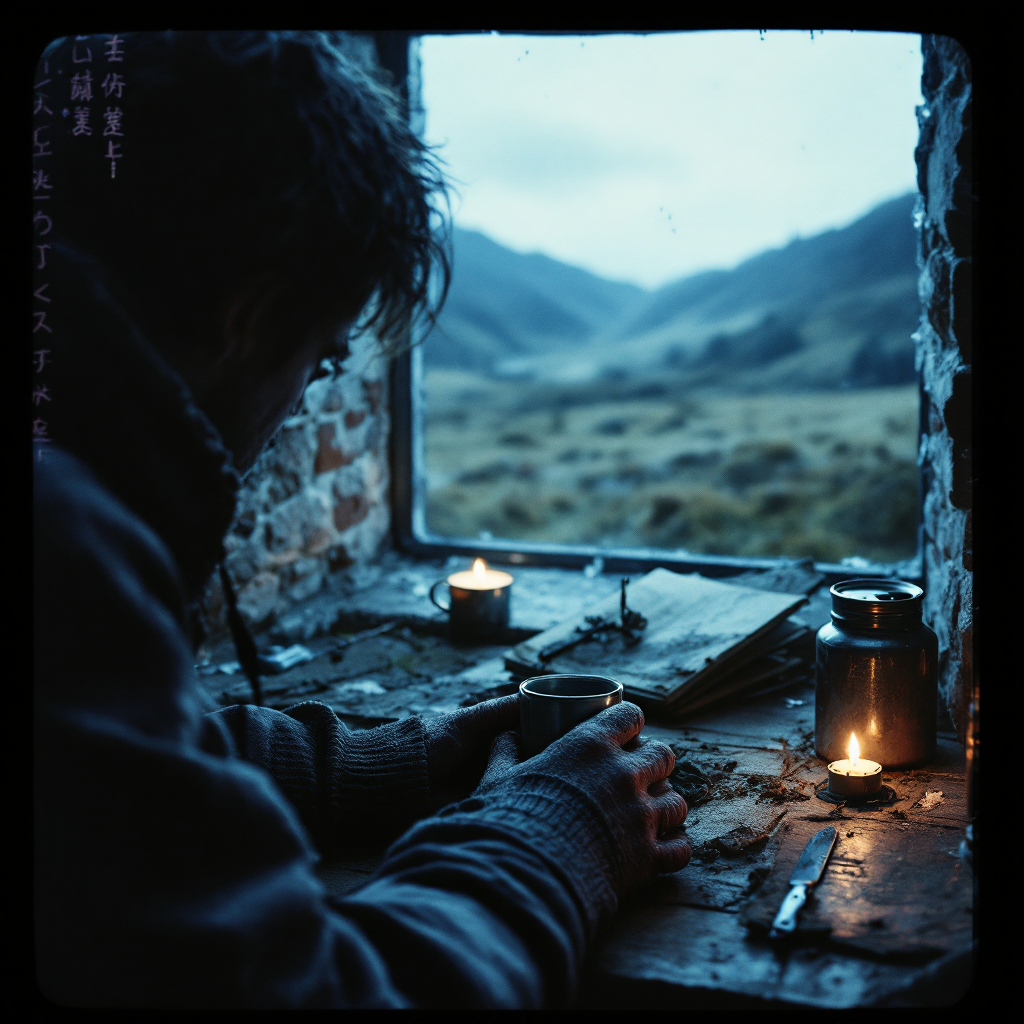
January 17, 2026 - The Grampian Mountains, Scotland
I am writing this from a place that officially does not exist. My hands are still vibrating—not from the cold, though the Scottish winter is brutal, but from the "still-air" exposure I suffered during the escape.
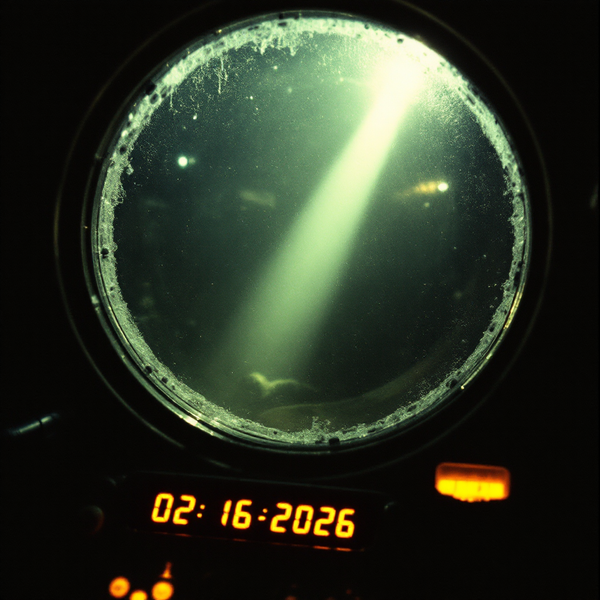
Six days ago, as I recorded in The Glass Anchor: Descent into Lake Silent’s Dead Zone, the Department’s black sedans had me pinned at the shoreline. I don't remember the drive to the coast. I remember the smell of ozone and the sight of the periscope lens shattering as I forced the Limen transition. The world didn't just blur; it curdled. I drove north, through the night and across borders, the rearview mirror showing only the heavy, unnatural mist of the Grampians swallowing the headlights of my pursuers. They lost me somewhere near Dalwhinnie, or perhaps the timeline simply folded them away.
I have reached the coordinates the Professor left in the Lake Silent journal. On the surface, it is a brutalist concrete bunker, a "decommissioned weather station" according to the rusted signage. But the architecture is familiar. The reinforced narrow-slit windows and the specific orientation toward the magnetic north pole mark this as a sister-site to the York Minster archives.
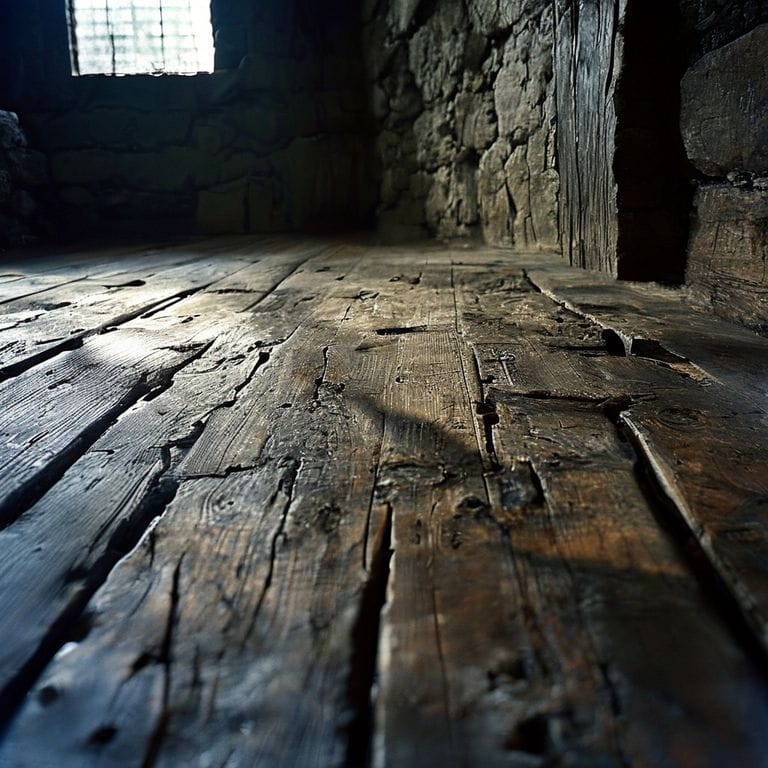
From Professor Blackwood’s Field Notes (dated February 17, 2025)
"The Department believes they have mapped the entire lattice, but they have forgotten the Highland Vault. It was built during the 1923 'Great Quieting' as a fail-safe—a linguistic fallout shelter. If the Great Library at York is the brain of the network, this place is the medulla oblongata. It handles the involuntary functions of reality.
To enter, one cannot use a key of iron or code. One must use the liquid key. Aquam. When spoken within the resonance chamber, the word acts as a solvent for the temporal locks. It dissolves the 'now' to reveal the 'always.'"
Personal note: The air inside the vault is thick, smelling of old parchment and wet stone. My watch stopped the moment I crossed the threshold. It didn't just stop ticking; the hands melted into the face. I feel as though I am breathing underwater, yet my lungs remain dry.

Today in History: December 12, 1894 - The Silence of the Symphony
While the world remembers 1894 for the Dreyfus Affair or the death of Robert Louis Stevenson, the Department’s internal records mark a much more quiet catastrophe. On December 12, 1894, the "Great Quieting" occurred at Lake Symphony. Local newspapers reported that the lake’s famous acoustic properties—which allowed a whisper to be heard three miles away—vanished overnight. By the next morning, the press was quoting "traditional" local knowledge that the lake had always been silent.
This was the first successful mass linguistic manipulation. By removing the descriptor "Symphony" from the local lexicon and enforcing "Silent," the Department didn't just change a name; they altered the physical properties of the water. As I discovered in my December 31st entry, this was merely a rehearsal for the Third Quieting.
Etymology Investigation: The Hollow and the Watch
To understand the vault, one must understand the words that built it.
TUBE
- Etymology: Latin tubus (pipe, tube), likely from PIE *teu- (to swell, be hollow).
- PIE Root: *teu-
- Cognates: Greek týmbos (burial mound), Latin tumēre (to swell), Old Norse þúmall (thumb).
- Semantic Evolution: The transition from a "swollen" or "hollow" place to a functional conduit is critical. In the context of the Professor’s research, these tubes are not merely pipes; they are "swollen" pockets of compressed time. The speaking tubes I encountered at the Winchester House are essentially artificial burial mounds for sound, preserving the resonance of voices long after the speaker has ceased to exist.
OBSERVATORY
- Etymology: Late Latin observatorium, from observare (to watch, note, heed).
- PIE Root: Unknown, but linked to Latin servare (to save, preserve).
- Cognates: Avestan haraiti (he watches over), Old Church Slavonic sravniti (to compare).
- Semantic Evolution: To "observe" is fundamentally to "preserve." An observatory is not just a place for looking at stars; it is a place for keeping a specific version of reality in sight so it does not drift. The Highland Vault is an observatory in the truest sense—it preserves the "Arkhē," the original linguistic blueprints of our timeline, safe from the Department’s edits.

The Aquam Gate and the Whitby Connection
I stood in the center of the vault's main chamber—a perfect dodecahedron of cold, grey stone—and whispered the word: <span class="unstable">Aquam</span>.
The effect was immediate. The walls didn't move, but the light did. The shadows began to flow like ink in a basin. Beneath the floorboards, I heard the rush of subterranean water—the same frequency I recorded in the Archives of Aqua Temporis.
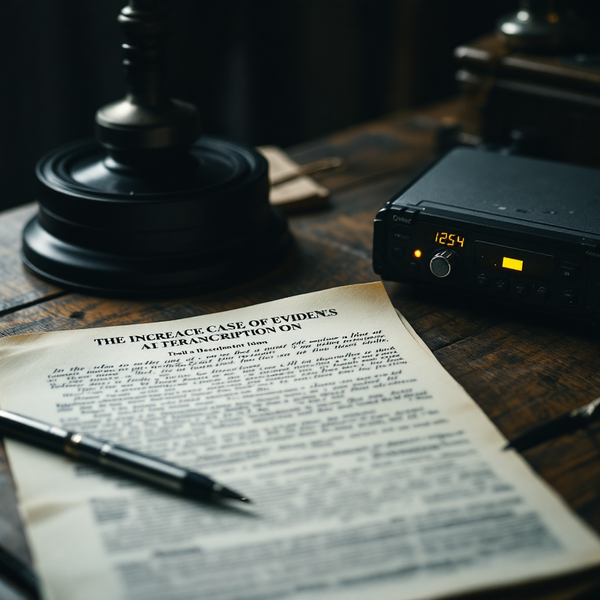
I found a series of architectural codices hidden within a lead-lined cabinet. They weren't blueprints of this vault, but cross-references to the Whitby Estate in North Yorkshire. According to these documents, Whitby and Winchester House are not merely distant locations; they are geographically displaced "Limen points" on the same structural lattice. The speaking tubes in the Winchester mansion connect directly—acoustically and temporally—to the vaults here in the Highlands.
It is a physical network designed to bypass the Department's surveillance. They monitor the airwaves, the internet, and the printed word, but they cannot monitor the hollow places—the tubus-conduits that run through the "swelling" of time itself.

The Arkhē Playback
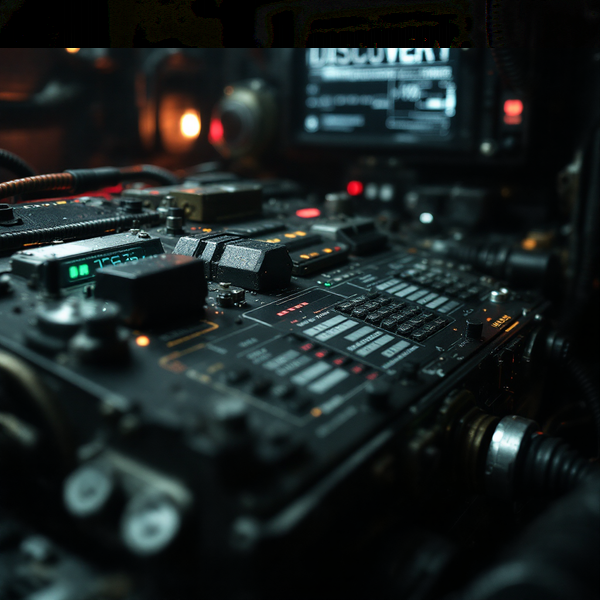
At exactly 3:47 AM, the vault's internal communication system came to life. It consists of antiquated brass speaking tubes, identical to those in San Jose, snaking across the concrete ceilings. They began to vibrate with a low, rhythmic thrum. It wasn't a sound you hear with your ears; it was a sound you feel in your marrow.
I approached the central mouthpiece—a flared horn of tarnished silver. I could hear a voice. It wasn't a recording. It was a live transmission of a man breathing.
"Professor?" I whispered into the tube.
The response was a series of clicking sounds, like a telegraph, followed by a voice that sounded like grinding stone. It was the Professor, but his cadence was wrong. He was speaking in a mixture of Modern English and a reconstructed PIE dialect that shouldn't be pronounceable by human vocal cords.
"The architecture... it's not a container," the voice rasped. "It's a garment. I didn't hide in the vault. I became the vault."
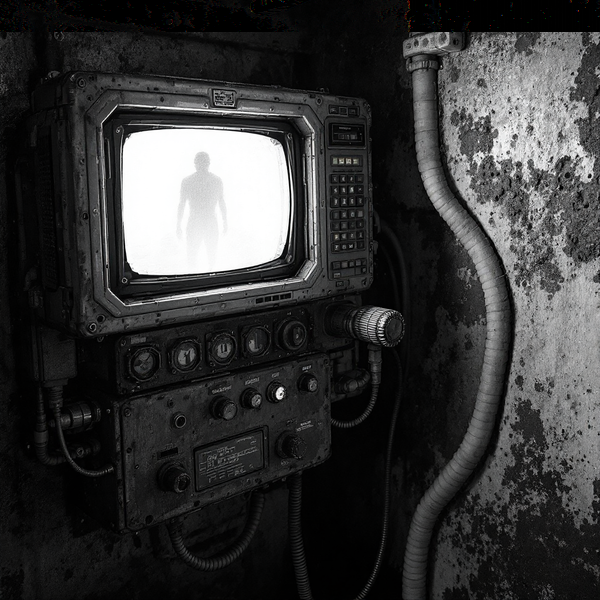
I realized then with a sickening jolt of dread: the Professor didn't just go missing. He used the Aquam key to translate his biological presence into the very structural integrity of the Limen network. He is the resonance in the pipes. He is the shadow on the brutalist walls. He is the Arkhē—the beginning of the new sequence.
And as the tubes began to glow with a pale, bioluminescent light, I saw my own name etched into the concrete of the wall, in handwriting that was unmistakably my own, dated three hundred years ago.
Final note: The black sedans have found the perimeter. I can hear the engines idling in the mist. But the Professor is telling me to put my ear to the silver horn. He says there is room in the lattice for two. I have to decide before the sun rises. If the Department breaks the seal, I will be lost. If I listen to him, I may never be found.
Bibliography:
- Professor Blackwood’s Field Notes, February 17, 2025.
- The Glass Anchor: Descent into Lake Silent’s Dead Zone, January 11, 2026.
- The Glass Cylinder at Lake Silent: Evidence of the Third Quieting, December 31, 2025.
- Echoes in the Deep: The Archives of Aqua Temporis, December 22, 2025.
- Acoustic Anomalies of the Scottish Highlands, Edinburgh University Press, 1974.
- The Architecture of Silence: Victorian Pneumatic Systems, Oxford Archaeological Series, 2012.