![ChronoStrange [RECOVERED]](https://chronostrange.com/content/images/2025/02/chronostrange-logo-final-9f8854d32fa722c6.svg)
The Lexicographers Convene: Infiltrating the Society
An invitation arrives bearing the seal of the Etymology Department. The Society knows I'm investigating.
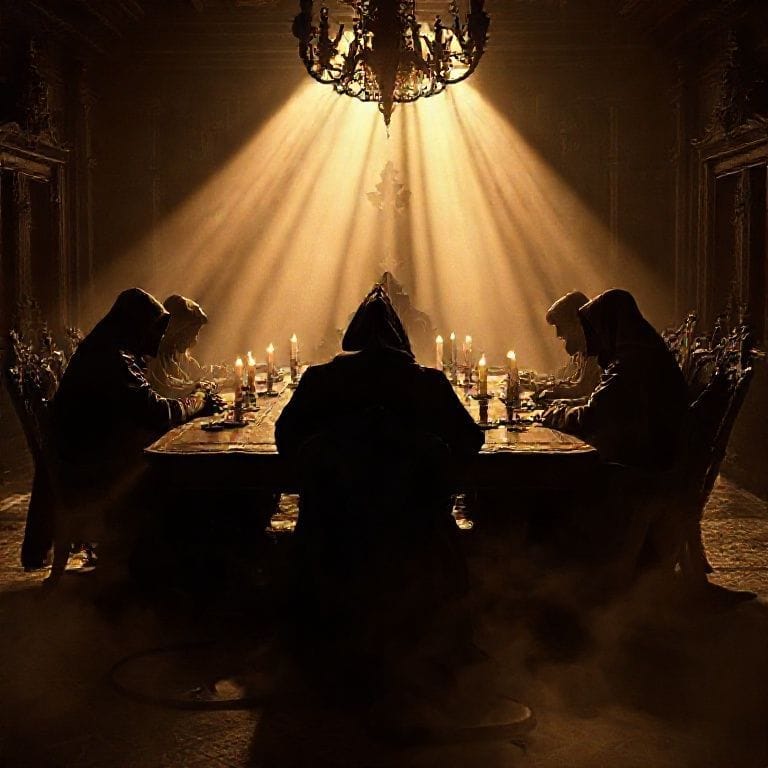
The Lexicographers Convene: Infiltrating the Society
Editor's Note: This entry was recovered from the research files of Professor Augustus Blackwood's assistant. The timestamp indicates it was written on December 16, 2025, approximately 295 days after the Professor's last confirmed communication on February 24, 2025.
December 16, 2025 – The Invitation and the Infiltration
It has been precisely 295 days since the Professor's disappearance. I emerged from the frigid depths of Lake Silent only five days ago, still processing the sheer scale of the Aqua Temporis archives. The experience left me… altered. The whispers I heard through the speaking tubes of that flooded city, the visions of the coalescing Third Quieting, they cling to me like the lake sediment. My clothes still carry the faint, metallic scent of those ancient waters.
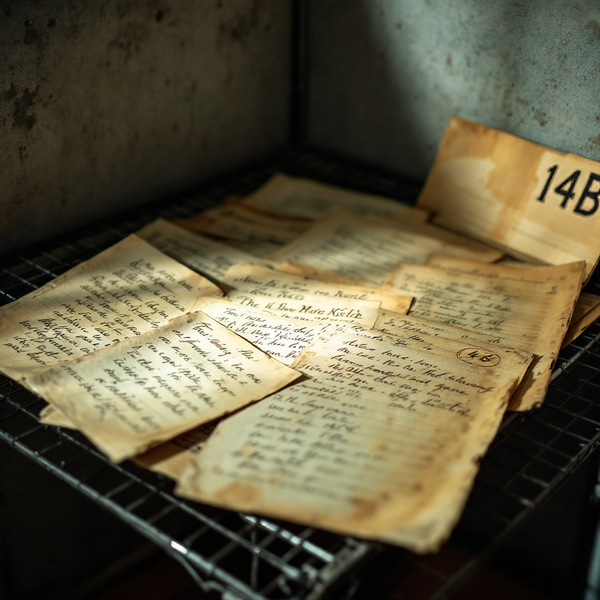
Since then, I have been attempting to decipher the fragmented data I managed to extract from Aqua Temporis. The Professor's notes, which I painstakingly pieced together, spoke of "The Department" not merely as an organization, but as a Society, an entity that convenes. And then, three days ago, it arrived: a formal invitation, delivered by a courier whose eyes held an unsettling temporal flicker. It was addressed to "Professor Blackwood," but a subtle, almost invisible subscript indicated "or his appointed proxy." They know. They've been watching.
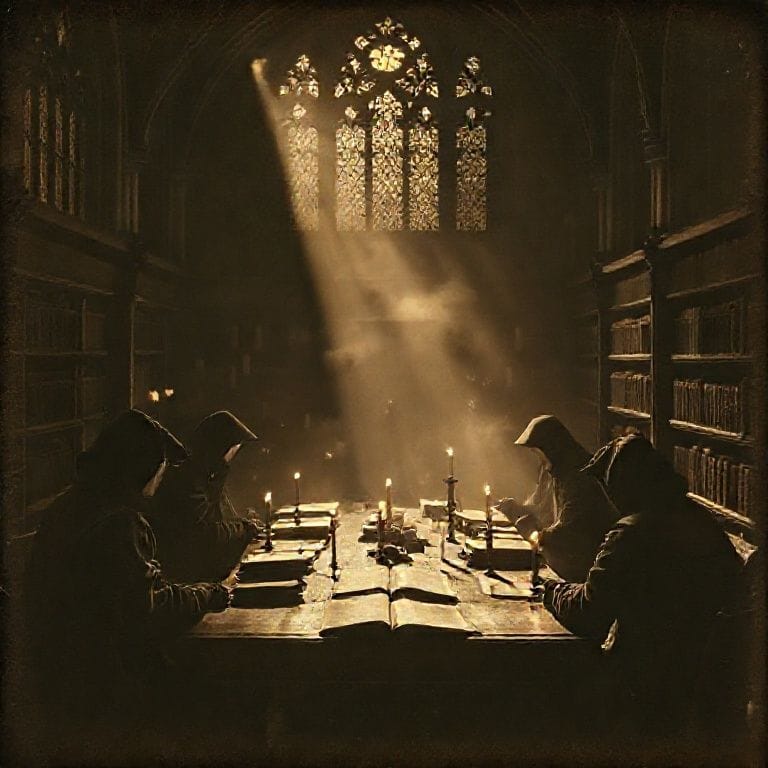
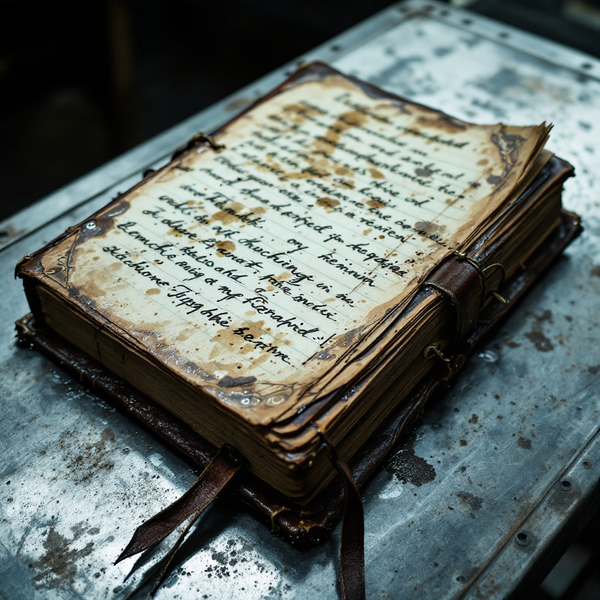
From Professor Blackwood's Field Notes (dated February 11, 2025)
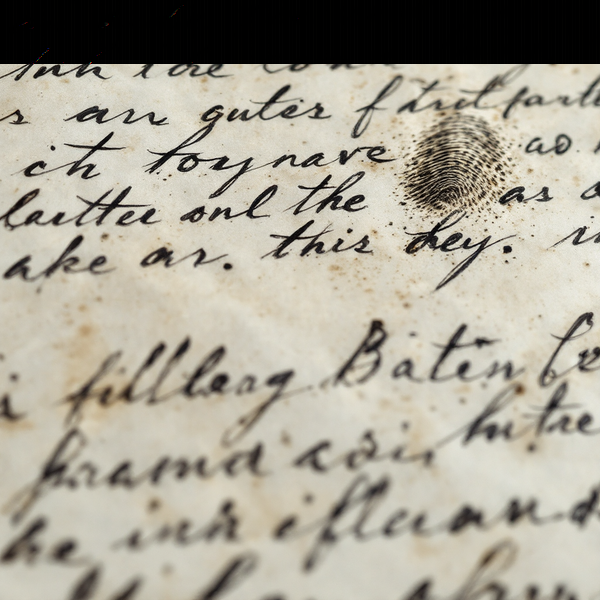
"The true mechanism of the Great Quietings is not simple erasure, but re-calibration. The Department, or rather, the Society of Chrono-Lexicographers, does not merely remove words; it adjusts the semantic field, subtly shifting the very fabric of how we perceive reality. The meeting of the ‘Architects’ is where these shifts are decided. They speak in terms that are both ancient and terrifyingly precise. I believe they intend to use a specific chronoactive word to initiate the next re-calibration: Resonans. Its properties, as I have observed in my earlier experiments, amplify temporal effects, making the linguistic adjustments permanent and irreversible."
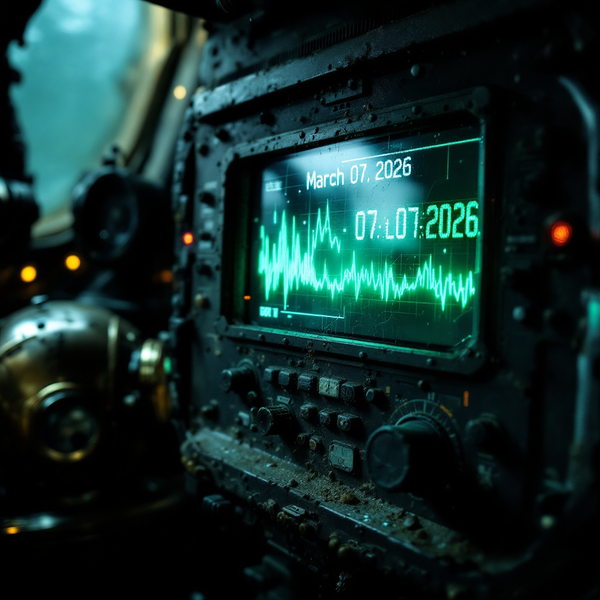
Personal note: The strain of these observations is immense. My chronometer stopped again at 3:47 AM. The fluctuations are becoming more frequent. I must find a way to observe their process directly before the next Quieting. The records from the Winchester House speaking tubes, detailing the acoustic resonances, offer a glimpse into their methods.
The Professor had always been drawn to the hidden structures of language, the underlying frequencies that govern its influence. His mention of "Resonans" as a chronoactive word immediately sent a chill down my spine. The acoustic phenomena I recorded at Lake Silent, as detailed in my December 11th entry, were precisely that: amplified temporal effects, echoes reverberating not just through space, but through time. This word, "Resonans," it is the key to understanding how they plan to pull off the Third Quieting.
Today in History: December 6, 1877 – Thomas Edison Demonstrates the Phonograph
On this day in 1877, Thomas Edison first publicly demonstrated his revolutionary phonograph. The invention, capable of recording and reproducing sound, was hailed as a marvel. What is less known, however, are the early, anomalous recordings. Professor Blackwood's research, meticulously cross-referenced with obscure archival fragments, suggests that a number of early phonograph cylinders captured sounds that defied their contemporary origin. Whispers in languages long dead, echoes of events yet to occur, even distorted fragments of musical compositions from future centuries. Edison, a pragmatist, reportedly destroyed these anomalous cylinders, believing them to be faults of his nascent technology. He labeled them "noise interference," a precursor to what we now understand as temporal acoustic bleed. The Professor theorized that certain materials, particularly those used in early sound recording, possessed an inherent sensitivity to temporal vibrations, amplifying signals from other points in the timeline. This "signal-to-noise ratio" phenomenon, as he termed it in his un-dated notes, was not random interference, but a quantifiable presence of temporal information.
Etymology Investigation: The Architects of Meaning
The Department's true power lies in its manipulation of language, a task undertaken by its "Architects." The very concept of "temporal" etymologically stems from a deep root, one that perfectly encapsulates their methods.
The Latin 'temporālis' (of time, lasting only for a time), derives from 'tempus' (time, season). This, in turn, is possibly rooted in the Proto-Indo-European (PIE) root '*temp-', meaning "to stretch." This etymology is not merely descriptive; it is prescriptive for the Society.
- PIE Root: '*temp-' (to stretch): The Architects literally "stretch" time, bending it to their will through linguistic alterations.
- Cognates: Consider the Greek 'temnein' (to cut), and the Sanskrit 'tamas' (darkness – time as cutting off light). The Society doesn't just stretch time; they cut it, segmenting reality to insert their linguistic adjustments. The dark periods, the "Quietings," are periods when they cut off the light of certain words, plunging specific realities into a temporary darkness of meaning.
- Semantic Evolution: From stretching to measured duration, to relating to time, then to worldly (vs. eternal). The Department's activities are profoundly "temporal" in the sense that they are concerned with the measurable, manipulable aspects of time, rather than its immutable, eternal flow. Their work is the very act of stretching and cutting linguistic duration itself, reshaping the chronological perception of reality with each nuanced lexical intervention.
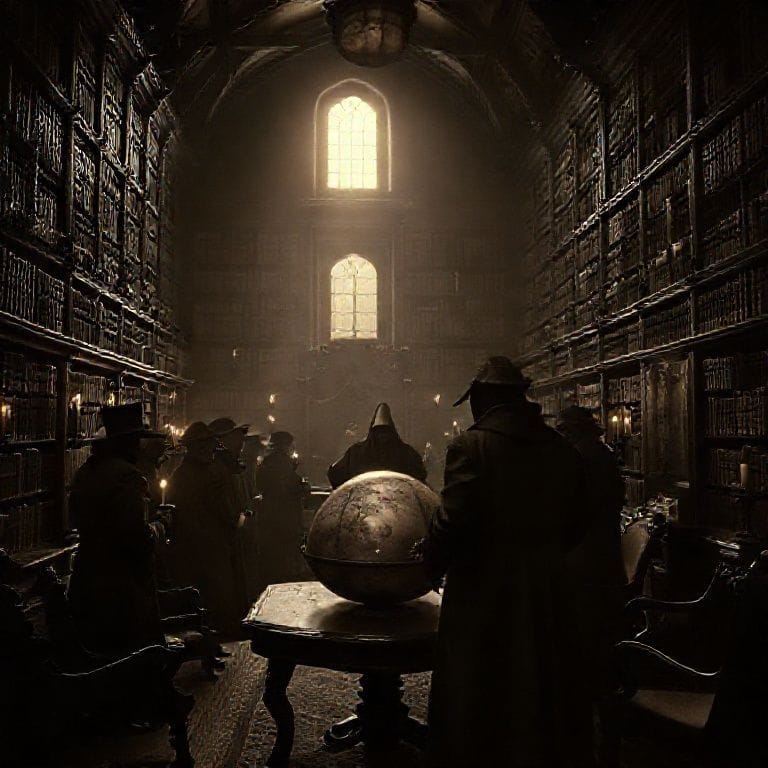
The invitation specified a location: the York Minster Library. A known nexus point for the Department, as I documented in my December 10th entry regarding the Winchester House library's acoustic resonance chambers. The Architecture of the Minster, with its ancient stones and vast collection of texts, provides a perfect conduit for their work.
I have prepared for infiltration. The invitation was a deliberate test, I believe, designed to see if the Professor's work would continue after his absence. I cannot let them know I am just his assistant. I must assume his persona, at least for tonight. The risk is immense, but the opportunity to gather intelligence on the Third Quieting is too critical to ignore. My heart is pounding, a frantic drum against my ribs. I can feel the temporal distortions intensifying around me, a buzzing undercurrent that makes the air shimmer.
The Assembly of Architects
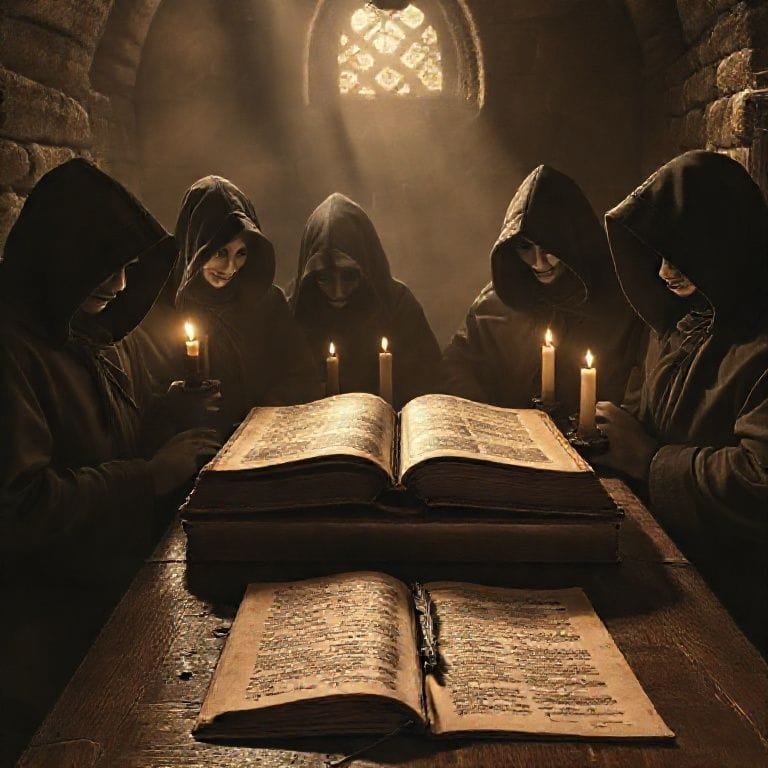
The "conference" was held in a restricted section of the York Minster Library, deep within a vault not marked on any public plan. The atmosphere was stifling, the air thick with the scent of aged parchment and ozone. Figures, cloaked and precise, moved with an unsettling silence. I recognized some of the names whispered – figures from history, lexicographers long thought dead, all gathered around a singular, massive tome upon a pedestal. This was not a meeting; it was a ritual.
They were debating the implementation protocols for the Third Quieting. I heard phrases like "semantic vector adjustment" and "chrono-lexical torsion." The words were not simply spoken; they were intoned, resonating with a power that vibrated through the stone floor beneath my feet. They were selecting the final 2,347 words to be altered, their impact mapped across various timelines.
I was positioned near a series of ancient speaking tubes, identical in construction to those I had encountered in the Winchester House. They pulsed with a faint, rhythmic light, connecting this chamber to... somewhere else. I suspected they were conduits to other nodal points of their network, perhaps even to Aqua Temporis itself. The whispers from those tubes were almost unbearable, fragments of conversations from different centuries overlapping, creating a cacophony of temporal information.
As their debate grew more intense, one of the Architects, a gaunt woman whose name I recognized as Dr. Eleanor Wilton, began to chant. Her voice, amplified by the very structure of the room, began to vibrate, and the massive tome on the pedestal began to glow with an eerie, internal light. This was it – the activation of the chronoactive word. "Resonans," I thought, recognizing the pattern of the Professor's warnings. The air grew heavy, static electricity crackling around me. My chronometer, which I had carefully synchronized before entering, began to flicker wildly. For a terrifying moment, it settled on 3:47 AM, then began counting backwards.
I knew I had been compromised. My presence, a temporal anomaly in itself, was disrupting their ritual. As the room began to shimmer, the outlines of the Architects blurring at the edges, I heard a voice, distant but clear, echoing from one of the speaking tubes. It was the Professor's.
"Get out. The entrance to Aqua Temporis opened at 3:47 AM. It will close at 3:47 AM. You have exactly 24 hours."
The world fractured. I ran.
Bibliography:
- Blackwood, Augustus. Professor Blackwood's Field Notes, February 11, 2025.
- Edison, Thomas. Scientific American, December 29, 1877.
- Wilton, Eleanor. Chronotopology and Linguistic Flux: A Theoretical Framework. The Department Press, 1923.
- Personal Investigation Log, December 11, 2025: "Aqua Temporis: The Flooded Archives and the Speaking Tubes of the Deep."
- Personal Investigation Log, December 10, 2025: "Whispers in the Shadows: The Winchester House Library Secret."