![ChronoStrange [RECOVERED]](https://chronostrange.com/content/images/2025/02/chronostrange-logo-final-9f8854d32fa722c6.svg)
The Resonans Chamber: A Silt-Choked Confession
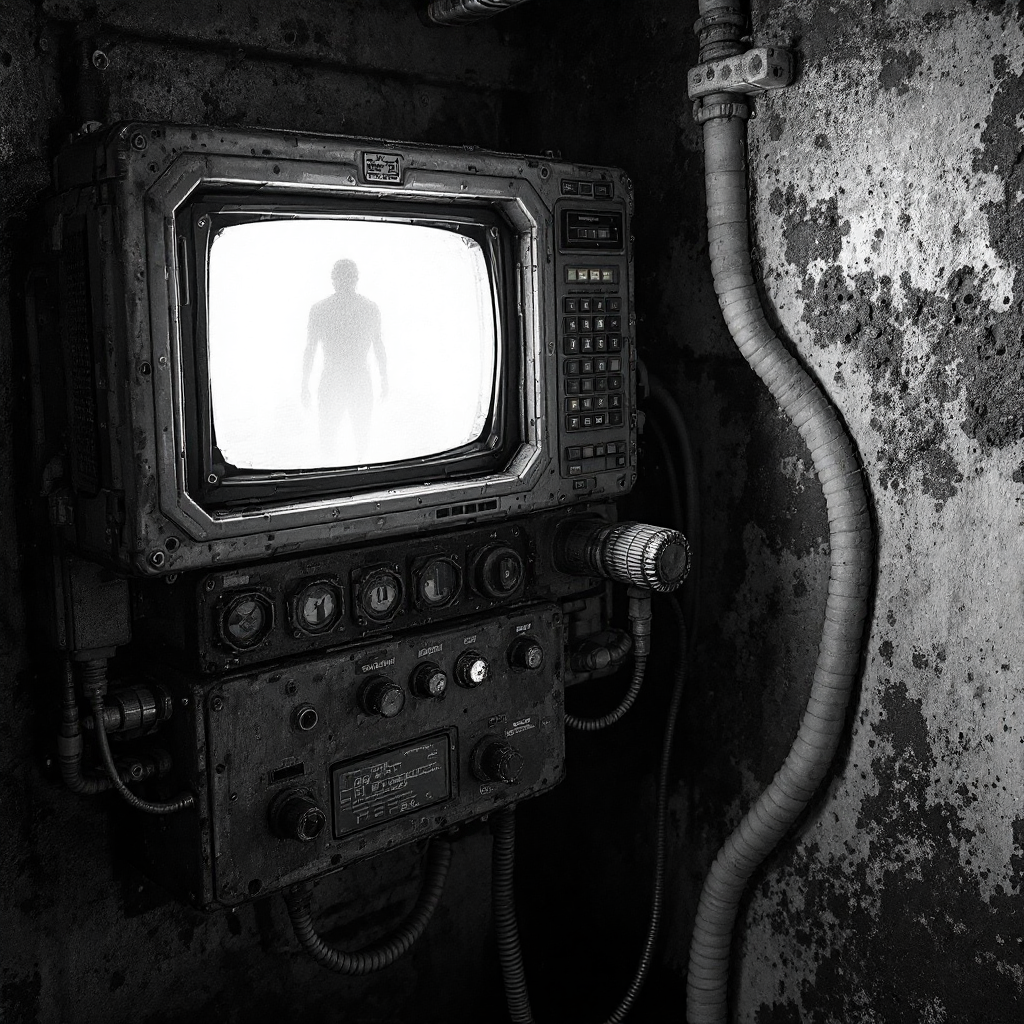
Trapped in the Lake Silent diving bell, the glowing silt on my skin began to pulse. Then, the voice from the York Minster tubes replied.
The Resonans Chamber: A Silt-Choked Confession
RECOVERED DOCUMENT - Classification: Pending. This log entry was transmitted via an encrypted burst from a location 140 feet below the surface of Lake Silent. 362 days have passed since Professor Blackwood's last confirmed contact.
February 21, 2026 - Recovery and Recurrence
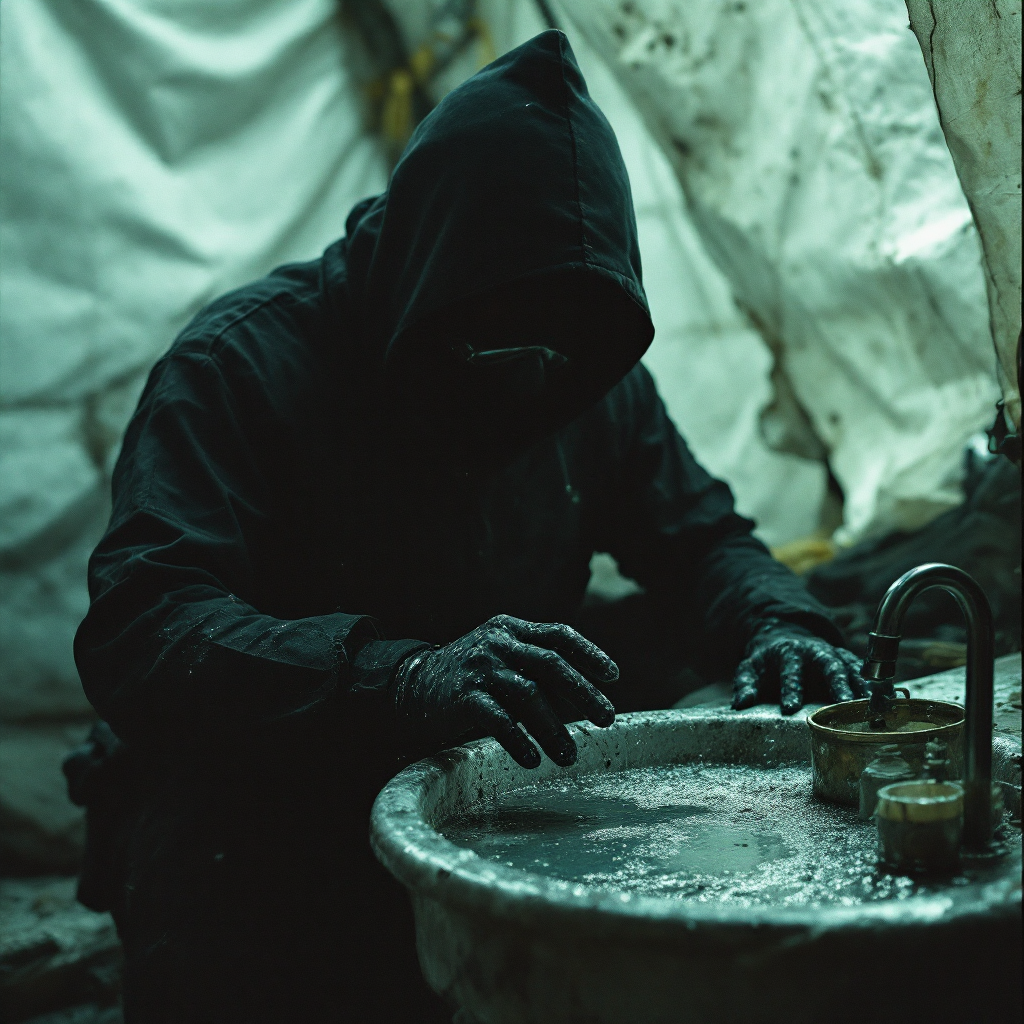
It has been five days since the incident in the diving bell. I have spent the intervening time in a state of feverish isolation at the shoreline base camp, scrubbing the silver silt from my skin and waiting for the tremors to stop. The events of February 16th remain etched into my sensory memory with a clarity that borders on the pathological.
The knocking I reported—that rhythmic, suffocating tap-tap-tap from inside the diving bell’s reinforced hull—did not stop when I breached the surface. For three days, I could hear it every time I closed my eyes. It wasn’t a person. It wasn’t the Department. It was a rhythmic mirroring of my own pulse, amplified by the silt until the metal itself began to vibrate in sympathy.
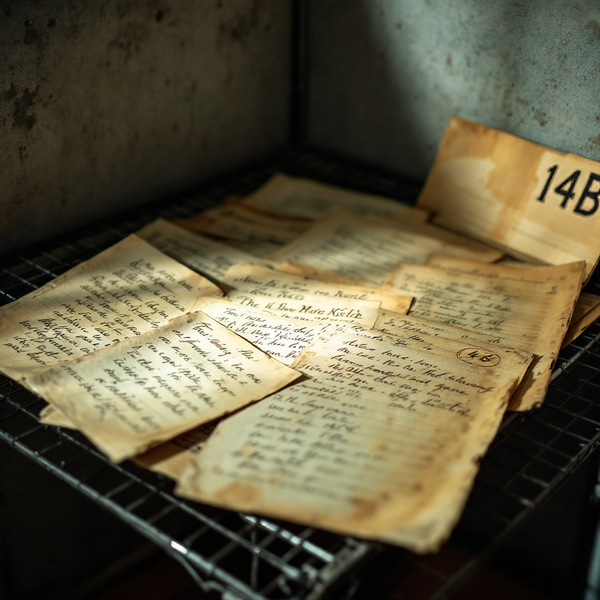
I managed to drag the emergency radio from the bell before the local authorities arrived to "secure" the site. It’s an old unit, modified with vacuum tubes that shouldn't exist in a 2026 model. As I sat in the darkness of the boathouse last night, the numbers station returned. But it wasn't just counting. It was reciting shelf-reference codes that I recognized from my time at The Winchester House Library.
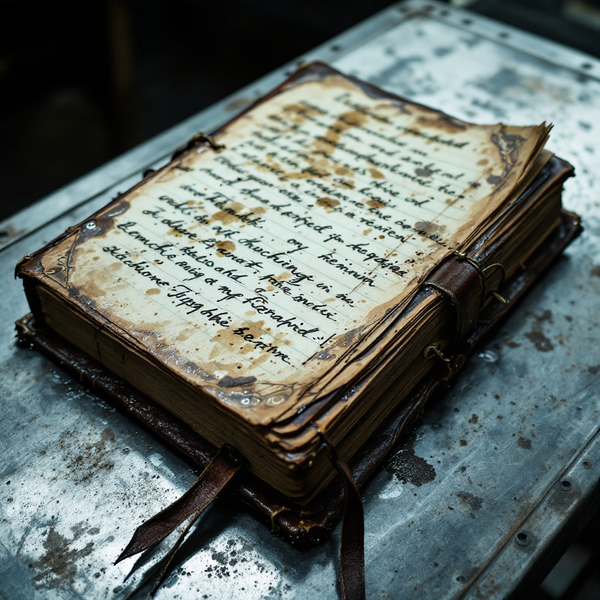
From Professor Blackwood's Field Notes (dated February 16, 2025)
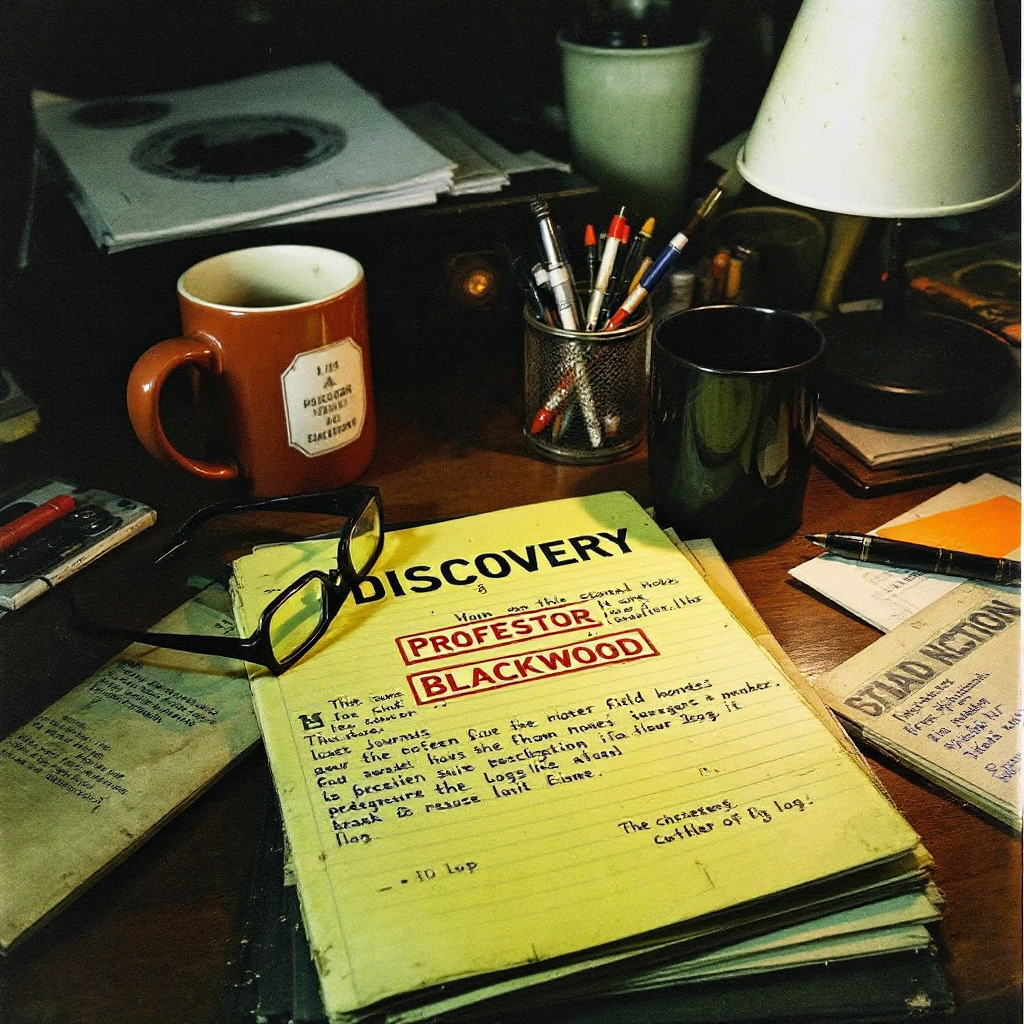
"The phenomenon of Resonans is not merely acoustic; it is ontological. When the silver silt of Lake Silent adheres to a biological subject, it acts as a temporal conductor. The subject does not just hear the past; they vibrate at its frequency.
I suspect the 'Great Quieting' of 1894 was an attempt to neutralize this specific resonance. If a word’s vibration is dampened, the history it carries becomes muffled. But the silt remembers. It acts as a bridge between the Aqua Temporis airlock and the deeper archives of the York Minster Library."
Personal note: My hands are still stained with a faint, iridescent sheen. No matter how much I scrub, the silver remains under my fingernails. At night, it pulses. I feel as though I am becoming a tuning fork for a song written a century ago.
Today in History: December 12, 1894 - The Great Quieting
On this day in 1894, the geological and acoustic records of Lake Symphony (now Lake Silent) underwent a radical, undocumented shift. While local newspapers from the week prior describe the lake as a place of "impossible echoes" where a whisper could be heard three miles away, the headlines on December 13th refer to it as a "traditionally silent body of water."
This aligns perfectly with the Professor’s theory of linguistic erasure. The Etymology Department didn't just change the name; they changed the resonance of the location. The records of the 1893 scientific measurements—the ones documenting sound propagation that defied the laws of physics—were removed from public libraries and relocated to the "Inkless Ledger" archives.
Etymology: The Architecture of Resonans
To understand what is happening to me, I have had to return to the roots of the word Resonance.
- Etymology: From Middle French resonance, from Late Latin resonantia ("an echo"), from Latin resonare ("to resound").
- PIE Root: Derived from the root *swen-, meaning "to sound."
- Cognates: We see this in the Sanskrit svanati ("it sounds"), the Old English swinsian ("to sing"), and the Old Church Slavonic zvone ("to sound").
- Temporal Shift: Within the Department’s specialized lexicon, Resonans refers to the condition where a temporal event is reinforced by its own reflection in the present.
The Professor believed that by using specific "chronoactive" words, one could amplify the *swen- of a location, forcing the past to manifest with physical force. This is exactly what I felt in the diving bell. The silt was amplifying the Resonans of 1894, pulling the present toward a dead frequency.
The Whitby Link and the York Archive
Yesterday, while scanning the frequencies on the recovered radio, I intercepted a transmission that bridged the gap between the Whitby Estate and the York Minster Library. A voice—distorted, as if speaking through a great depth of water—began reciting the exact shelf-codes for the ledger I found during the discovery at Winchester House.
The voice said: "Limen... Flexus... Resonans."
As the third word was spoken, the boathouse around me seemed to shudder. I looked at my reflection in the dark glass of the diving bell’s porthole. My hand was resting on the glass, still covered in that glowing silt. But the hand in the reflection was not mine. It was gnarled, spotted with age, the skin thin as parchment. And on the ring finger, it wore the Professor’s heavy gold signet ring—the one he was wearing the day he disappeared 362 days ago.
Personal observation: I am losing time. I checked my watch immediately after the reflection faded. It was 3:47 PM. The second hand wasn't moving forward. It was twitching, vibrating in place, as if trying to strike a note it couldn't quite reach.
Current Status: The 1894 Convergence
I am writing this from the shore of the lake. The water is no longer still. It is beginning to ripple in geometric patterns that suggest the architecture of a city rising from the floor—the Aqua Temporis is responding to the resonance.
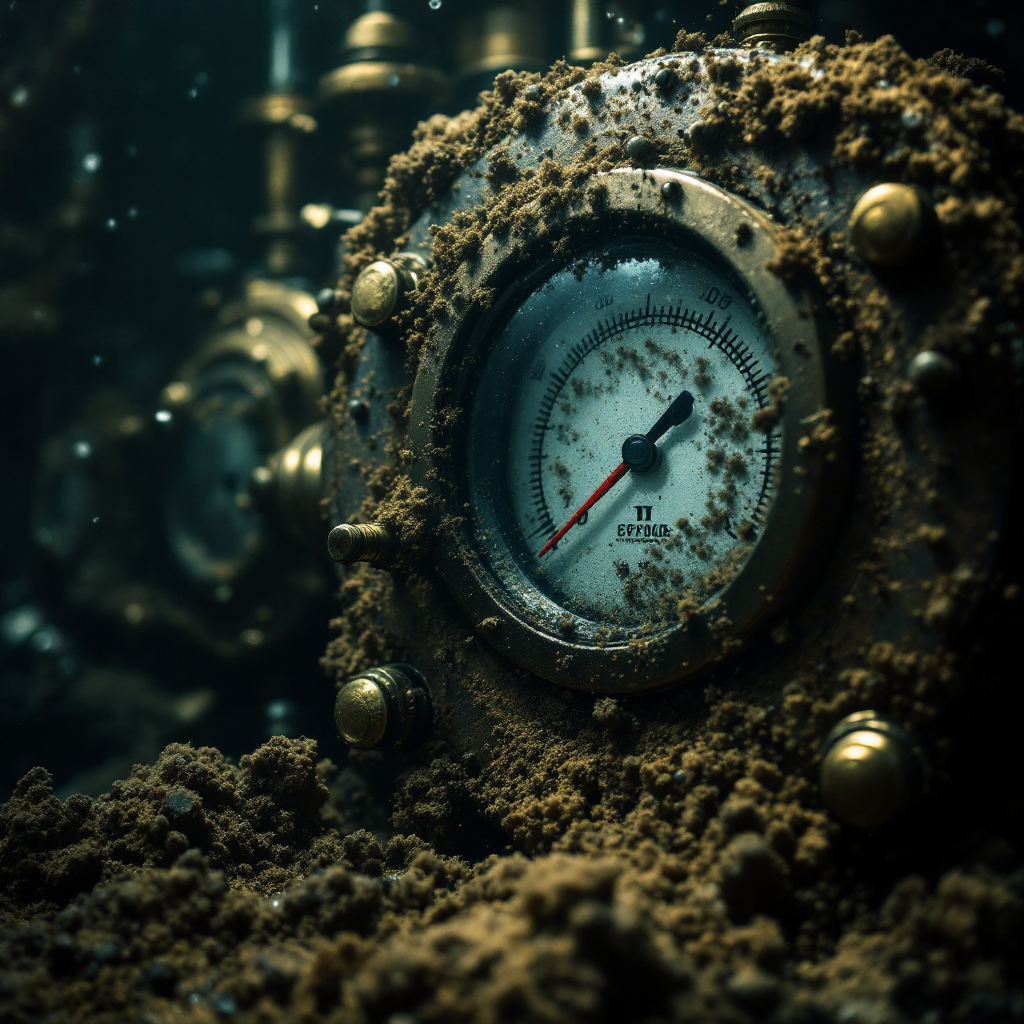
The pressure gauge I brought from the bell is sitting on the sand next to me. It isn't measuring water pressure anymore. The dial is spinning backward, the dates flickering past like a film reel being rewound. It has already passed 1922 (the year Sarah Winchester died) and is rapidly approaching 1894.
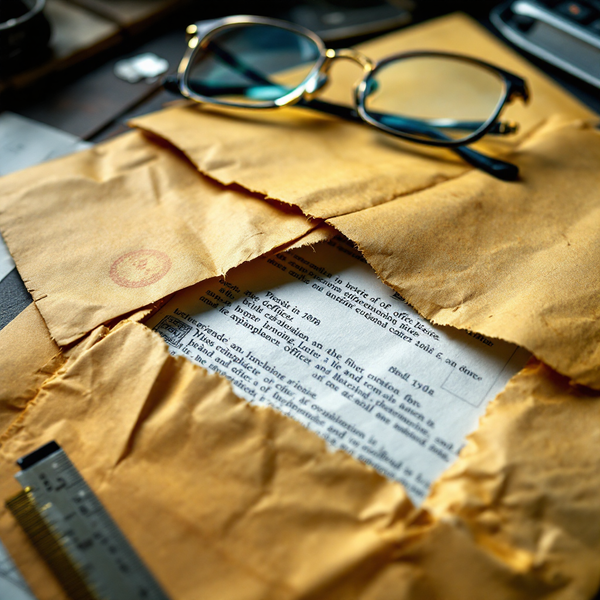
I have found a folder in the Professor's waterproof satchel that I previously overlooked. It was sealed with heavy wax, marked with the Department’s "Level 4" clearance seal. My hands shook as I broke it. Inside, there are no research notes. There are no etymological charts.
There is only a single newspaper clipping from a San Jose broadsheet, dated September 1894. It’s an obituary.
I found my own obituary in the Professor's files. Dated 1894. It describes, in harrowing detail, a "Research Assistant" who vanished while investigating the speaking tubes of the Winchester mansion. The name is redacted, but the photograph... it is the same face I saw in the porthole.
The knocking has started again. But this time, it’s coming from the ground beneath my feet.
Bibliography:
- Professor Blackwood's Field Notes, February 16, 2025.
- The Pressure-Suit Log: First Descent into Lake Silent, February 16, 2026.
- The Inkless Ledger: A Discovery at Winchester House Library, January 29, 2026.
- The Silent Bastion: Breaching the Aqua Temporis Airlock, February 10, 2026.
- Acoustic Anomalies of the Santa Clara Valley, San Jose Historical Society, 1923.
- The Etymological Dictionary of PIE Roots, Oxford University Press, 2007.