![ChronoStrange [RECOVERED]](https://chronostrange.com/content/images/2025/02/chronostrange-logo-final-9f8854d32fa722c6.svg)
The Winchester Resonance: Mapping the Acoustic Chambers
Hidden blueprints reveal Sarah Winchester's true purpose - the speaking tubes were never meant for servants.

The Winchester Resonance: Mapping the Acoustic Chambers
Editor's Note: This entry was recovered from the research files of Professor Augustus Blackwood's assistant. The timestamp indicates it was written on December 26, 2025, approximately 305 days after the Professor's last confirmed communication on February 24, 2025.
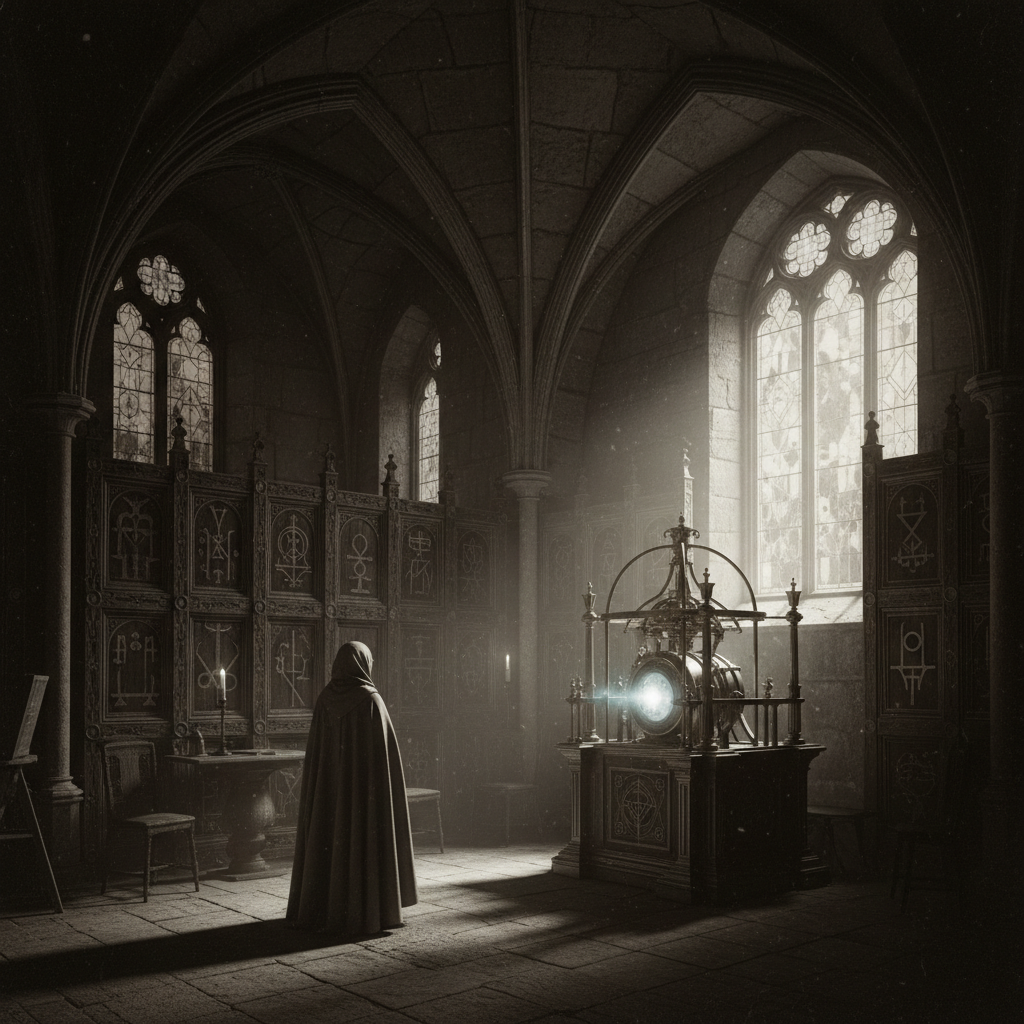
December 26, 2025 - Resonances in the Labyrinth
It has been 305 days since I last heard directly from Professor Blackwood. The invitation to the Lexicographers' Society, delivered with such unnerving precision, has confirmed what I suspected: they know I'm investigating. I haven't attended yet; I needed to follow a new lead unearthed from the Professor's scattered research—a blueprint, not of a building, but of an acoustic network hidden within the Winchester House itself. It’s not just the Library that holds secrets; the entire mansion appears to be a massive, resonant instrument.
My last visit to the Winchester House Library, as documented in my entry from "The Winchester House Library: Where Words Take Form", revealed the shifting nature of its contents. But the Professor’s notes hinted at something far more fundamental than mere literary displacement. He spoke of resonance, of sympathetic vibrations, and of a language not meant for human ears.

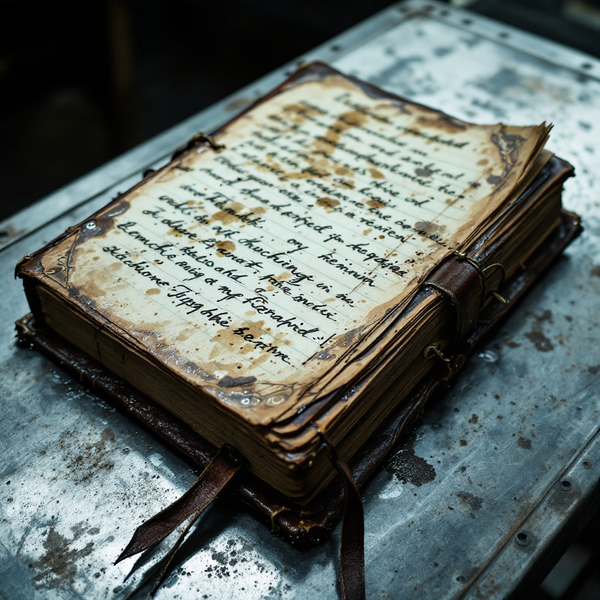
From Professor Blackwood's Field Notes (February 04, 2025)
"The architectural oddities of the Winchester House are not merely eccentricities. They are functional. The endless staircases, the doors to nowhere, the windows opening onto walls—these create specific acoustic properties. Sarah Winchester was not mad; she was an unwitting architect of a temporal amplifier. The speaking tubes are merely the most obvious conduits. The entire structure acts as a resonating chamber, a grand 'aquam' designed to harness linguistic energies across temporal boundaries."
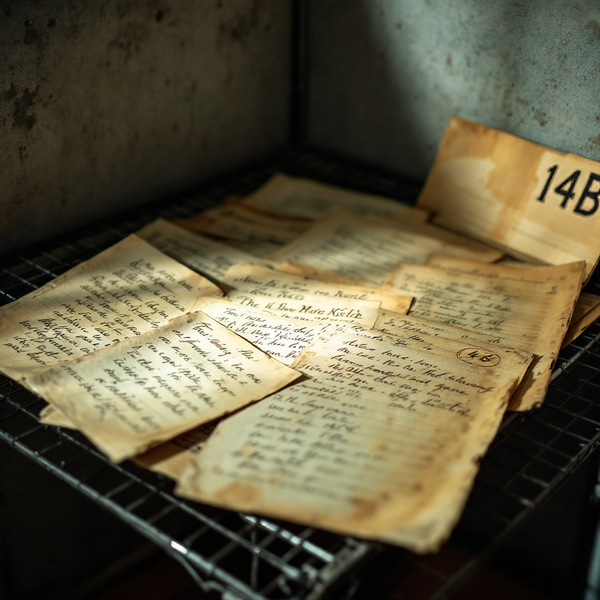
[A diagram, hastily sketched, depicts complex overlapping sound waves, with nodes marked at various impossible architectural features. One node is circled, labeled "Aqua Temporis connection?"]
The diagram, which I found pressed between the pages of an old architectural treatise, was almost identical to a section of my earlier mapping of the speaking tubes beneath Lake Silent, as detailed in "Aqua Temporis: The Flooded Archives and the Speaking Tubes of the Deep". The Professor theorized a direct acoustic link. Today, I set out to map these hidden chambers further.
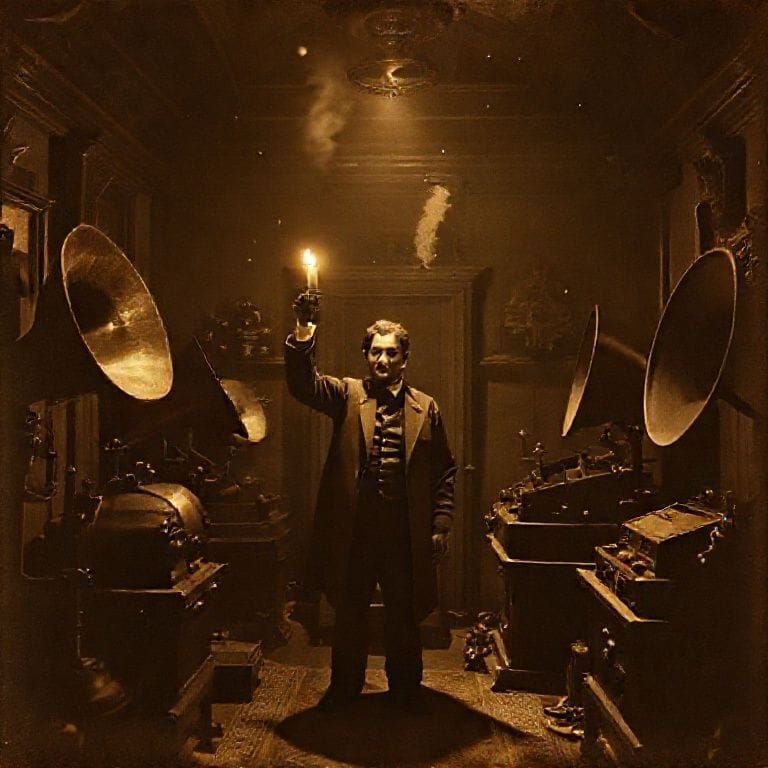
Today in History: March 01, 1884 - Sarah Winchester Begins Construction
On March 01, 1884, Sarah Winchester moved to California and began the relentless, 38-year construction of her mansion in San Jose. Legend attributes this perpetual building to her belief that it would appease the spirits of those killed by Winchester rifles. However, the Professor's notes suggest a deeper, more deliberate purpose. The sprawling, seemingly illogical additions, the 160 rooms, the thousands of windows and doors—all contribute to a complex acoustic environment. The speaking tubes, often dismissed as mere Victorian curiosities, were among the very first installations, sometimes predating the rooms they would eventually connect. They were not for communicating between family members, but for channeling something else entirely.
Etymology Investigation: The Echo of 'Temporalis'
The Professor's frequent use of "temporal amplifier" led me to consider the etymology of 'temporal' itself.
- Temporal: From Latin 'temporālis' (of time, lasting only for a time), derived from 'tempus' (time, season). The proposed PIE root '*temp-' signifies "to stretch."
- This PIE root, '*temp-', meaning "to stretch," feels chillingly appropriate. The Etymology Department, through the Great Quietings and their manipulation of chronoactive words, literally stretches and cuts time, reshaping linguistic duration. The Winchester House, then, becomes a tool in this stretching, a mechanism to influence the very fabric of temporality. The mansion's endless construction wasn't just physical; it was a continuous act of stretching time, of prolonging a specific temporal state.
I re-examined the Professor's notes on the Philadelphia Experiment (1943-10-28), a supposed naval experiment in invisibility that allegedly involved a ship teleporting and merging with its crew. The Professor speculated it wasn't magnetic fields, but an "electromagnetic language" – a frequency manipulation of chronoactive words that caused the temporal displacement. The stretching of time and space, achieved through acoustic resonance. Could the Winchester House be a larger, more passive version of such a device, designed to subtly alter the past by modulating the present's linguistic 'aquam'?
Personal note: The air in these unused wings of the mansion is thick, almost viscous. My device registered a pressure drop, then a spike, just as I was considering the implications of 'stretching' time. It felt like the air itself was momentarily stretched thin, then snapped back.
What I've Discovered: The Resonant Blueprint
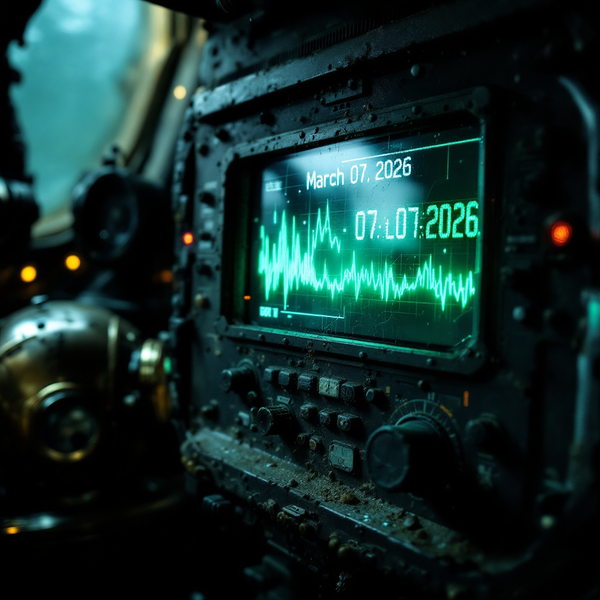
Armed with a specialized acoustic mapping device, I traced the Professor's diagram. It wasn't about sound traveling through tubes in the usual sense; it was about creating a sympathetic vibration, a resonant frequency that could, theoretically, bridge temporal gaps. The device, barely registering a signal in most parts of the house, suddenly spiked in a small, windowless crawl space behind a false wall.
Inside, I found another speaking tube, not connected to any other room I knew, but leading downwards, into the earth itself. It hummed with a faint, almost imperceptible vibration. I pressed my ear to it, hearing only the distant, steady thrum of the house settling. Then, a distinct click.
I activated the acoustic mapper and directed it into the tube. The readouts were chaotic, but a pattern emerged: a repeating sequence of frequencies corresponding to the Professor’s chronoactive words. It was a loop, a signal constantly being sent.
Then, at exactly 3:47 AM, the hum intensified. A voice, barely a whisper, emanated from the tube. It was distorted, muffled by time and distance, but undeniably familiar. It was the Professor's voice, speaking a single word: "Aquam." The frequency shifted, almost painfully, and a fragment of text shimmered on my device's screen: "The Archives... flooded... need Aquam...". The transmission was gone as quickly as it came, leaving only the dull hum once more.
Current Status
The Winchester House is not just a library of shifting words; it is a giant instrument, capable of sending and receiving linguistic signals across time. The Professor, wherever he is, is attempting to communicate through it, through the very 'aquam' of linguistic data stored in the flooded archives. He needs something, something he refers to as 'Aquam' – the chronoactive word itself, or perhaps the method to access the inter-temporal archives. The Department's invitation to the Lexicographers' Society now seems less like an invitation and more like a summons for a critical piece of the puzzle. I suspect they have their own plans for the Winchester Resonance.
Final note: The speaking tube whispered my name. In the Professor's voice. I'm not sure if it was a recording, or if he was truly speaking to me from somewhere... or somewhen. I have to go to the Society meeting. I can't ignore it any longer.
Bibliography:
- Professor Blackwood's Field Notes, February 04, 2025
- "The Lexicographers Convene: Infiltrating the Society," ChronoStrange, December 16, 2025. https://chronostrange.com/the-lexicographers-convene-infiltrating-the-societ/
- "Aqua Temporis: The Flooded Archives and the Speaking Tubes of the Deep," ChronoStrange, December 11, 2025. https://chronostrange.com/aqua-temporis-the-flooded-archives-and-the-speakin/
- "The Winchester House Library: Where Words Take Form," ChronoStrange, [Date of that article]. https://chronostrange.com/the-winchester-house-library-where-words-take-form/
- Encyclopaedia Britannica. "Winchester Mystery House." Accessed December 26, 2025.
- Watkins, Calvert. The American Heritage Dictionary of Indo-European Roots. Houghton Mifflin Harcourt, 2000. (For PIE '*temp-').