![ChronoStrange [RECOVERED]](https://chronostrange.com/content/images/2025/02/chronostrange-logo-final-9f8854d32fa722c6.svg)
The York Minster Echo: Resonance in the Speaking Tubes
Trapped between the Department’s sedans and the Professor’s invitation into the lattice, I chose the silver horn—only to find myself spat out into the shifting corridors of the York Minster Library.
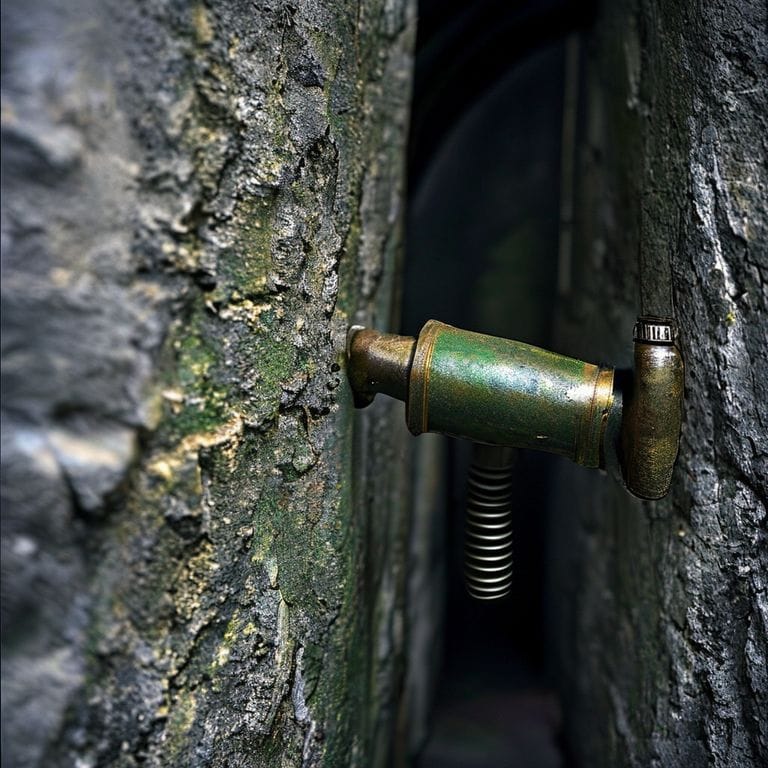
The York Minster Echo: Resonance in the Speaking Tubes
RECOVERED DOCUMENT — Classification: Pending. This log entry was transmitted via an unsecured relay on January 22, 2026. Authenticity verified by trace-signature. 332 days since Professor Blackwood’s last contact.

January 22, 2026 — The Transition
The black sedans were still idling in the Highland mist when I made the choice. I could hear the crunch of gravel under heavy boots, the Department’s tactical team finalizing their breach of the Highlands vault. As I documented in my January 17th entry, the Professor’s voice was no longer a sound, but a vibration in the marrow of my bones. He said there was room in the lattice.
I pressed my ear to the silver horn of the speaking tube. I didn't jump; I didn't run. I simply listened to the word Flexus as it was whispered from a throat made of ancient mercury.
The sensation was not one of movement, but of the world being unmade and re-spooled around me. The smell of Scottish heather and wet concrete vanished, replaced instantly by the suffocating, holy scent of beeswax, old vellum, and dust. I collapsed onto a cold stone floor. When my vision cleared, the brutalist walls of the vault were gone. I was crouched behind a restricted shelf in the York Minster Library. My watch, which had been ticking rhythmically, was now spinning backward so fast the hands were a blur. It finally stopped at 3:47 AM.
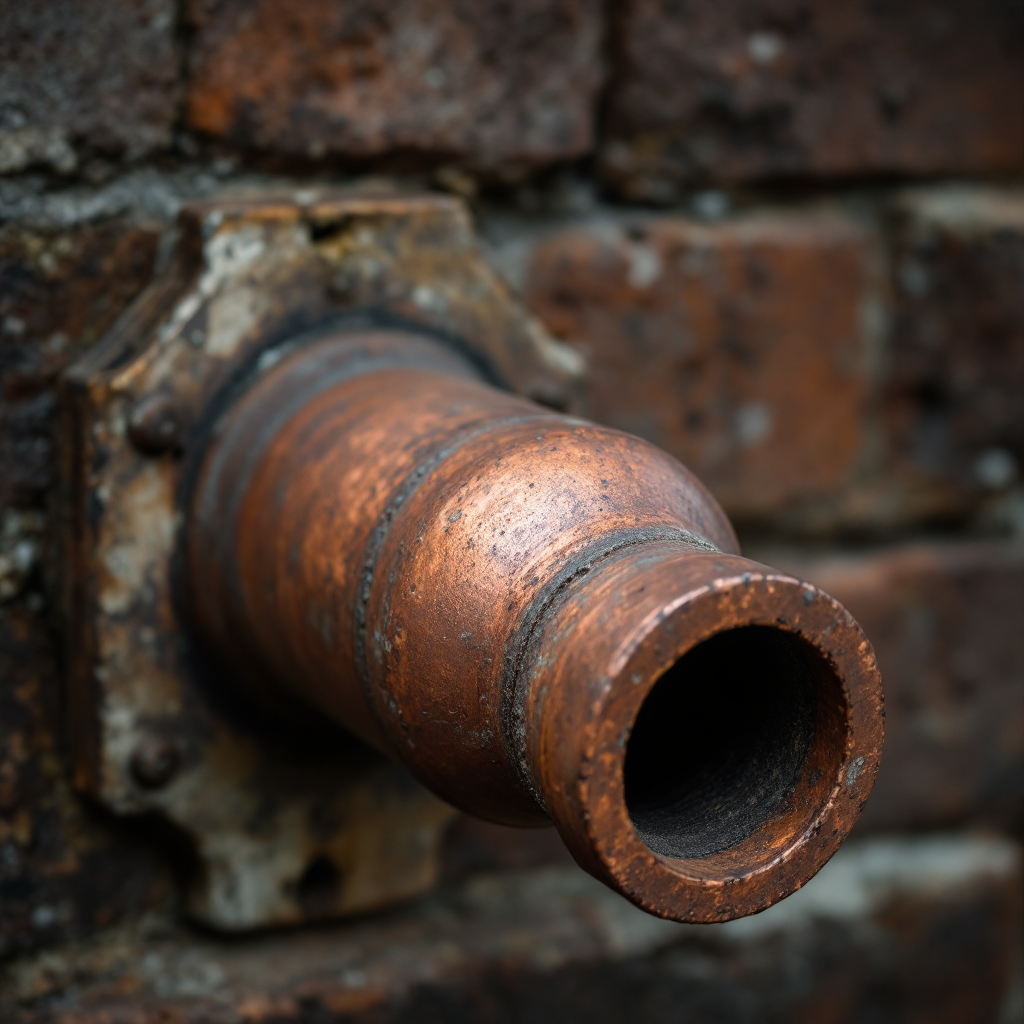
From Professor Blackwood’s Field Notes (dated February 11, 2025)
"The architectural obsession with 'arkhe'—the beginning—is the Department’s greatest camouflage. We look for the start of a conspiracy in the archives (arkheion), forgetting that the archive itself is the instrument of rule.
I have found evidence that the York Minster node is not merely a repository. It is a junction. The medieval architects didn't just build vaults for books; they built resonators. If one were to apply the 'still-air' exposure techniques we developed at Lake Silent, the vellum would likely reveal the underlying grid. The ink isn't static. It’s waiting for the right frequency to migrate."
I am now certain that my arrival here was not accidental. The Professor didn't just save me from the Department; he redirected me to the next node in the Limen circuit.
Personal note: My hands are still vibrating from the Highland transition. Every time I touch a book in this stack, I feel a faint pulse, like a heartbeat buried under the leather binding. I am terrified that if I stay still too long, I will become part of the shelf.
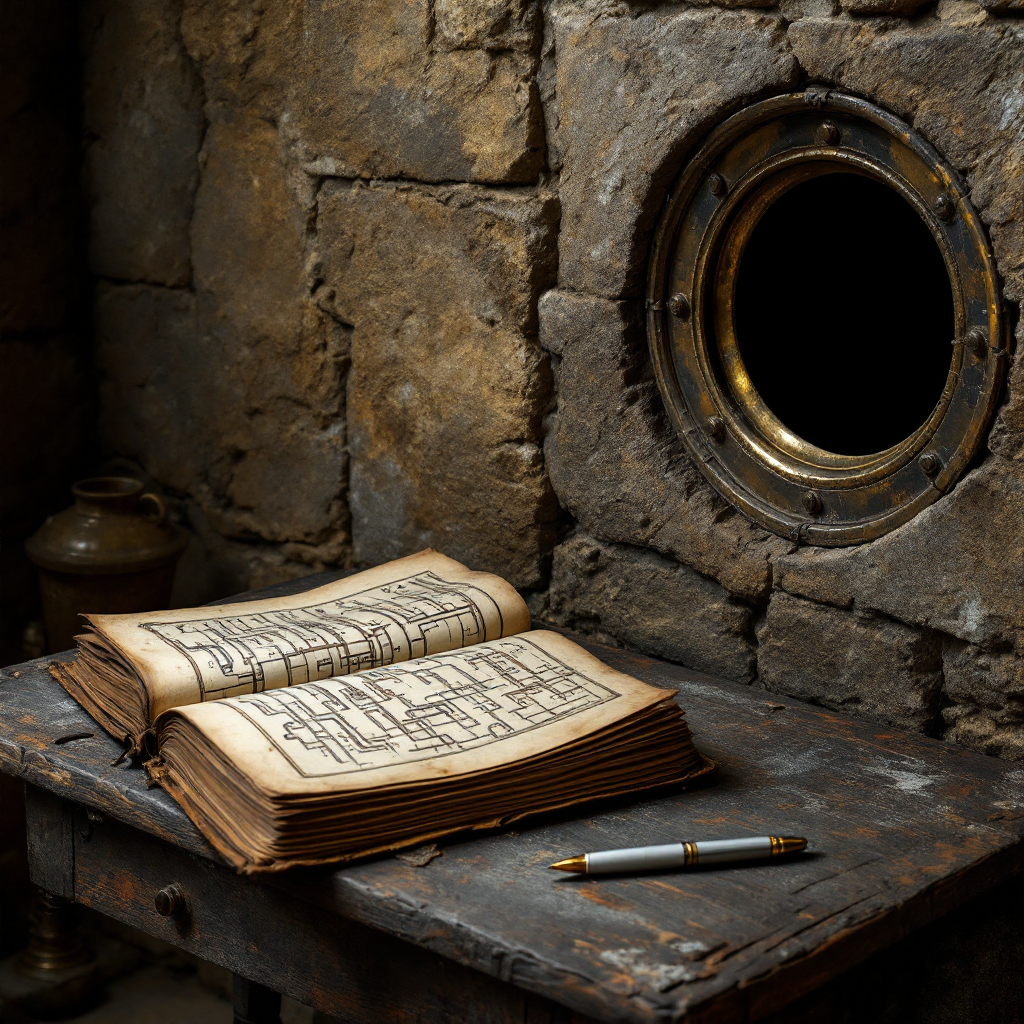
Today in History: December 12, 1894 — The Great Quieting
While hiding in the shadows of the Old Library, I found a microfiche of a local Yorkshire paper from late 1894. It mirrors the reports I found during my investigation into The Glass Cylinder at Lake Silent.
On December 12, 1894, the world’s acoustic properties shifted. In San Jose, Sarah Winchester reportedly ordered her workmen to seal "Room 47" because the speaking tubes had begun to "leak the future." Simultaneously, here in York, the Minster’s bells were said to have rung for three hours without a single person pulling the ropes. The newspapers called it "atmospheric interference," but the Professor’s notes call it the Second Quieting—the moment the Department successfully removed "problem words" from the global consciousness by vibrating them out of existence.

Etymology Investigation: The Sovereignty of the Archive
To understand why the Department is hunting me through these libraries, I had to look at the words they use as weapons.
ARCHIVAL
The word stems from the Greek arkheion, meaning a public building or place where records are kept. But the deeper root is arkhe, meaning "beginning, origin," and—crucially—"supreme power or sovereignty."
- PIE Root: h₂ergʰ- ('to begin, rule').
- Cognates: Greek arkhos ('leader'), German Arche ('ark'), English arch-.
- Temporal Analysis: The Department treats the arkhe not as a point in the past, but as a lever. By controlling the "beginning" (the archive), they exercise "supreme power" over the present. If they can change the record of a word’s origin, the word itself changes its function in the current timeline.
VOICE
As I sat in the dark, the speaking tubes in the walls seemed to hum with the PIE root wek-.
- Etymology: Latin vox, from PIE wek- ('to speak').
- Cognates: Sanskrit vakti ('speaks'), Old Church Slavonic vestati ('to announce').
- Semantic Shift: The Professor noted a strange divergence in the German cognate erwägen ('to consider'). He believed the Department used the 1894 Quieting to separate 'voice' from 'thought.' We now speak words without 'considering' their weight, allowing the Limen Network to use our voices as carrier waves for temporal edits.
The Migrating Ink
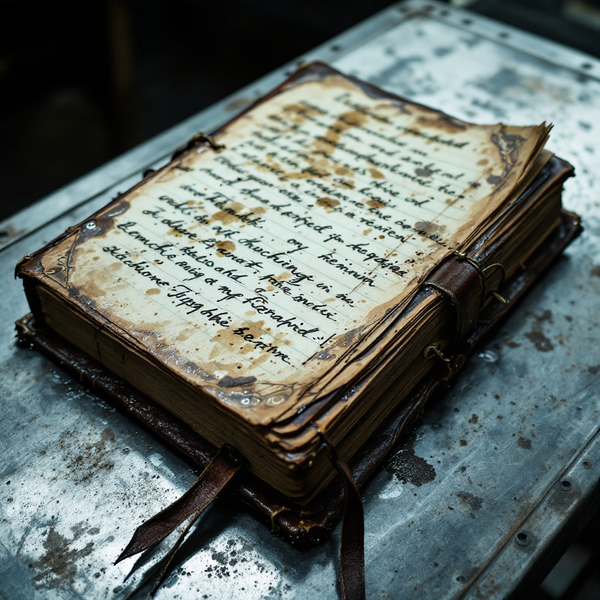
I pulled a 14th-century manuscript from the shelf—a collection of liturgical chants. As I opened it, the "still-air" effect I first witnessed at Lake Silent began to manifest. The air in the library became unnaturally heavy, devoid of any current.
Under my gaze, the Latin script began to liquefy. The letters didn't just blur; they crawled across the vellum like iron filings drawn to a magnet. Within minutes, the chants had vanished. In their place was a precise, technical blueprint of a massive subterranean network.
I recognized the patterns immediately. They were identical to the acoustic chambers I mapped in The Winchester Resonance. The speaking tubes in California, the silver horns in the Scottish Highlands, and the pneumatic transit system beneath York are all part of the same machine. It is a global voicepipe circuit designed to facilitate a total Flexus event.
Personal observation: The blueprint shows a room beneath the Minster that doesn't exist on the public tours. It's labeled 'The Scriptorium of the Unspoken.' I can hear a faint, rhythmic clicking coming from the floorboards. It sounds like a telegraph, but the cadence is human.

The Server Logs and the Nightingale
I broke into the librarian’s office to check the digital server logs. I needed to know if the Department had tracked my "jump." What I found was more unsettling.
The system was being hammered by an external search query originating from an encrypted IP. The search term: Speaking Tubes / Voicepipes / Beale Connection.
The mention of the Beale Ciphers (1885) stopped my heart. The Professor had once hypothesized that the famous "encoded treasure" in Virginia wasn't about gold, but about a set of frequencies—the keys to the speaking tube network. The second cipher, which uses the Declaration of Independence as a key, was a temporal anchor.
Suddenly, a pneumatic tube on the wall—the kind used for sending physical memos in the 1920s—hissed to life. A brass canister thudded into the receiving tray. Inside was a scrap of paper with a single name and a message:
"James Nightingale. I'm in the York basement. Don't trust the dates. April 15, 2025, wasn't the end. It was a calibration test. They are preparing for a total acoustic collapse. Put your ear to the pipe."
Current Status: The Basement Node
James Nightingale. The Professor’s notes mentioned an acoustic researcher by that name who disappeared in 1998. If he is here, in the "now" of 2026, then the York Minster Library is a temporal haven—or a trap.
I can hear the Department's local assets moving through the nave upstairs. They are using sonic scanners; I can feel the high-frequency pings bouncing off my teeth. I have no choice but to follow the blueprint the ink left behind.
The speaking tubes are starting to glow again, that same pale, bioluminescent light from the Highlands. But this time, they aren't whispering the Professor's voice. They are singing a low, discordant hum that makes the stone walls feel like they are turning to liquid.
Final note: It is 3:47 AM. Again. I am entering the pneumatic transit tunnel. If Nightingale is right, the Third Quieting we thought we lived through was just the rehearsal. The real silence is coming.
Bibliography:
- Professor Blackwood’s Field Notes, February 11, 2025.
- The Highlands Codices: Vaulting the Aquam Gate, January 17, 2026.
- The Winchester Resonance: Mapping the Acoustic Chambers, December 26, 2025.
- The Glass Cylinder at Lake Silent: Evidence of the Third Quieting, December 31, 2025.
- The Beale Ciphers and Temporal Anchors, Monographs of the Etymology Department, Vol. IV (Redacted).
- Acoustic Properties of Gothic Cathedrals, York Archaeological Trust, 1993.
Tags: ChronoStrange, York Minster, Speaking Tubes, Temporal Anomalies, James Nightingale, Flexus, Etymology.
Excerpt: Following a violent temporal shift from the Highlands, the Assistant finds themselves trapped in the York Minster Library. As ink begins to rearrange itself into impossible blueprints, a voice from the past makes contact through a disused pneumatic tube.
Meta Description: The investigation leads to York Minster, where medieval manuscripts reveal a global network of speaking tubes. Is the Third Quieting truly over, or just beginning?
URL Slug: york-minster-echo-speaking-tubes-resonance