![ChronoStrange [RECOVERED]](https://chronostrange.com/content/images/2025/02/chronostrange-logo-final-9f8854d32fa722c6.svg)
The York Minster Marginalia: A Flexus in the Ink
Escaping Lake Silent, I found my name erased from the Ledger. Now, at York Minster, the medieval manuscripts are rewriting themselves in real-time.
The York Minster Marginalia: A Flexus in the Ink
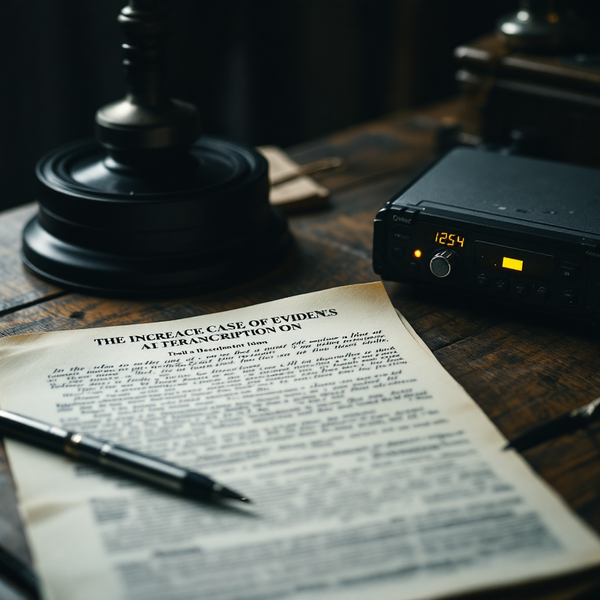
Archive Reference #8812: Recovered from a localized encrypted buffer in the York Minster Library's private network. This log entry was recorded 388 days after Professor Blackwood’s disappearance. Authenticity of the digital signature verified.

March 19, 2026 – The North Corridor
It has been seven days since I fled the pier at Lake Silent. Seven days of existing in the periphery, moving through the shadowed veins of the rail network toward the only sanctuary the Professor’s notes still validated: the York Minster Library. My departure from the lake was not a clean one. As I documented in The Drowned Ledger of Lake Silent, the water itself seemed to be reclaiming the etymology of my identity.
The journey north was plagued by a phenomenon the Professor called Flexus. It is a localized temporal drag, a sensation that the world is moving at a different frame rate than your own pulse. In the reflection of the train window, I looked like a blurred photograph—my edges softening, my features struggling to maintain a constant state of "now." I am haunted by the ledger’s final warning: that I am becoming a word being removed from the dictionary.
I reached York under the cover of a falsified researcher credential—"Dr. Aris Thorne"—a name that, for now, the Department’s Observers haven't yet flag-synced. My hands were shaking as I keyed into the private archives. I am looking for the Codex Temporis, a volume the Professor mentioned in his final weeks.
From Professor Blackwood’s Field Notes (dated February 09, 2025)
"The Department believes they can curate history by burning the books. They are fools. History isn't in the paper; it’s in the resonance of the ink. In York, there exists a ledger—a 'Flexus' point—where the ink never truly dries.
If you find it, do not trust the Latin. Look for the 'shorthand' in the margins. It is the only place where the Great Quietings haven't reached. But be warned: touching the seal will synchronize your timeline with the archive. You may find yourself written into a century you don't belong to."
Personal note: The air in this library is too heavy. It smells of ozone and wet earth, the same scent that preceded the discovery of The Resonans Chamber. My watch has been stuck at 3:46 for the last hour. I can feel the pressure building in my inner ear.

Today in History: March 1st, 1884 – The Winchester Foundation
While my current focus is the medieval heart of York, the temporal echoes of the Winchester House remain inescapable. It was on this day in 1884 that Sarah Winchester began her 38-year marathon of construction in San Jose. Most historians focus on the "ghosts" she intended to confuse, but the Professor’s research into The 1894 Obituary and the Winchester Speaking Tubes suggests a far more practical purpose.
The speaking tubes were not for spirits. They were acoustic conduits designed to capture the "resonance" of shifting timelines. Sarah wasn't building a house; she was building a terrestrial antenna. The York Minster archives contain several letters from Winchester’s primary architect, hidden under a classified linguistic cipher, discussing the "importation of York stone for its unique harmonic properties."
The Anomaly: 3:47 PM
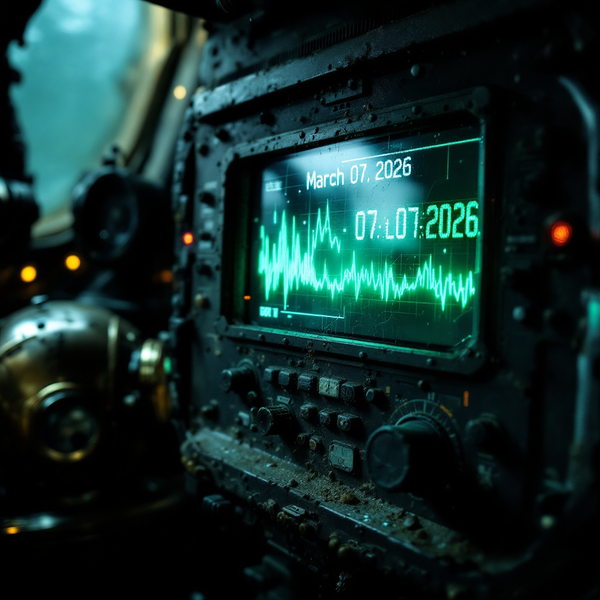
The silence of the library broke at exactly 3:47 PM. It wasn't a sound, but a vibration—a low-frequency hum that vibrated the very marrow of my teeth. I had found it: the Codex Temporis.
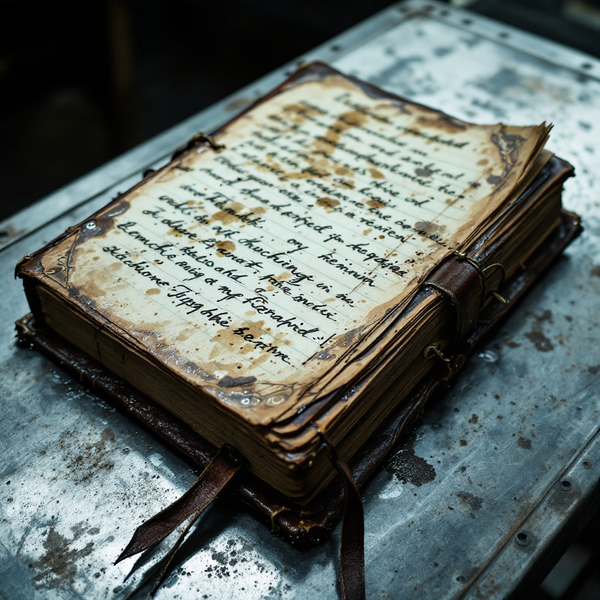
As I laid the manuscript open on the reading desk, I realized the Professor was right. The medieval Latin on the page was shimmering, the letters vibrating with an unstable energy. I reached out to touch a passage from the 14th century, but my fingers retracted in shock.
The ink was wet.
Not just wet—it was moving. Before my eyes, the carefully scribed Gothic script began to dissolve, the black pigment swirling across the vellum like oil on water. New shapes began to form. It wasn't Latin anymore. It was modern English shorthand.
I leaned in, my breath hitching. The text was a blow-by-blow log of my own actions at Lake Silent seven days ago. It described the coldness of the water, the weight of the ledger, and the exact moment I realized my name was being erased. The manuscript was recording me in real-time, 600 years before I was born.

Etymology Investigation: Secrecy and the Unseen
To understand why the Department is obsessed with York, one must look at the linguistic roots of concealment.
HIDDEN
- Etymology: Past participle of hide (v.). From Old English hydan, from Proto-Germanic *hudjanan.
- PIE Root: *keudh- (to cover, to conceal).
- Cognates: Old Saxon huddian, Old High German hutten, Gothic hudjan.
- Semantic Evolution: Originally meaning to cover or protect, the word evolved to describe the act of withdrawing from notice.
Professor Blackwood theorized that words derived from *keudh- carry a "semantic shield." By labeling something as hidden, the Etymology Department isn't just describing its state—they are actively applying a linguistic veil that prevents the "un-cleared" observer from perceiving it. This is how they managed the Great Quieting of 1894, making Lake Symphony’s disappearance seem like a natural transition into "Lake Silent."
They didn't move the water. They hid the word for the sound.
Server Log Interjection: York Archive Node
I managed to patch my laptop into the library’s internal server for a brief moment. The ChronoStrange site traffic is usually erratic, but the logs show a massive spike in searches for "Time Anomalies/Slips" and "Bébé et fillettes."
The origin? An IP address assigned to the very room I am sitting in. Someone else in the York Minster's private archives is searching for the same anomalies. Or perhaps, in a Flexus event, the person searching is me, three hours from now, or three days ago.
Personal note: I found a reference to a film by Georges Méliès in the server cache—'Bébé et fillettes.' It’s listed in the Department’s acquisition records as 'Secured for Temporal Stability.' Why would a 19th-century documentary be considered a threat to the timeline?
The Flexus Seal
At the center of the Codex Temporis lies a wax seal, dark as dried blood and cold to the touch. It bears the mark of the Flexus—a recursive loop of two serpents consuming each other’s tails, but with a third eye positioned at the point of intersection.
When I placed my hand near it, the seal began to vibrate. It was the exact same frequency I recorded from the speaking tubes in the Winchester House Library. It is a tuning fork for reality.
I realized then that the "Lady Lovibond" mentioned in the ledger wasn't just a ghost ship legend. According to the marginalia appearing on the page, the Lovibond is a "temporal ferry" used by the Department to transport "decommissioned" individuals—those whose names have been successfully removed from the linguistic record.

The Revelation
The ink has finished its transformation. The page is now a dense map of coordinates and names—a manifest.
Near the bottom of the 14th-century vellum, there is a detailed sketch of a 17th-century schooner. The Lady Lovibond. The drawing is impossibly precise, every shroud and mast rendered in ink that still looks like it’s shimmering.
But it’s the text beneath the ship that has paralyzed me. It isn't in the flickering Gothic script or the modern shorthand. It is in my own handwriting. It is my signature, my loops, my specific way of crossing a 't'.
The message reads:
"The Department isn't deleting your name; they are harvesting it for the manifest. You are not being erased. You are being recruited. Don't look at the water. Look at the crew."
I am staring at my own handwriting on 600-year-old paper. I haven't written this yet. Or I wrote it centuries ago. My skin is starting to hum again. The 3:47 PM vibration is intensifying, and the library doors, which I locked from the inside, are beginning to rattle as if someone—or something—is trying to turn the handle from the other side of time.
I have to find the ferry. If they have my name, I have to take it back.
Bibliography:
- Professor Blackwood's Field Notes, February 09, 2025
- The Drowned Ledger of Lake Silent, March 12, 2026
- The 1894 Obituary: Transcription of the Winchester Speaking Tubes, February 24, 2026
- Acoustic Properties of Medieval Vaulting, York Archaeological Society, 1998
- *The PIE Root keudh- and the Evolution of Secrecy, Oxford Linguistics Press, 2012
- The Winchester Inventory: Recovered Documents from the 1922 Estate Sale, San Jose Historical Society.