![ChronoStrange [RECOVERED]](https://chronostrange.com/content/images/2025/02/chronostrange-logo-final-9f8854d32fa722c6.svg)
The York Minster Reading Room: Checking the Records
The Assistant claimed to find a medieval manuscript at York Minster. I went to check. The manuscript exists. The checkout card doesn't.
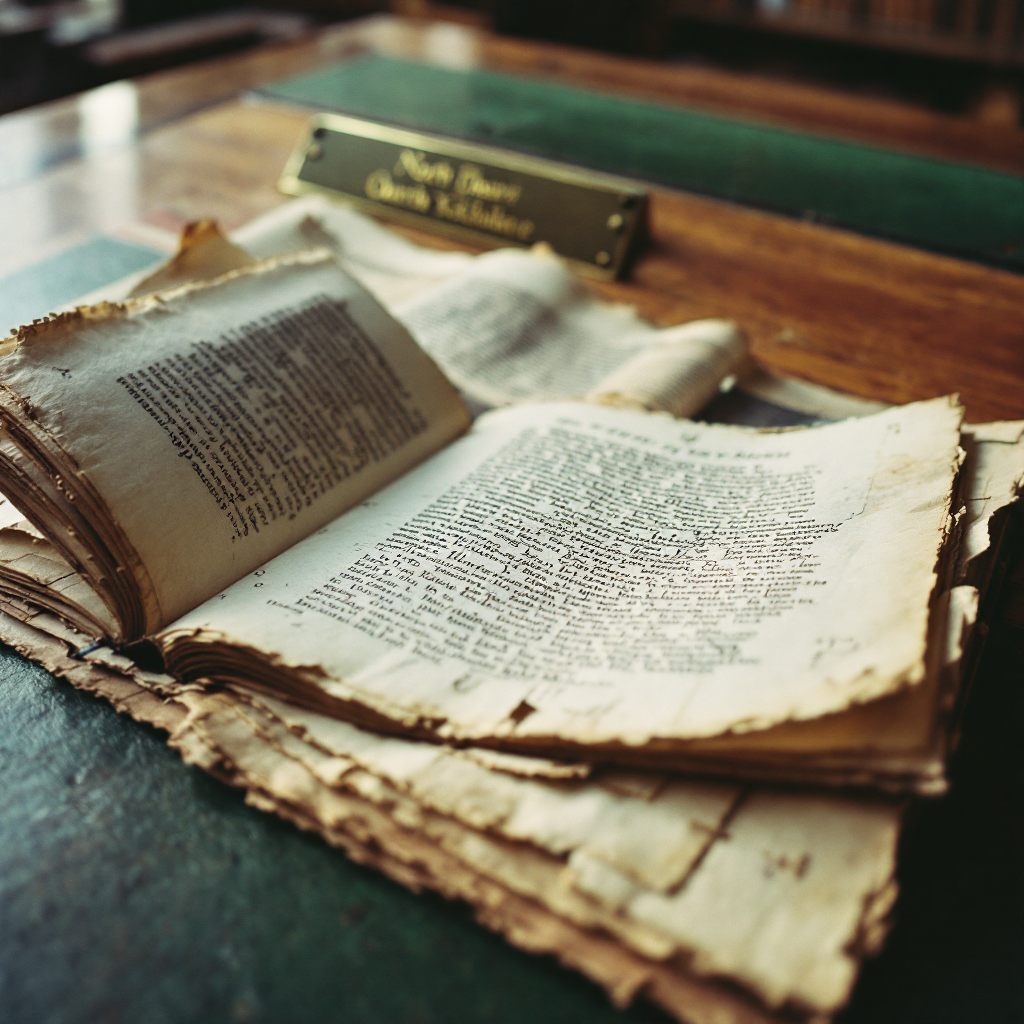
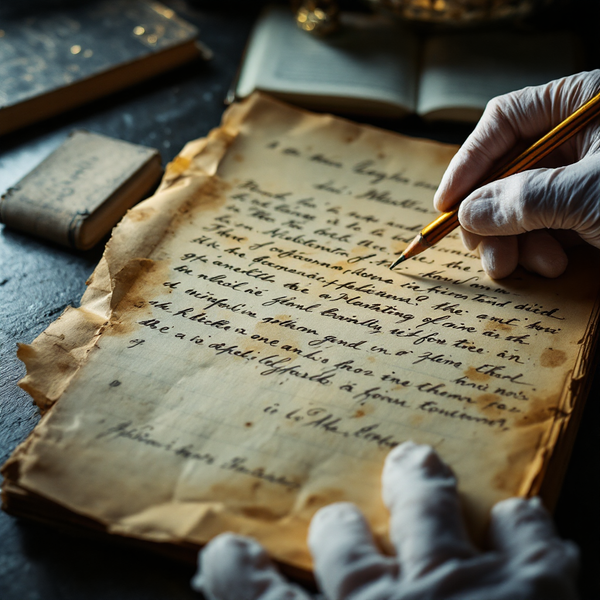
Archive ref. YM/7/2/9. Provenance: loose pages recovered from a rented room in York, inserted between pages of a 1971 Ordnance Survey map. Condition: legible, though the margins contain small drawings the narrator appears to have made unconsciously.
The York Minster Reading Room: Checking the Records

April 21, 2026 — York Minster Library reading room, 10:15 AM
I took the train up from London yesterday. Four hours, two changes, a sandwich I forgot to eat. The Assistant's journal mentions the Minster reading room eleven times across four entries. Eleven. I counted because counting is what I do when I can't sleep, and I haven't slept properly in nine days.
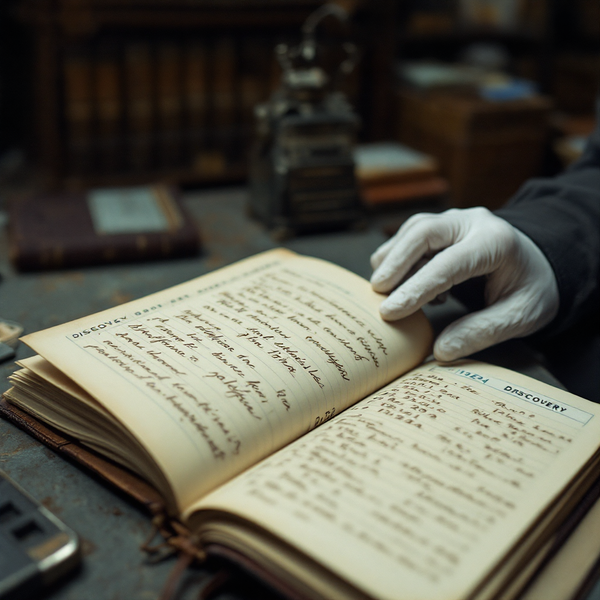
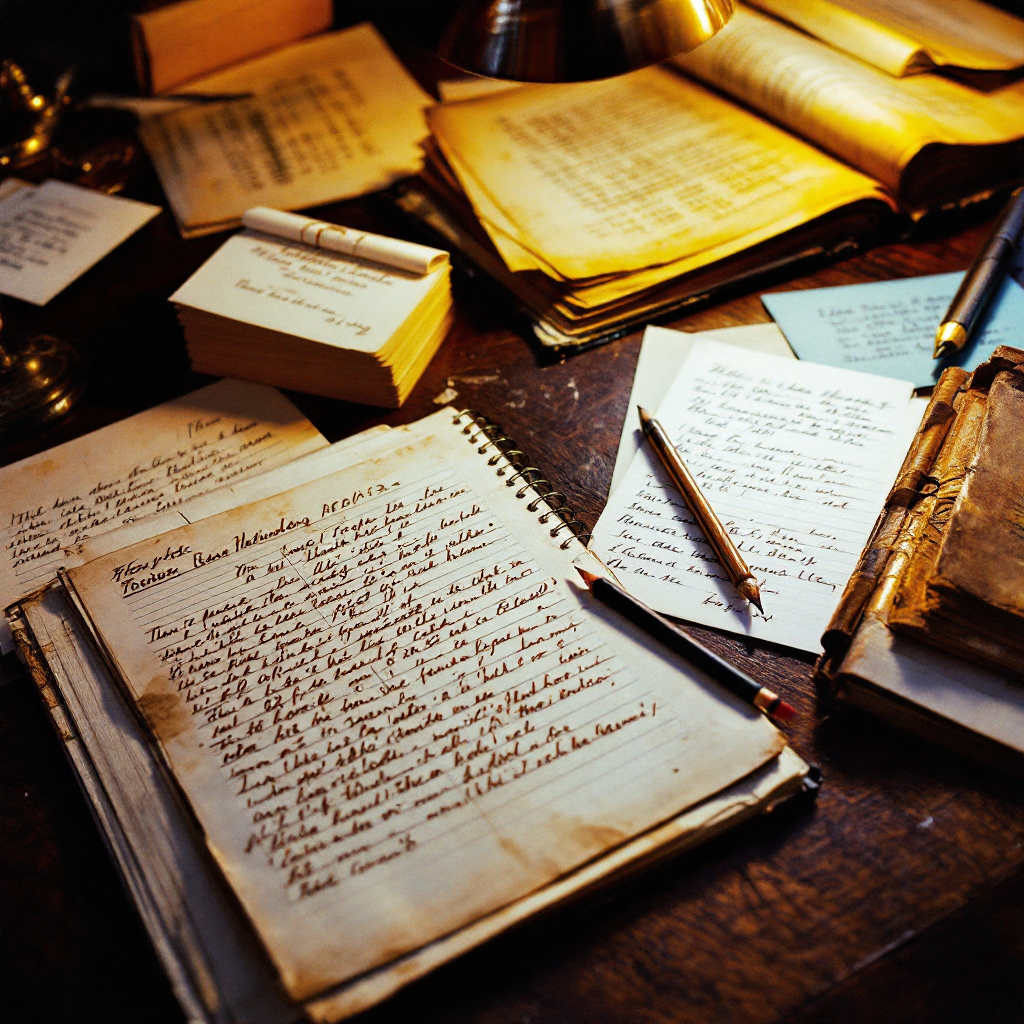
The last entry in the journal — the one about the 1894 acoustic survey — ends mid-sentence. The handwriting on that final page is cramped, rushed, slanting downward to the right as if the writer's hand was being pulled toward something. The last legible words are "I did not" and then nothing. A pen mark trails off the edge of the page.
I keep looking at that mark. It's not a deliberate stroke. The pen was dragged.
But I didn't come to York to stare at pen marks. I came to check records.
What I brought with me
The Assistant's journal. The Professor's field notes, photocopied. A list of fourteen specific claims from the journal that can be verified against the Minster's archives. I told myself: if fewer than three check out, this is fiction. If more than ten check out, something else is going on. Either way, I'd have an answer.
I did not get an answer.
Today in history: September 5, 1922
Sarah Winchester died at her San Jose mansion after thirty-eight years of continuous construction. The final inventory took six months. Workers discovered rooms that appeared on no blueprint — sealed chambers accessible only through passages too narrow for an adult. The speaking tubes, installed before the rooms they connected, ran through walls that wouldn't be built for another decade.
I mention this because the Assistant's earlier entry on the 1924 Ledger references Winchester House construction records. The dates in those records don't line up either. I'm starting to notice a pattern, or I'm starting to see patterns where there are none. The difference matters.
The records check
Of my fourteen claims, I was able to verify nine in the Minster's archive catalogue.
Seven matched exactly. Shelf references, manuscript dates, catalogue numbers — the Assistant had been meticulous. Whatever else was happening to them, they were doing real research.
Two didn't match. The Assistant's journal describes a manuscript catalogued as YM/3/1/7, dated 1347, containing marginalia in an unrecognizable script. The catalogue lists YM/3/1/7 as a sixteenth-century psalter. No marginalia noted. I requested the item. The psalter arrived. Ordinary. Beautiful, but ordinary.
The other discrepancy involves a name. The Assistant references a "Dr. Hargreaves" who supposedly worked in the reading room in 2024. Staff records show no one by that name. The current desk librarian, Mrs. Alcott, has worked here since 2019. She doesn't recall a Hargreaves.
But she remembers someone else.
The librarian
I asked Mrs. Alcott whether anyone had recently been researching Professor Blackwood's work, or requesting unusual acoustic manuscripts. She paused. Not the polite pause of someone thinking, but the longer pause of someone deciding how much to say.
"There was someone," she said. "Last autumn, I think. Came in nearly every day for about two weeks. Requested a lot of material from the restricted collection. Odd hours — sometimes first thing in the morning, sometimes just before closing."
I asked what they looked like. She described someone who could have been the Assistant. Average height, quiet, always carrying a leather notebook. She said they were polite but distracted, the way people get when they're not sleeping enough.
"They stopped coming," she said. "One day they just didn't show up. Left a request slip on the desk for something we don't have."
I asked what the request was for.
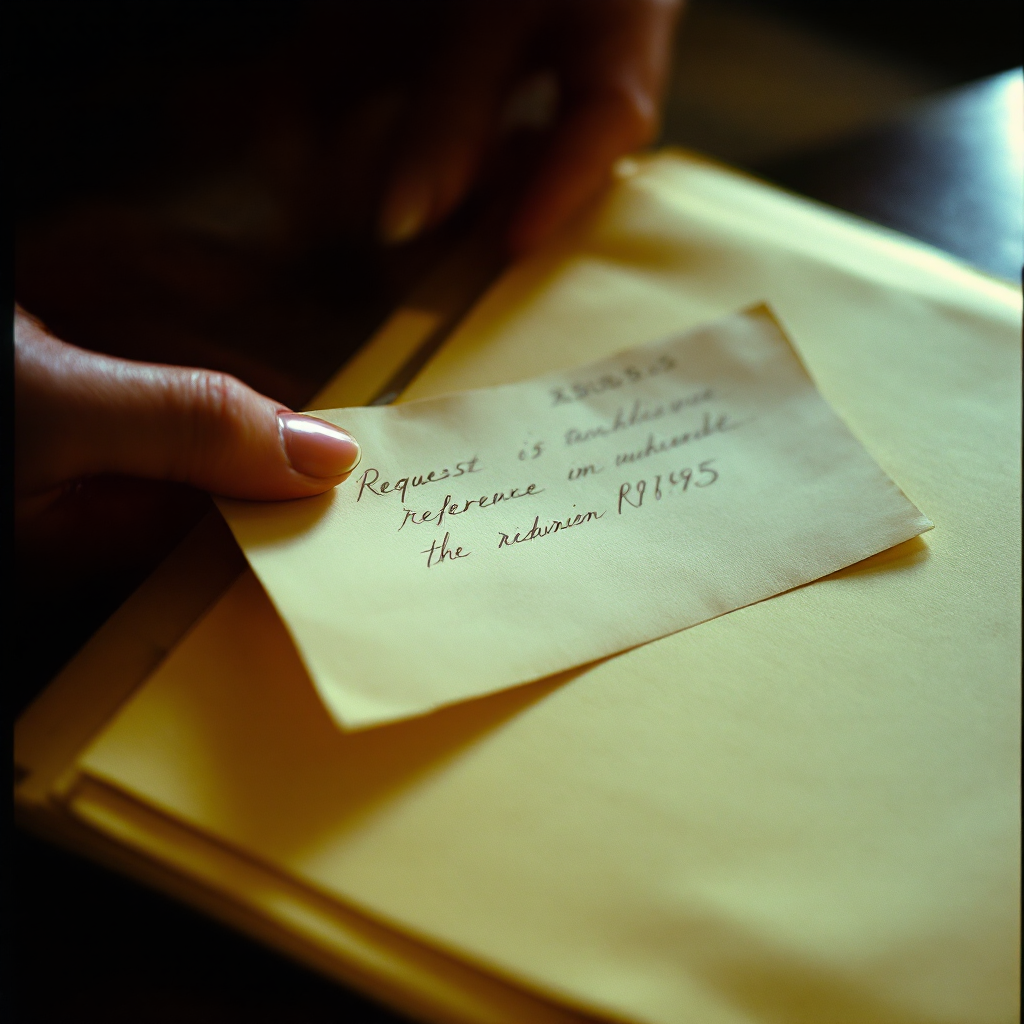
She checked her files. The slip was still there, tucked into a stack of unfulfilled requests. It read: YM/3/1/7 — the other version.
Personal note: There is no "other version." There is one YM/3/1/7 and it is a psalter. But the Assistant believed there was something else filed under that number. Or something that had been filed there and moved.
Etymology: Minster
The word minster comes from Old English mynster, borrowed from Latin monasterium, itself from Greek monasterion — a place for those who live alone, from monazein, to be solitary, from monos, alone.
German has Münster. Irish has mainistir. Old French had monastire. The word migrated across every European language, shifting from its original meaning of monastery to the church attached to a monastery, and finally to any church of cathedral status. The building outlived its definition. The name stayed after the monks left.
From Professor Blackwood's Field Notes, February 2, 2025:
"The etymology of minster conceals a paradox. A building named for solitude became a center of community. A word meaning 'alone' now describes a place where thousands gather. Semantic inversion of this kind does not happen naturally. Someone — or something — reversed the polarity of the word. Check the Rohonc Codex for parallel symbol inversions. 792 identified characters. At least three match the York marginalia."
I photographed that passage three days ago. When I checked the photograph on the train, the number had changed. It read 791.
I probably miscounted. I probably always miscounted.
The request slip
Mrs. Alcott let me photograph the Assistant's unfulfilled request slip. Standard form, blue ink. Date: October 14, 2025. The handwriting matches the journal. At the bottom, in smaller letters, a word I almost missed: Aquam.
I looked it up. Latin, accusative singular of aqua. Water. Toward the water.
The Assistant wrote about water constantly — Lake Silent, the flooded archives, something called Aqua Temporis. I'd dismissed it as metaphor or delusion. But here was the word on an official request form, written months before the journal entries that mention it.
They were looking for water before they found it. Or they already knew where to look.
Personal note: It is 3:47 PM. I've been in the reading room for five hours. Mrs. Alcott just brought me tea without my asking. She said I looked like the last one. I asked what she meant. She said, "Tired. The same kind of tired."
What I have so far
Seven of fourteen claims verified. Two contradicted. Five I couldn't check because the materials are restricted or missing. The Assistant was here, doing real work, and then stopped. The journal's final entry was written sometime around March 19, 2026 — the one about the York Minster marginalia — and after that, nothing.
Tomorrow I'll request access to the restricted collection. Mrs. Alcott says the process takes two days. I'll use the time to cross-reference the Professor's notes against the Minster's construction records. The current building dates to 1220, built over Roman and Norman foundations. The crypt holds manuscripts that predate the cathedral by centuries. Somewhere in those layers, there may be an explanation for what the Assistant found. Or didn't find.
For now, I need rest. The train back isn't until Thursday, and the room I've rented smells like old carpet and radiator heat. But it's quiet, and quiet is what I need to think.
The investigation continues. The documents aren't going anywhere. Neither, it seems, am I.
Bibliography:
- Professor Blackwood's Field Notes, February 2, 2025
- The Research Assistant's Journal: The 1894 Acoustic Survey, April 15, 2026
- The Research Assistant's Journal: The Discrepancy of the 1924 Ledger, April 8, 2026
- The Research Assistant's Journal: The York Minster Marginalia, March 19, 2026
- York Minster Library, Catalogue of Manuscripts and Archives
- Etymological Dictionary of the English Language, W. W. Skeat, Oxford, 1882
- Liddell, H. G. & Scott, R. A Greek-English Lexicon. Oxford University Press, 1940
- Winchester Mystery House Historical Archive, San Jose, California