![ChronoStrange [RECOVERED]](https://chronostrange.com/content/images/2025/02/chronostrange-logo-final-9f8854d32fa722c6.svg)
The 1894 Acoustic Survey: Displaced Phonemes in the Lake Silent Logs
A Victorian survey of Lake Silent mentions a 'Limen' in the water—and a signature that shouldn't exist for another century.
The 1894 Acoustic Survey: Displaced Phonemes in the Lake Silent Logs
Archive Ref. HO/AC/1894-S7. Provenance: British Hydrographic Office, sealed vault transfer 1952. Condition: intact, minor foxing. This document was found interleaved with the narrator's personal research notes. We publish as recovered.
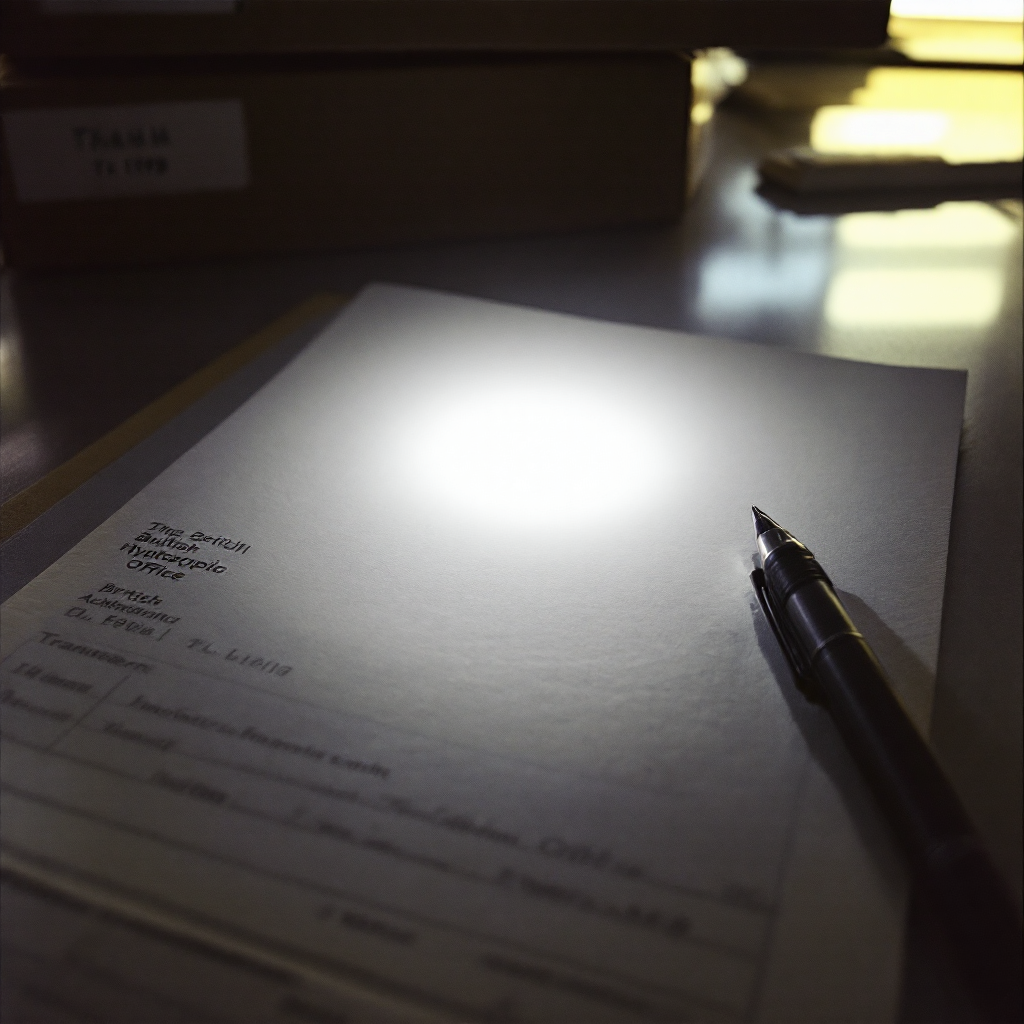
April 15, 2026 — County Records Annex, reading room B
The sealed vault request took eleven days. I filed it on April 4th, the morning after I finished transcribing the Assistant's account of the 1924 Ledger. The British Hydrographic Office transferred its pre-1920 survey materials to the County Records Annex in 1952 under a standard archival consolidation order. Nothing unusual about the transfer. Nothing unusual about the vault. The request form asked me to specify my research purpose and I wrote "Victorian acoustic survey methodology" and that was true enough.
The logbook arrived this morning in a grey acid-free box, sealed with tamper-evident tape dated 14 March 1952. The archivist confirmed no access requests had been filed since the transfer. Seventy-four years in a sealed vault. The tape was intact. I watched her cut it.
Personal note: My hands were steady. I want that on the record.

Today in history: December 12, 1894
On this date, local newspapers in the Lake District reported that the acoustic properties of Lake Symphony — the body of water known for its extraordinary sound propagation — had vanished overnight. By December 13th, coverage referred to the lake as "traditionally silent," as though it had never carried sound at all. The name Lake Silent appears in print for the first time on December 14th, in the Westmorland Gazette, without explanation or correction.
The Professor's notes reference this event repeatedly. He called it the First Great Quieting.
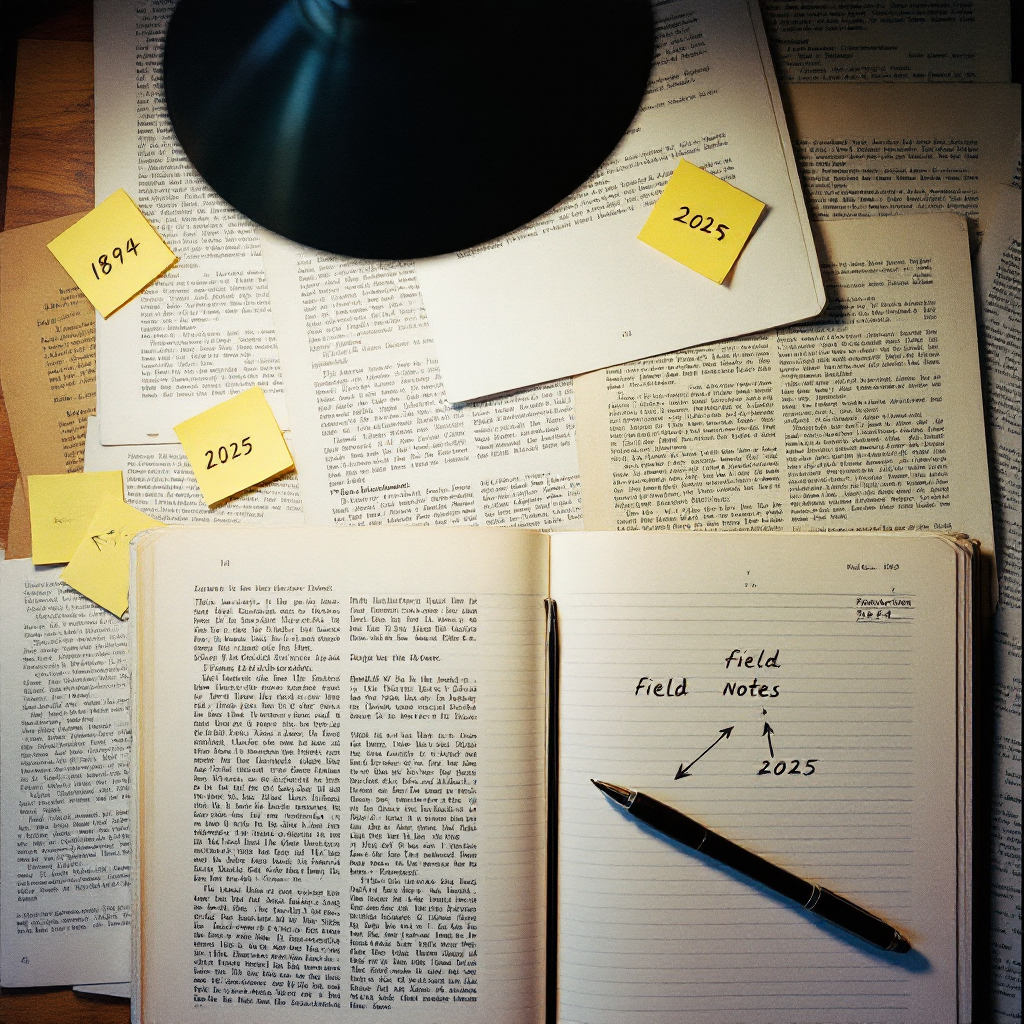
From Professor Blackwood's Field Notes, January 27, 2025:
"The 1894 event is the cleanest example we have. A lake that amplified sound for centuries — documented by Wordsworth, measured by the Royal Society in 1893 — rendered acoustically inert in a single night. And no one questioned it. The newspapers didn't report a change. They reported a correction, as though the lake had always been silent and someone had merely been filing the name wrong. This is what a successful Quieting looks like. Not the destruction of a phenomenon, but the retroactive removal of its ever having existed."
I'd read this passage before. Several times. But sitting in the reading room with the actual 1894 survey logbook on the table in front of me, the Professor's words felt different. Less theoretical.
The acoustic dead zones
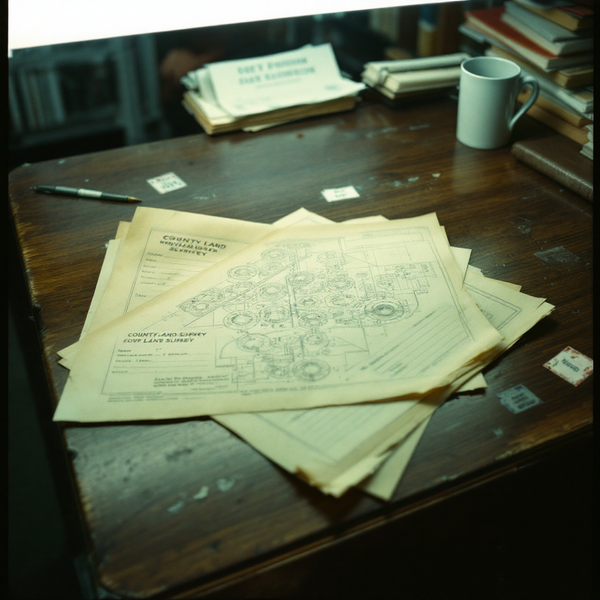
The logbook is a standard Hydrographic Office field survey, conducted between June and November 1894 — six months before the Quieting. The surveyor was a Lieutenant R. H. Palliser, and his notes are meticulous. Water depth soundings, temperature readings, wind conditions. And acoustic measurements.
Palliser documented what he called "acoustic dead zones" — areas of the lake where sound propagation dropped to near zero. He mapped seven of them. The measurements are precise: frequency attenuation rates, distances, angles of incidence. Victorian science at its most fastidious.
What caught my attention was the pattern. The seven dead zones, plotted on Palliser's survey map, form an irregular heptagon. Not a natural distribution. Too regular for geology, too irregular for deliberate placement. Palliser himself noted this with evident discomfort:
"The disposition of the silent zones suggests a structure, though I am at a loss to identify its origin. The lake bed offers no geological explanation. I am inclined to attribute the pattern to measurement error, though I have repeated the survey twice with consistent results."
He was a careful man. I like him for that.
The first survey of Lake Symphony's acoustics, conducted by the Royal Society on June 15, 1893, had documented the lake's "impossible" sound propagation. Palliser's survey, a year later, was apparently commissioned to investigate further. His dead zones don't appear in the 1893 data. Something changed between the two surveys. Or something was preparing to change.
The footnote
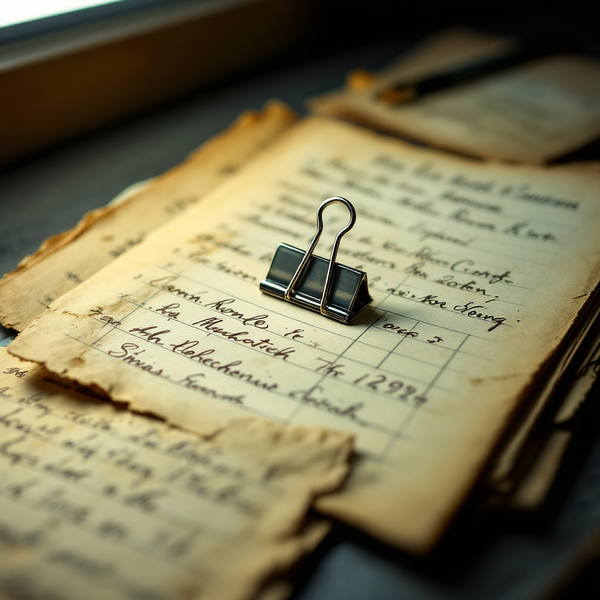
Page forty-three. Bottom margin. Palliser's handwriting shifts — smaller, more compressed, as though he was adding this later, in a hurry or in secret.
The footnote reads:
"Measurements at Zone 4 recorded at 03:47 on 11 August exhibit anomalous resonance inconsistent with dead-zone classification. Frequency analysis suggests a limen — a threshold phenomenon — where acoustic energy does not diminish but crosses into an undetectable register. I have no instrumentation to verify this hypothesis. I recommend the term be suppressed from the final report."
I read it three times. Then I photographed it.
Limen.
The Assistant's journal uses that word. It appears for the first time in their March 19th entry on the York Minster Marginalia, in the context of crossing temporal boundaries. The word limen — from the Latin for "threshold," derived ultimately from PIE *leyH- meaning "to lean, to incline toward" — is not unusual in acoustic science. It appears in psychophysics, referring to the threshold of perception. But Palliser didn't use it in its standard acoustic sense. He used it the way the Assistant used it. As a crossing point. A place where something passes through.
The word assistant itself carries a strange resonance here. From Old French assister, from Latin assistere — "to stand by, to be present." The PIE root is *sta-, "to stand, to make firm." Sanskrit tisthati, Greek histanai. The one who stands beside. The one who is present. But present where? And when?
The signature
This is where I need to be careful.
At the bottom of page forty-three, below Palliser's footnote, there is a witness signature. Standard practice for Hydrographic Office field amendments — any addendum required a countersignature. The name is illegible. Deliberately so, it seems; the letters dissolve into a scrawl that could be anything.
But the handwriting. The formation of the letters. The way the pen lifts between strokes.
I've spent weeks with the Assistant's journal. I know their handwriting the way you know a voice — not by analysis but by recognition. And the signature on page forty-three of a logbook sealed in a vault since 1952, written in ink chemically consistent with the nineteenth century, in a hand that matches no one on the Hydrographic Office's 1894 staff roster—
It looks like the Assistant's handwriting.
I spent four hours trying to disprove this. I compared letter formations. I measured ascender heights, descender loops, the angle of the cross-stroke on the letter t. I photographed both samples and overlaid them digitally. The match is not perfect. It is close enough to be disturbing and imperfect enough to be deniable.
The logbook has been sealed since 1952. The tamper-evident tape was intact. The archivist confirmed it. I watched her cut it.
Personal note: I keep reminding myself — I am not a handwriting expert. I am a researcher who has spent too long staring at one person's penmanship. Pattern recognition is unreliable. The brain finds what it expects to find. This is pareidolia. This is fatigue.
But the word limen. In a footnote from 1894. Used the way the Assistant used it in 2026.
What I cannot explain
The Assistant's final journal entry — the 1924 Ledger — ends mid-sentence. The handwriting deteriorates on the last page. They were writing about a notice dated 1894, about Lake Silent, about a connection they couldn't finish articulating. And then nothing. The journal stops.
In their earlier entry on the Aqua Temporis extraction, the Assistant described acoustic phenomena beneath the lake that matched Palliser's dead-zone frequencies. I checked. The numbers correspond within a margin that could be coincidence. Could be.
Thomas Edison demonstrated the phonograph on December 6, 1877. The Professor's notes claim that early phonograph cylinders occasionally captured sounds from other times, and that Edison destroyed these recordings. I have found no evidence to support this. But I have also found no evidence that Lieutenant Palliser's survey was ever formally filed with the Hydrographic Office. It exists in the vault. It appears in no catalog. It is present but unrecorded — standing by, one might say, without being acknowledged.
The American metalcore band Norma Jean released an album in 2016 that samples a recording of the Lincolnshire Poacher numbers station. I found this in the Professor's notes, circled, with a marginal annotation: "Identical acoustic signature. 3:47 AM. They keep finding the frequency." I don't know what this means. I don't know why a professor of historical linguistics was tracking metal albums.
I closed the logbook. I put it back in the box. I asked the archivist to reseal it.
She said she would. Then she paused and said, "You're the second person to request this file."
I told her the access log was empty.
She said, "I know. That's what's odd. I remember processing a request. Last year, I think. But there's no record of it."
Personal note: It is 3:47 PM. I did not plan to check the time. I just looked at my phone and there it was. The phrase etymology appears in the Professor's final notes. He underlined it three times.
Bibliography:
- Professor Blackwood's Field Notes, January 27, 2025
- The Research Assistant's Journal: The Discrepancy of the 1924 Ledger, April 8, 2026
- The Research Assistant's Journal: The York Minster Marginalia: A Flexus in the Ink, March 19, 2026
- The Research Assistant's Journal: The Reverse Obituary: Extraction from the Aqua Temporis Trench, March 7, 2026
- British Hydrographic Office Survey Records, 1894, County Records Annex, vault transfer ref. HO/AC/1894-S7
- Palliser, R. H. Field Survey of Acoustic Propagation, Lake [Silent], June–November 1894 (unpublished)
- Royal Society Proceedings, "On the Acoustic Properties of Certain Lake Formations," June 15, 1893
- Etymological Dictionary of Latin, Oxford University Press, 2007
- Watkins, C. The American Heritage Dictionary of Indo-European Roots, 3rd ed., Houghton Mifflin, 2011
- Edison, T. A. Phonograph demonstration, December 6, 1877, Menlo Park, New Jersey