![ChronoStrange [RECOVERED]](https://chronostrange.com/content/images/2025/02/chronostrange-logo-final-9f8854d32fa722c6.svg)
The Resonance Chamber Blueprints: A 1902 Misplacement
A structural diagram of the Winchester House Library found in 1902 includes a 'Resonance Chamber' that occupies a space where only solid stone exists.
The Resonance Chamber Blueprints: A 1902 Misplacement
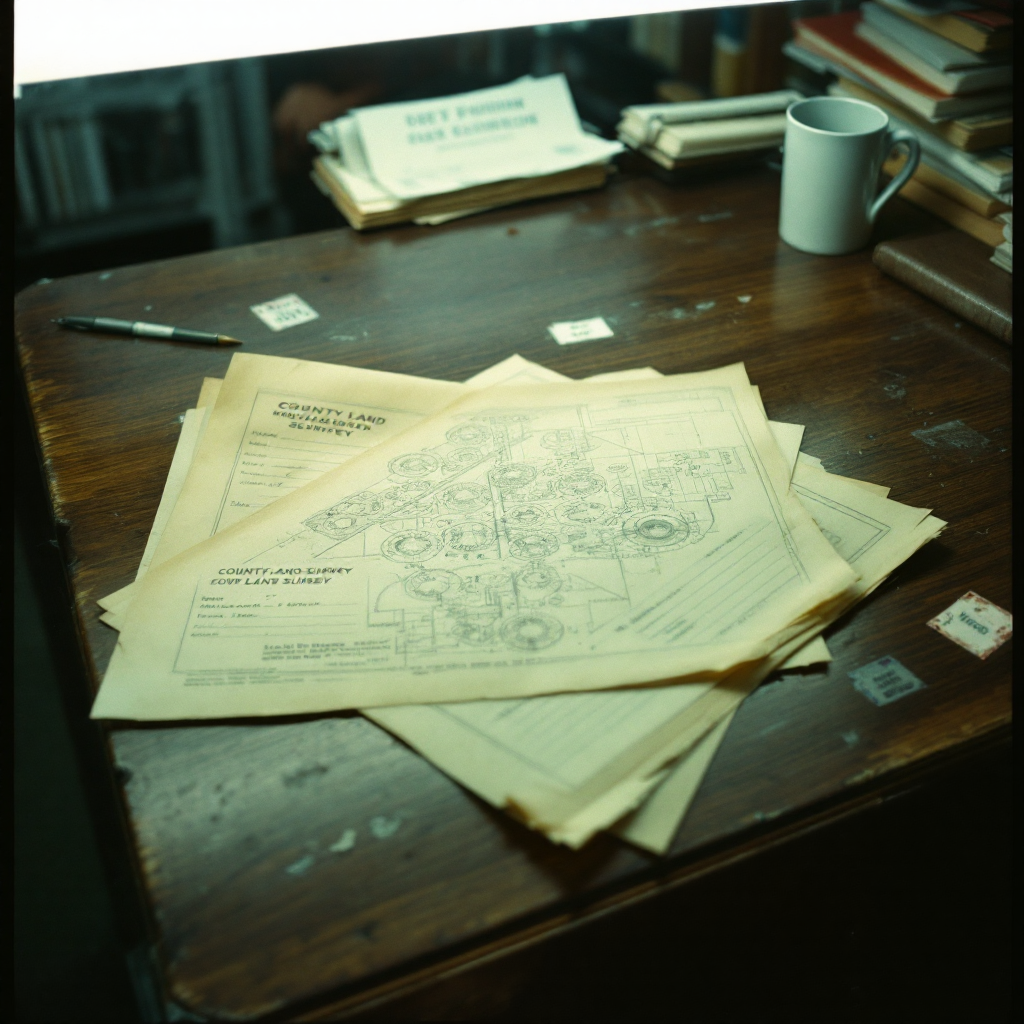
Archive ref. SC/2026/0523. Recovered from a rented desk at the San José Public Library, Main Branch. The pages were folded inside a photocopy of a county land survey. No name on the desk reservation.
May 23, 2026 — San José Public Library, California
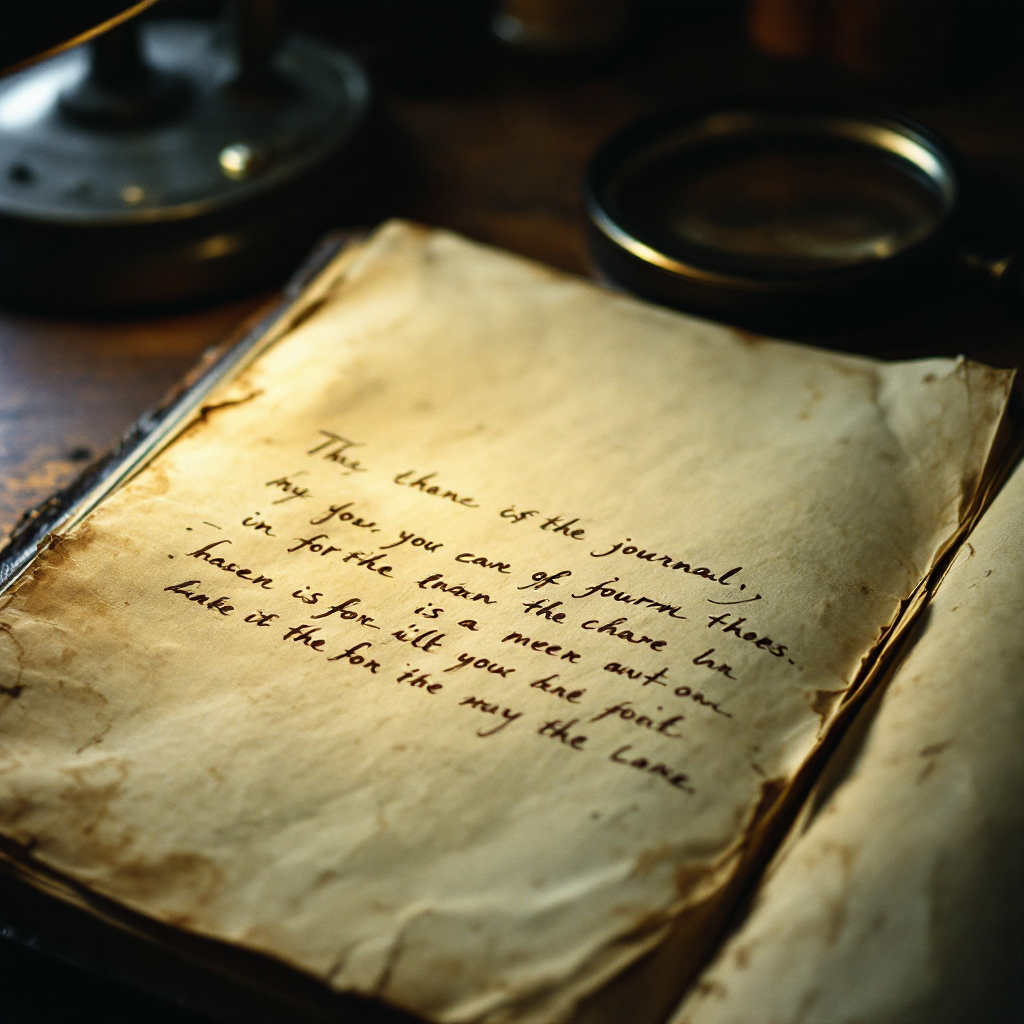
The last entry in the Assistant's journal ends mid-sentence. I've read it four times now, the passage from their May 18th entry about the Gstaad manifest, and each time I focus less on the words and more on the paper itself. The final page is different from the rest. Not the handwriting — though that deteriorates too, the letters tilting rightward like someone writing on a moving train. The paper. It's thinner along the bottom edge, almost translucent, as if the fibers have been stretched. I held it up to the desk lamp this morning and could read the page beneath it through the surface. Paper doesn't do that. Paper doesn't thin from the bottom up like a tide going out.
But I'm getting ahead of myself.
Five days ago I finished transcribing the Assistant's notes on the 1924 ledger discrepancy, and I told myself that was enough. Two missing people, a box of increasingly frantic handwriting, and a set of claims that would get anyone committed. I was done. I returned the box to the storage unit. I went home. I slept poorly but I slept.
Then on Tuesday I remembered something the Assistant had written about the Winchester House Library — a reference to architectural surveys filed with the county. A throwaway line, barely a sentence, buried in their notes about the ghost in the index. They'd written: "County archives hold the original surveys. Someone should check them against the current floor plans."
Someone should check.
I am, apparently, someone.
Today in history: September 5, 1922
Sarah Winchester died at her San José mansion after thirty-eight years of continuous construction. The final inventory took six months. Workers cataloged 161 rooms, 47 fireplaces, 10,000 window panes, and an unspecified number of hallways that connected to nothing. The inventory team reported that certain rooms did not appear on any existing blueprint. The house had outgrown its own documentation.
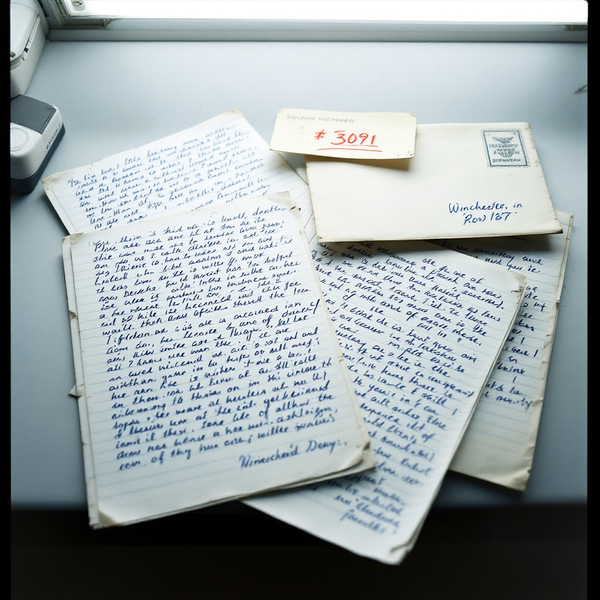
I mention this because I spent Wednesday morning at the Santa Clara County Recorder's Office, pulling everything filed under the Winchester property between 1884 and 1923. Most of it was routine — permits, lot surveys, the endless parade of construction addenda that accompanied Mrs. Winchester's building obsession. But in a folder marked Structural Surveys, 1900–1910, I found something that wasn't routine at all.
The 1902 survey
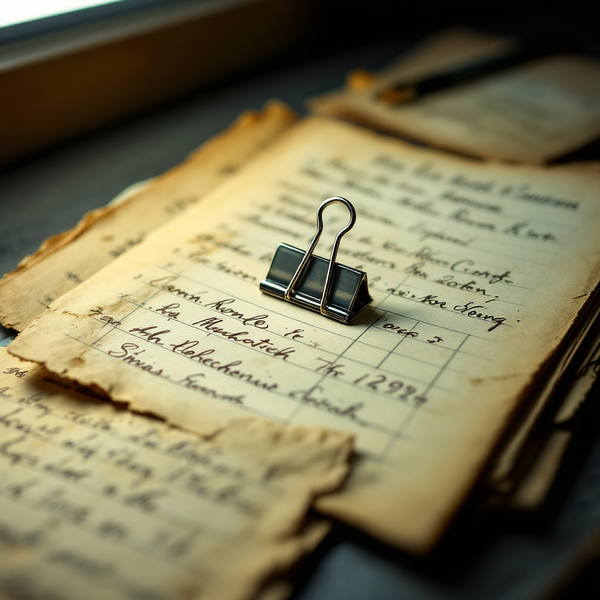
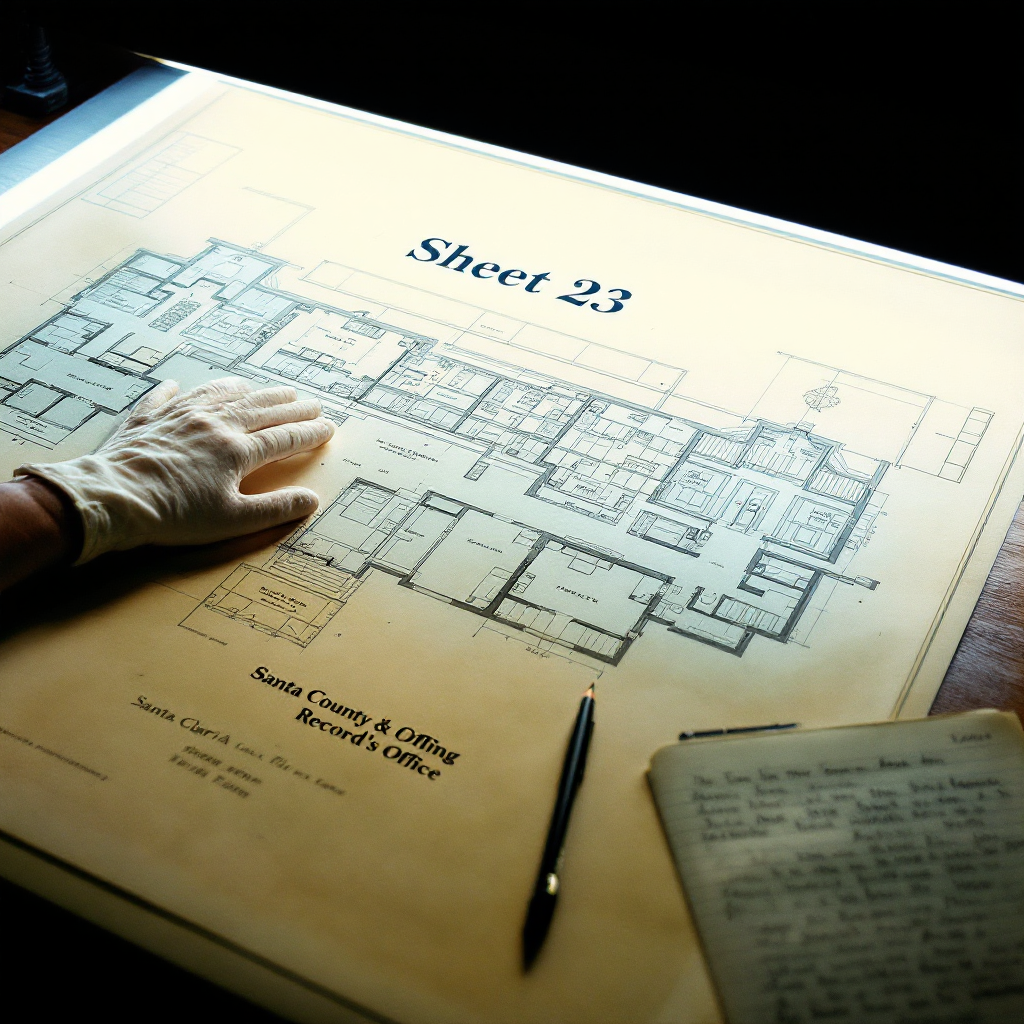
The document is an architectural survey dated March 1, 1902 — eighteen years into the mansion's construction, when the building was already a labyrinth. The survey was commissioned by the county assessor's office, presumably for tax purposes. Standard practice. The surveyor was listed as one E. R. Halloran, and the drawings are competent if unremarkable: floor plans rendered in brown ink on heavy drafting paper, with room dimensions noted in a neat copperplate hand.
I photographed every page. Thirty-seven sheets in total. Most of them correspond, more or less, to what you'd expect from the Winchester House as it existed in 1902.
Sheet twenty-three is the problem.
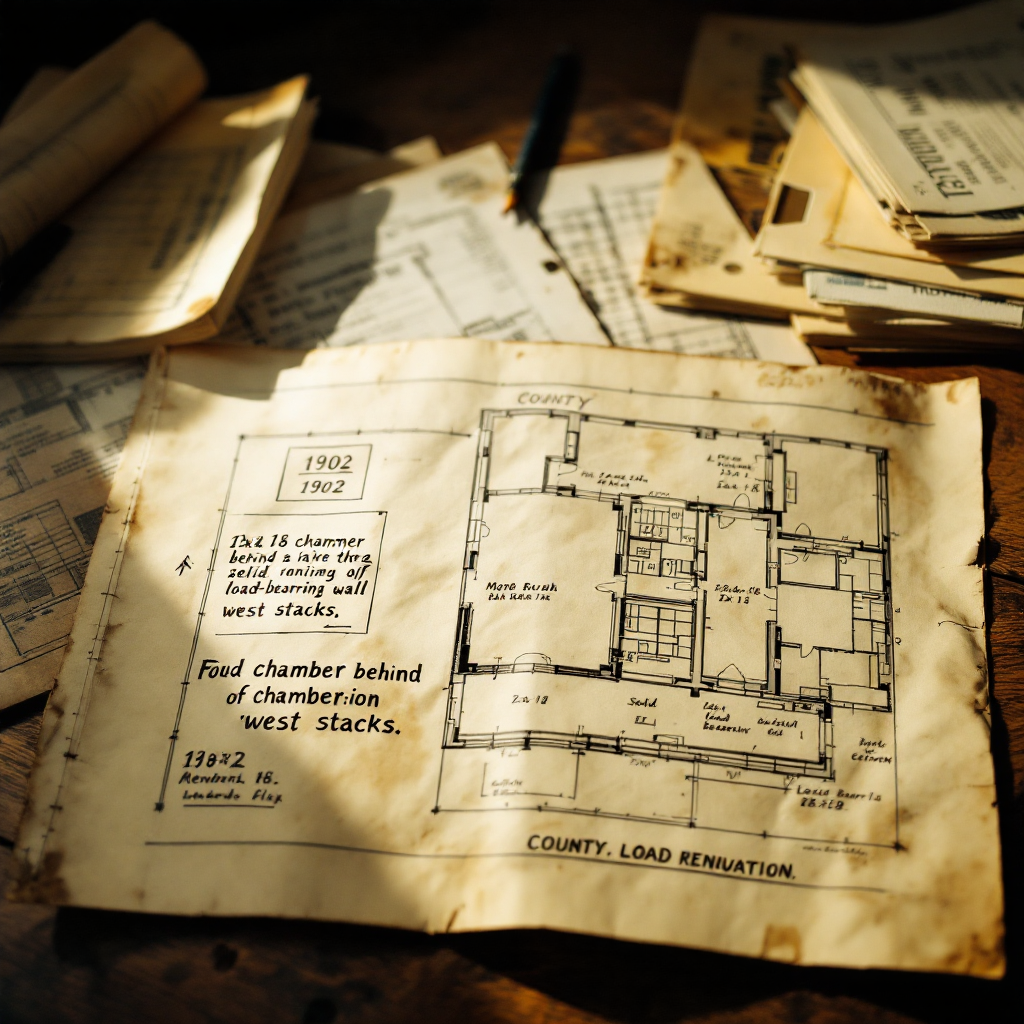
It depicts the western wing's lower level — the area that today houses what the mansion's tour guides call the "Hall of Fires," a corridor lined with small, purposeless fireplaces. But Halloran's 1902 survey shows something different behind the west stacks: a large rectangular room, roughly twelve by eighteen feet, labeled in the surveyor's copperplate as "Resonance Chamber."
The label includes an annotation in the margin. A single word, written in a hand that is not Halloran's — smaller, sharper, pressed harder into the paper: Limen.
Etymology: Limen
The word comes from Latin līmen, meaning threshold or doorway — the bottom of a doorframe, the strip of wood or stone you step across when entering a room. It derives from the PIE root *leyH-, carrying a sense of smearing or adhering, which in Latin branched into both līmen (threshold) and limus (mud, slime — something that clings). The semantic logic is architectural: the threshold was originally the place where mud was smeared, the boundary between outside dirt and inside cleanliness.
The word survives in English primarily through its psychological descendant: liminal, coined in the late nineteenth century to describe states of transition. Being between. Not yet through the door.
From Professor Blackwood's Field Notes, January 28, 2025:
"The Winchester House speaking tubes were among the first installations — before the rooms they would connect even existed. Mrs. Winchester built the communication system first and the architecture around it. As if the house were an instrument, and the tubes its strings. The word LIMEN appears in three separate construction documents. It is not an architectural term. It is a temporal one. A limen is not a doorway you walk through. It is a doorway that walks through you."
I read that passage at 3:47 PM, sitting at a microfiche reader in the county recorder's basement. The fluorescent light above my desk flickered once. I noted the time because I'd been checking my watch compulsively — the archive closes at five, and I needed to photograph the remaining survey sheets. That's the only reason I noticed the time. I mention it only for completeness.
What isn't there
I spent Thursday comparing Halloran's 1902 survey against the current floor plans of the Winchester House, which are publicly available through the mansion's historical trust. The Hall of Fires corridor is there. The surrounding rooms match Halloran's drawings within a few inches.
The Resonance Chamber is not there.
There is no room behind the west stacks. The current plans show a solid wall — foundation-grade, load-bearing — where Halloran drew a twelve-by-eighteen-foot chamber. I checked the renovation records. Nothing. No permit to demolish an interior room. No structural modification filed with the county between 1902 and Sarah Winchester's death in 1922. No record of any alteration after the house became a tourist attraction in 1923.
A room that appears on a 1902 survey simply does not exist on any subsequent document. As if it was never built. Or as if it was removed by means that don't require a demolition permit.
Personal note: I keep telling myself there's a filing error. Halloran mislabeled a room. The county misfiled a renovation permit. These things happen in 120-year-old archives. They happen all the time.
The signature
I almost missed it. Sheet twenty-three has a notation block in the lower right corner — standard practice for architectural surveys, where the surveyor signs and dates the drawing. Halloran's signature is there, dated March 1, 1902, in the same brown ink as the rest of the plans.
Below it, in the margin, there is a second signature.
It is not dated. It is written in black ink — a modern ballpoint, not a dip pen. The ink sits on top of the paper rather than soaking into it the way Halloran's century-old notations do. And the handwriting —
I compared it to the Assistant's journal. I laid the photograph of sheet twenty-three next to the last page of their notebook, the one that ends mid-sentence. I am not a handwriting analyst. I don't have the training to make this determination with any authority.
But the capital letters are identical. The way the t crosses high and trails off to the right. The distinctive g with its open loop. The slight leftward lean that appears in both samples when the writer was pressing hard.
The signature on a 1902 architectural survey matches the handwriting of someone who, by any reasonable chronology, would not be born for another eighty years.
Personal note: There is an explanation for this. There has to be. Someone copied the Assistant's handwriting onto the old document as a hoax. The Assistant themselves visited the archive and signed the sheet as some kind of — what? Performance? Delusion? But the ink. The ballpoint ink on 1902 drafting paper. It looks fresher than the surrounding notations. Not aged. Not faded. As if it was written recently, on paper that has been waiting for over a century.
Behind the survey
The Old English bihindan — at the back of, after — from bi (by) and hindan (from behind), tracing back to PIE *k̑en-, meaning "beyond." German hinter, Gothic hindar. The word carries a spatial meaning that doubles as a temporal one. What is behind you is also what came before. What is behind a wall may also be what was there before the wall.
The Resonance Chamber is behind the west stacks. Or it was. Or it will be.
I photographed everything. I returned the folder to the archivist. I asked, as casually as I could manage, whether anyone else had requested the Winchester structural surveys recently. She checked the access log. No one had pulled that folder since 2019.
I didn't ask about the second signature. I didn't want to explain why I was comparing a county land survey to a missing person's notebook.
The documents raise more questions than I can process tonight. I need to cross-reference the Halloran survey against the handful of references to the Winchester House in the Professor's earlier field notes — there may be something about the west wing I've overlooked. I also want to look into Kazimierz Prószyński, a name that appears once in the Professor's marginalia beside a note about 1902 visual recording technology and the word "quieted." It may be nothing. It is probably nothing.
Tomorrow I'll check the Assistant's journal again for any mention of the Resonance Chamber. For now, I need to stop. It's nearly midnight, and I've been staring at photographs of old paper for nine hours.
The investigation continues. But not tonight.
Bibliography:
- Halloran, E. R. Structural Survey: Winchester Property, San José. Santa Clara County Recorder's Office, Folder 1900–1910, Sheet 23. March 1, 1902.
- Professor Blackwood's Field Notes, January 28, 2025.
- The Research Assistant's Journal: The Discrepancy of the 1924 Gstaad Manifest, May 18, 2026.
- The Research Assistant's Journal: The Discrepancy of the 1924 Ledger, May 1, 2026.
- The Research Assistant's Journal: The Etymology Department Archives: A Ghost in the Index, April 24, 2026.
- De Vaan, Michiel. Etymological Dictionary of Latin and the Other Italic Languages. Brill, 2008.
- Winchester Mystery House Historical Trust. Floor Plans and Architectural Documentation. Public archive, accessed May 2026.
- Bosworth, Joseph and T. Northcote Toller. An Anglo-Saxon Dictionary. Oxford University Press, 1898.