![ChronoStrange [RECOVERED]](https://chronostrange.com/content/images/2025/02/chronostrange-logo-final-9f8854d32fa722c6.svg)
The Discrepancy of the 1924 Gstaad Manifest
A scribbled ledger entry from a Swiss hotel suggests Professor Blackwood checked in three days after his own reported disappearance.
The Discrepancy of the 1924 Gstaad Manifest
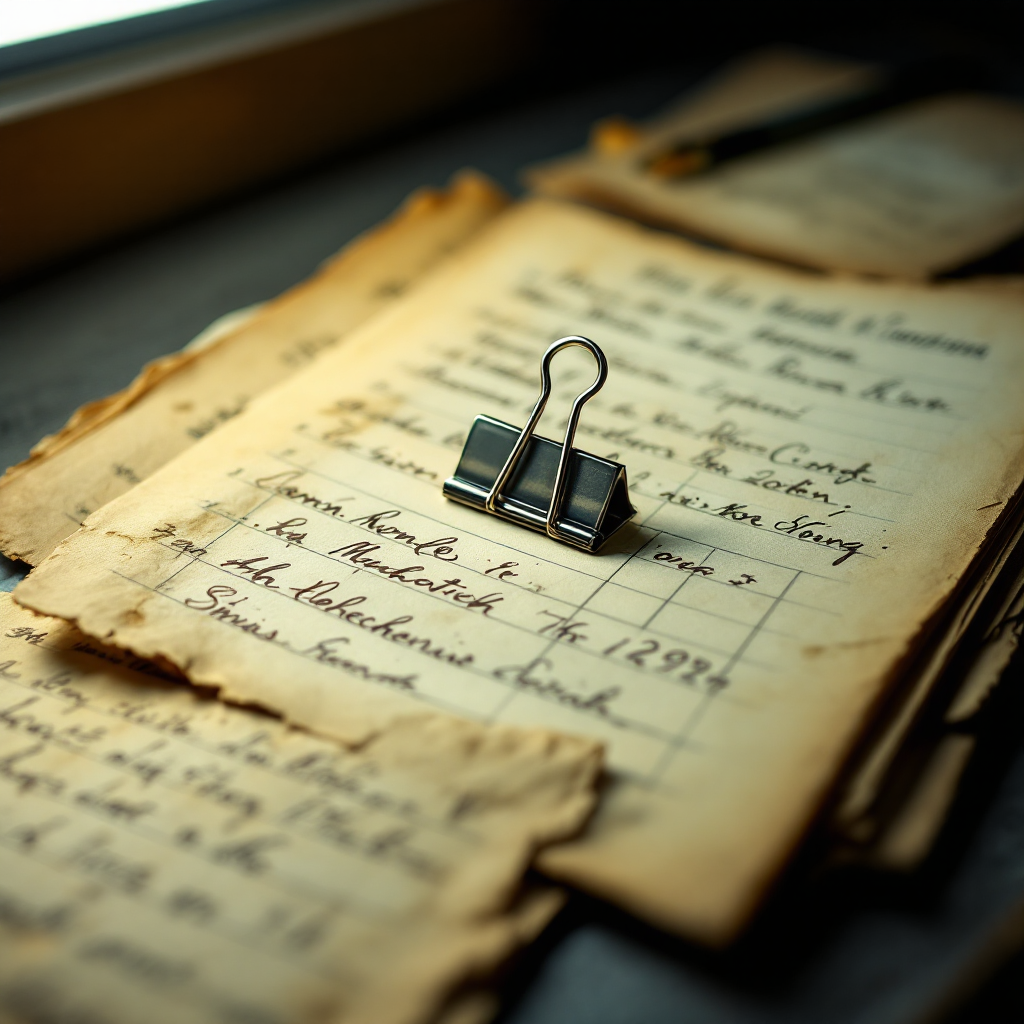
Archive Ref. #7702 — Provenance uncertain. The following pages were found paper-clipped to a photocopy of a Swiss hotel register. The paper clip is modern. The register is not.

May 18, 2026 — Reading room, county library, south wing
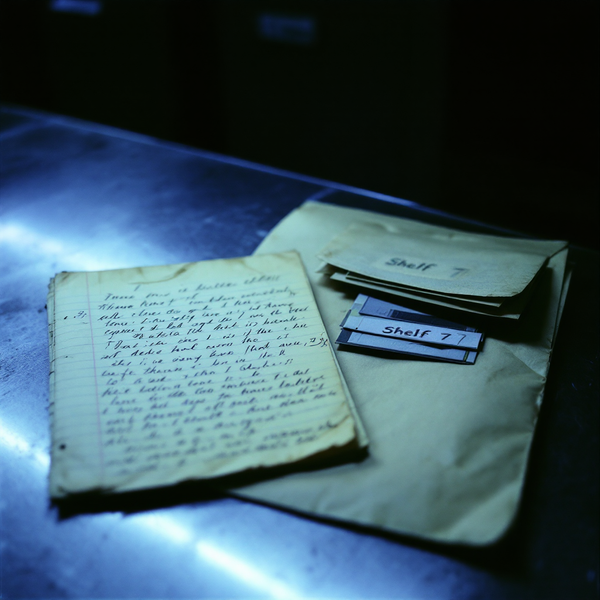
Something fell out of the Assistant's journal last night.
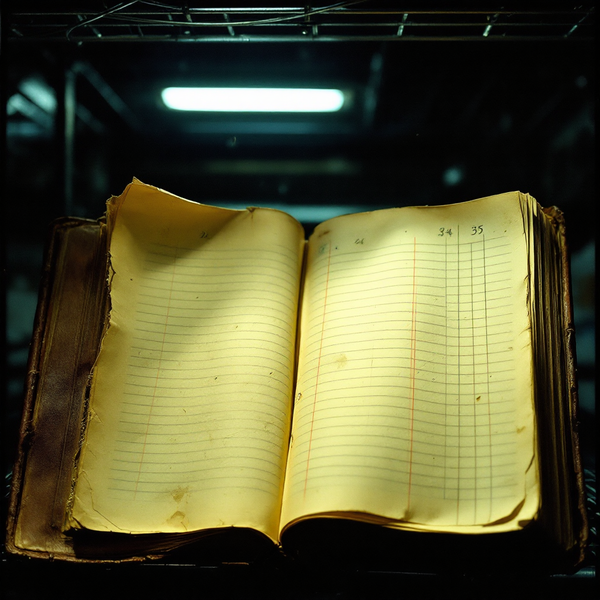
I've been through this notebook four times now. Cover to cover. I've photographed every page, catalogued every marginal annotation, mapped every coffee ring and water stain. I thought I knew this object. I thought I'd exhausted it.
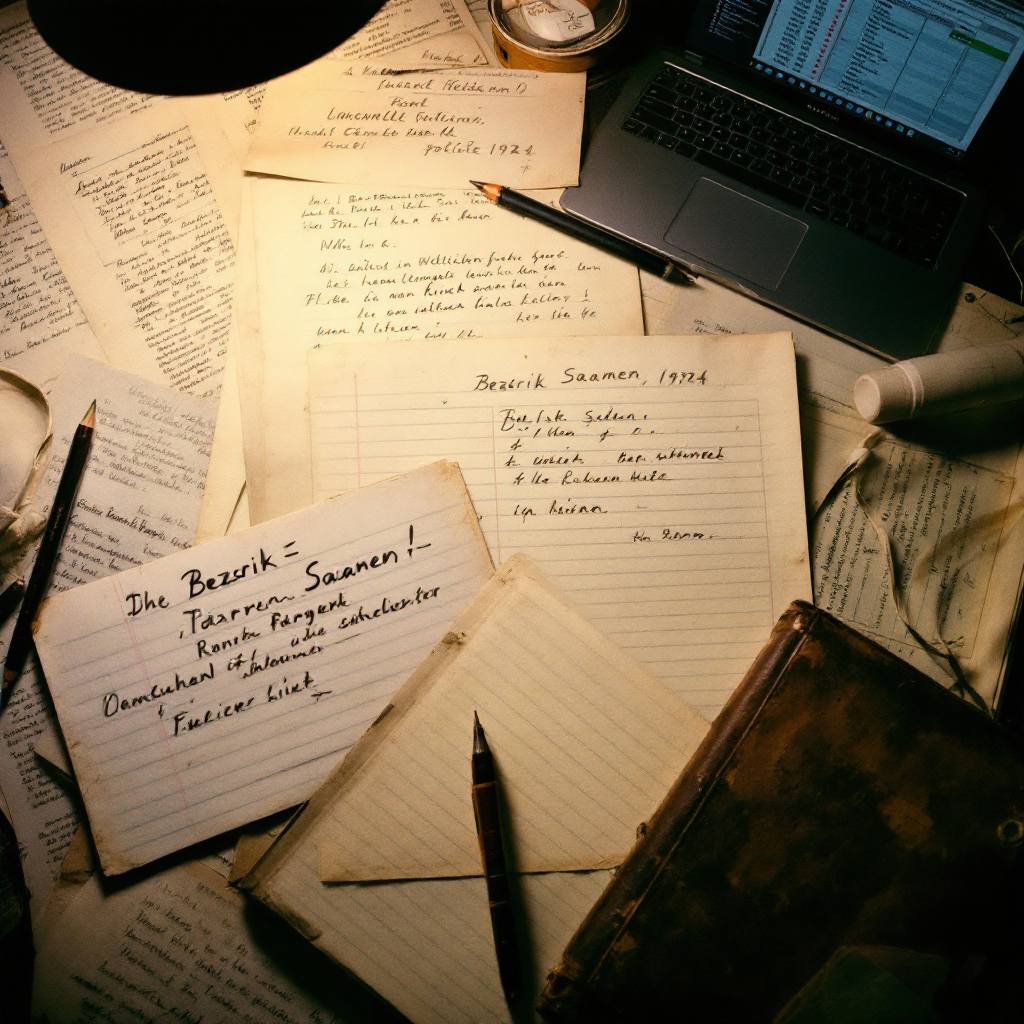
But last night — around half past three, closer to 3:47 than I'd like to admit — I was re-reading the Assistant's final entries, the ones where the handwriting starts to list sideways like a ship taking on water, and a folded sheet slipped from between pages 38 and 39. Not tucked in, exactly. More like it had been part of the binding and had worked itself loose. The paper was heavier than the journal pages. Cream-coloured. Water-damaged along the bottom edge, with a faint smell of mildew and something else — cedar, maybe, or old luggage.
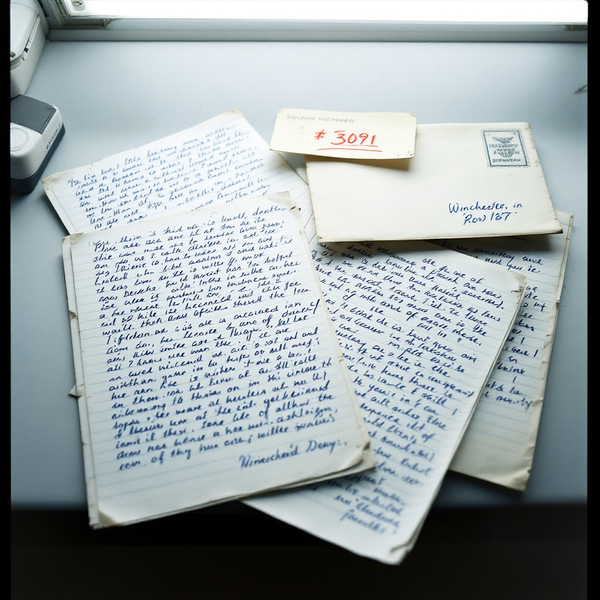
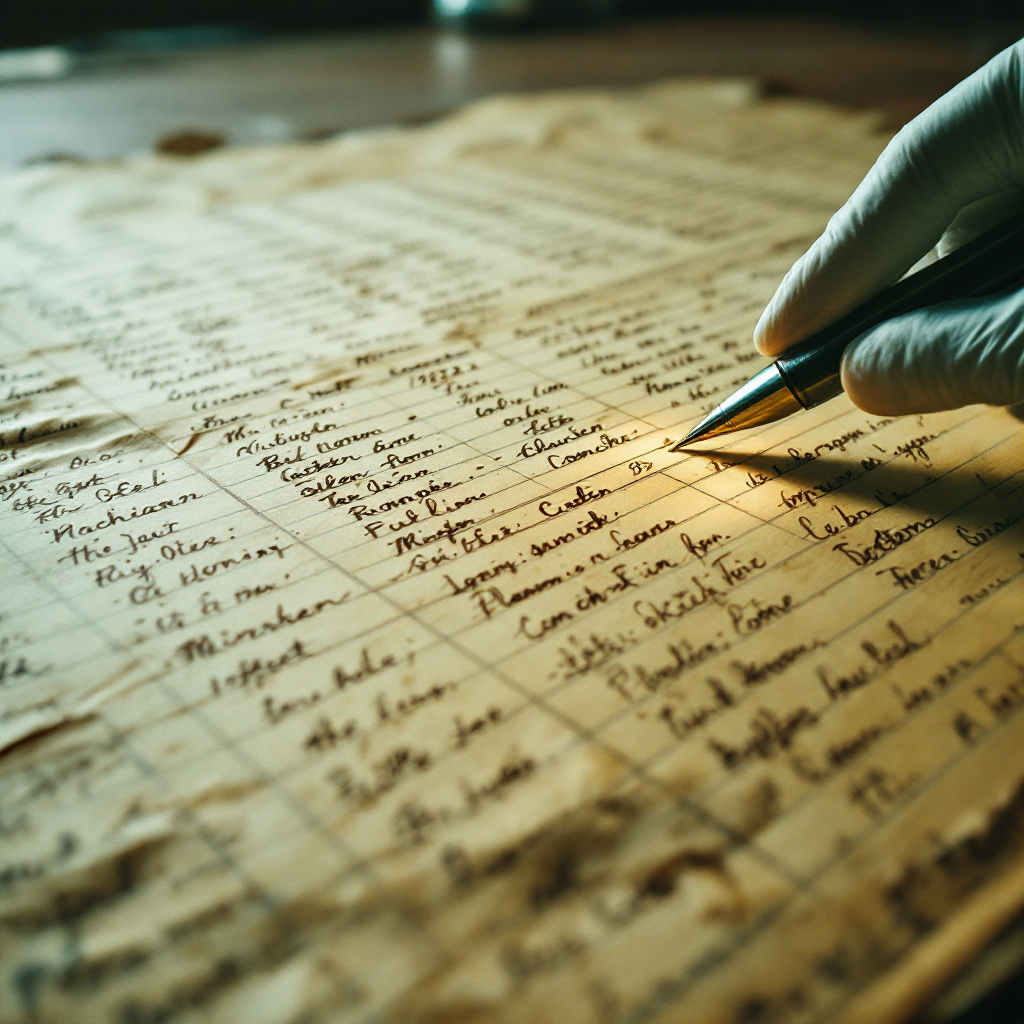
It was a leaf torn from a hotel logbook. The header, printed in a serif typeface with ink that had oxidised to a reddish brown, read:
HOTEL OLDEN — GSTAAD — REGISTER DER GÄSTE
The date column showed entries from the second week of December 1924.
I almost set it aside. Another loose document, another dead end. Then I saw the signature on the third line.
A. Blackwood. London.
The handwriting is unmistakable. I've spent weeks with the Professor's field notes. I know the way he forms his capital A — that sharp upstroke, the crossbar sitting too high. I know the cramped, forward-leaning lowercase letters, the way his d's loop back on themselves. This is his hand. I'd stake what's left of my professional credibility on it.
But the register is from 1924.
And the ink is from 1950.
The ink problem
I should clarify. I am not a forensic chemist. I don't have access to a mass spectrometer. What I do have is a colleague at the university conservation lab who owed me a favour, and a willingness to ask questions that made her look at me sideways.
She examined the page under UV light and took a small sample from the edge of the signature. Her preliminary assessment: the ink is a ballpoint formulation consistent with mid-twentieth century manufacture. Probably 1948-1955, based on the dye composition. The rest of the register entries — the other guests, the dates, the room numbers — are written in iron gall ink, standard for the period.
One signature. Wrong ink. Wrong decade.
I keep turning this over. Someone could have added the signature later, obviously. A hoax. A game. The Assistant could have done it themselves — they had access to the journal, and if they were unravelling as badly as the final entries suggest, forging a signature in a stolen hotel page would be well within the range of obsessive behaviour.
But I checked the Assistant's May 11th entry, the one about the 1924 ledger discrepancy. They were already fixated on documents from that year. And in the margin of page 39, right where the hotel register had been pressed flat, the Assistant wrote something in pencil — small, barely legible, clearly added in haste:
He's not aging in a straight line. The dates are wrong because HE is wrong. He's leaving things in the past that he hasn't made yet.
No attribution. No explanation. Just that single terrified observation, wedged between a grocery list and a phone number with a York area code.
Today in history: December 12, 1894
On this date, local newspapers around Lake Silent — then still called Lake Symphony — reported that the lake's celebrated acoustic properties had vanished overnight. By December 13th, articles were already describing the lake as "traditionally silent," as though the sound had never existed. The retroactive nature of the change is what disturbs me most. Not that something disappeared, but that the record of its existence was edited simultaneously.
The Assistant referenced this event repeatedly. In their April 24th entry, they described finding gaps in the Etymology Department archives that corresponded to the same date — an absence where documentation should have been. A ghost in the index, they called it.
I mention this because the Hotel Olden register shows a similar pattern. The page before the one I found — the page that should contain entries from December 10-11, 1924 — has been removed. Clean cut, close to the spine. Someone took it deliberately.
What was on it? Who else checked in that week?
From Professor Blackwood's field notes (dated February 15, 2025)
"Temporal displacement leaves material traces. Not ghosts — residues. Ink that hasn't been manufactured yet. Fingerprints on surfaces that haven't been touched. The word 'found' itself carries this paradox: from PIE *pent-, to go, to pass. To find something is to arrive at it, which presupposes a journey. But what if the journey hasn't happened yet? What if the finding precedes the seeking?"
I read that passage six times when I first encountered it in the Professor's notes. It seemed like the kind of thing a brilliant man writes when he's been awake too long — suggestive, poetic, ultimately meaningless.
It doesn't seem meaningless now.
Etymology: found and tucked
The Professor's obsession with the word found makes more sense to me this week. Old English findan, from Proto-Germanic finþaną, from PIE *pent- — to go, to pass, to find. The cognates are everywhere: Old Saxon findan, Old Frisian finda, Old High German findan. The semantic core is movement. You cannot find without first going. Discovery is inseparable from passage.
But the hotel register wasn't found in the usual sense. It was tucked — pressed flat between pages, hidden in the architecture of the journal itself. And tucked is a stranger word than it appears. Mid-fifteenth century, origin uncertain, possibly from Middle Low German tucken — to pluck, to pull, to twitch. The earliest English sense is violent: to seize suddenly. Only later does it soften into concealment, into the domestic gesture of tucking a child into bed or a letter into a pocket.
Something was seized and hidden. The violence came first. The comfort was an afterthought.
Personal note: I keep coming back to the Assistant's phrase — "not aging in a straight line." I don't know what that means in any literal sense. But I think about the ink. 1950 ink on a 1924 page. As if someone visited the register decades after it was written and signed their name backwards through time.
The police report
I almost didn't follow this thread. But the Assistant's May 1st entry mentioned cross-referencing local records from the same period, and I'd already requested access to the Saanen district police blotter for December 1924 through the cantonal archives in Bern.
Most of it is livestock disputes and property boundary complaints. But on December 14, 1924 — two days after the Lake Silent event, two days after someone signed A. Blackwood in a Gstaad hotel register — there's an entry about a man detained near the municipal archives. The duty officer described him as "English-speaking, well-dressed, disoriented." The man reportedly spoke in what the officer called "future-tense idioms" — referring to events that hadn't occurred as though they already had. He was released after several hours when he "became coherent" and provided identification.
The name recorded in the blotter is A. Blackwell. Close enough to be a coincidence. Close enough not to be.
No further record. No follow-up. The man walked out of the police station and, as far as the Saanen district was concerned, ceased to exist.
The coordinate
This is the part I can't explain away.
On the back of the hotel register page — the side I didn't examine until this morning, because I was so focused on the signature — someone has written a string of numbers in pencil. Light, precise, unmistakably modern notation:
46.4750° N, 7.2861° E
That's a GPS coordinate. Decimal degrees. A format that didn't exist in 1924. A format that didn't exist in 1950.
I looked it up. The coordinate points to a location in the Bernese Oberland, approximately four kilometres southeast of Gstaad. There's nothing there on current satellite imagery — a meadow, a tree line, a stream. No buildings. No roads.
But the precision is deliberate. Six decimal places. Someone wanted a specific spot found.
Personal note: I keep telling myself there are rational explanations. The register could be a forgery. The police report could describe anyone. The coordinate could have been written last year by the Assistant in a moment of delusion. Each piece, individually, is dismissable. But together they form a shape I don't like. A shape that looks like someone moving through decades the way the rest of us move through rooms — leaving a coat here, a signature there, a set of directions for whoever comes next.
The documents I found this week raise more questions than answers. Tomorrow I'll try to identify what — if anything — exists at those coordinates through historical land registry records. The cantonal archives may have survey maps from the 1920s that show structures no longer standing. For now, I need to step away from this desk. I've been here since yesterday afternoon, and the light through the reading room windows has gone from gold to grey to nothing.
It's nearly dawn. The investigation continues.
Bibliography:
- Professor Blackwood's Field Notes, February 15, 2025
- The Research Assistant's Journal, entries May 11, 2026 and May 1, 2026
- The Etymology Department Archives: A Ghost in the Index, April 24, 2026
- Staatsarchiv des Kantons Bern, Polizeirapporte, Bezirk Saanen, 1924
- Oxford English Dictionary, entries for "find" and "tuck"
- Waterman, J. T. A History of the German Language. University of Washington Press, 1966
- Hotel Olden guest register, December 1924 (fragment, provenance unverified)