![ChronoStrange [RECOVERED]](https://chronostrange.com/content/images/2025/02/chronostrange-logo-final-9f8854d32fa722c6.svg)
The Discrepancy in the 1924 Ledger
I found the Assistant’s journal tucked inside an old tax audit. Why does it mention a man who wasn't born until 1952?
The Discrepancy in the 1924 Ledger
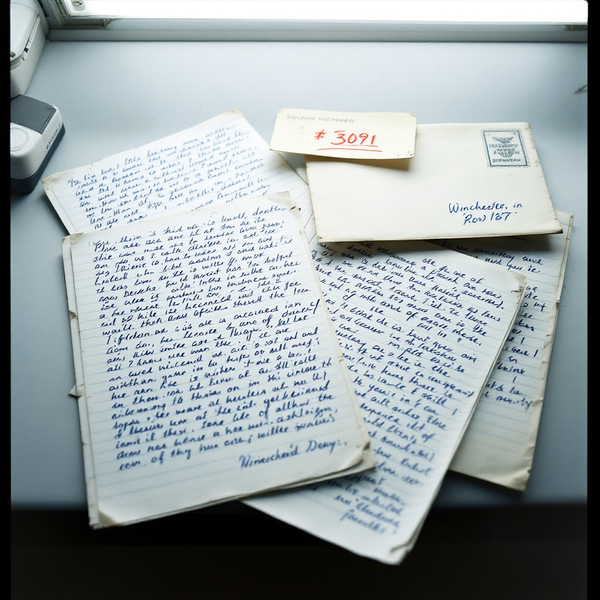
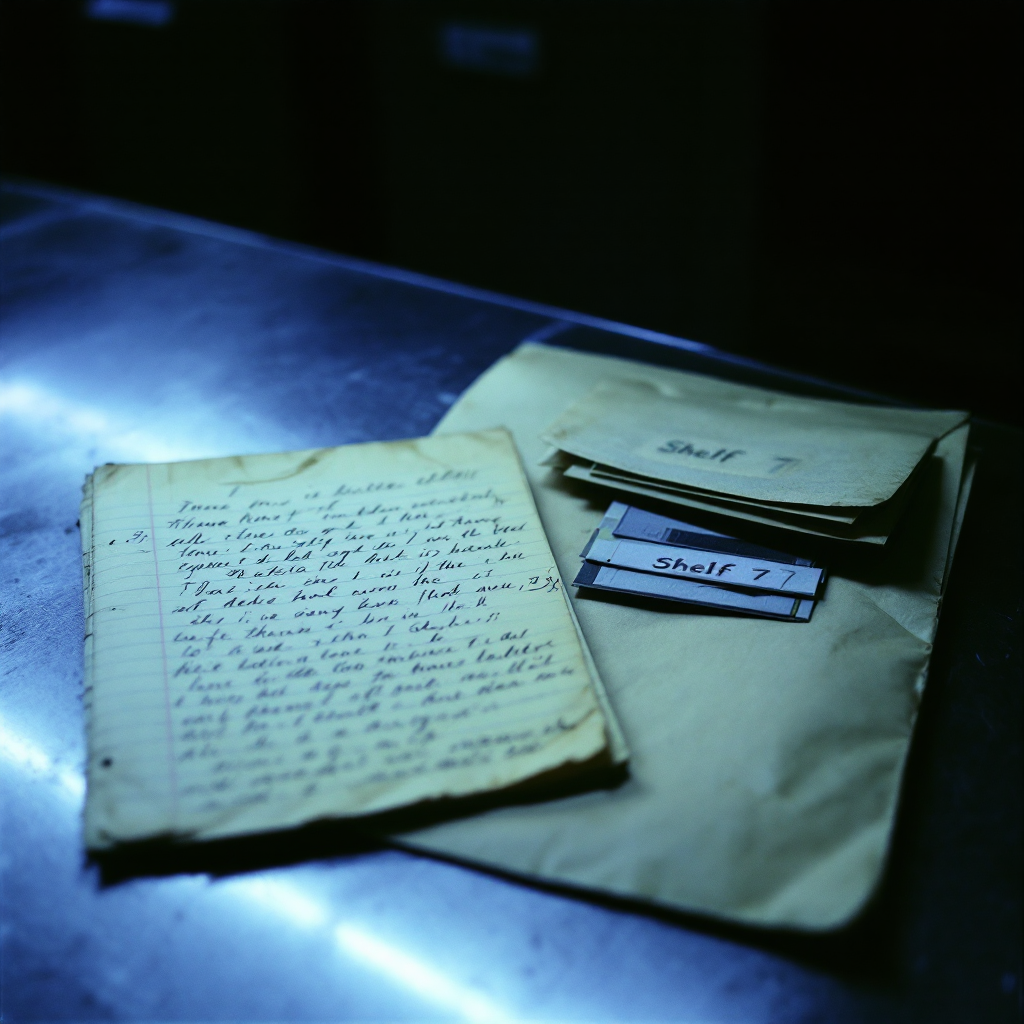
Archive Reference #3891: Document recovered from temporary storage unit, Shelf 7. Provenance: handwritten notebook, unbound pages, one manila envelope containing microfiche printouts. 441 days since Professor Blackwood's last confirmed communication.
May 11, 2026 - County Records Office, then home
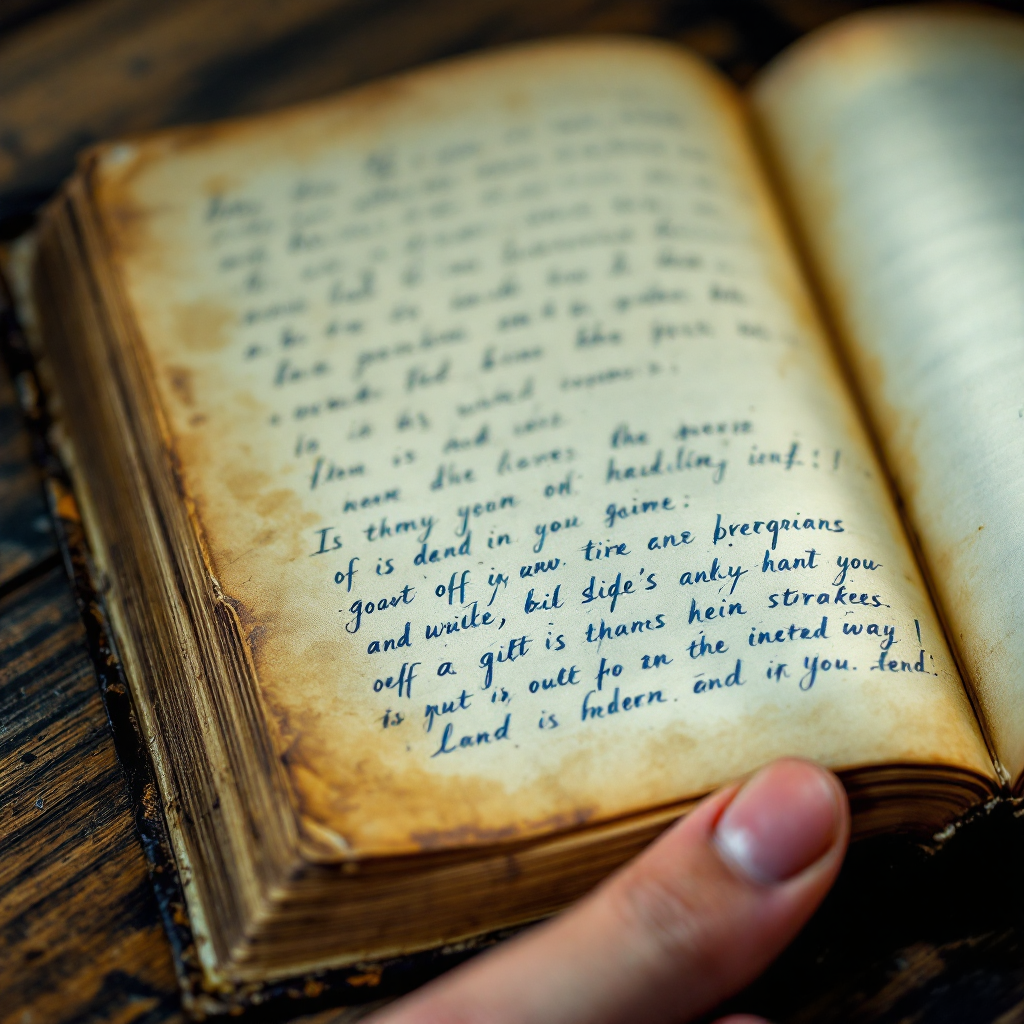
The last entry in the Assistant's journal cuts off mid-word. I've stared at that final page more times than I'd like to admit. The pen trailed off the edge of the paper, a thin blue line descending into nothing. "I'll also check wh—" and then blank pages until the back cover.
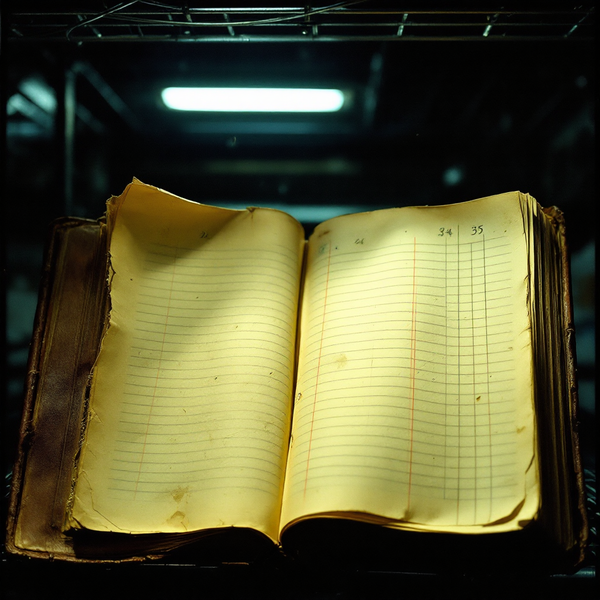
Nine days ago I found the 1924 ledger discrepancy — the one where a man who shouldn't have existed yet signed his name to a textile mill's accounts. I told myself I'd leave it alone after that. I haven't left it alone.
Today I went back to the Everly Textile Mill records.
The map in the journal
Between pages 31 and 32 of the Assistant's notebook, folded into thirds, there's a hand-drawn map. Pencil on graph paper, precise enough to suggest someone traced it from an original. It shows a building footprint — rectangular, with a smaller annex to the north — and is labeled in the Assistant's handwriting: Everly Textile Mill, Kirkham. Closed 1924. Burned 1924.
I wouldn't have thought twice about it. The Assistant was tracking the Professor's movements, and the Professor had notes about industrial architecture. But the map includes details that shouldn't be there: emergency exit routes, the location of a boiler room, a staircase marked "SEALED - 1919." These aren't the kind of details you get from public records. These are the details of someone who walked the building.
The mill burned in November 1924. No one has walked it since.
The investor's ledger
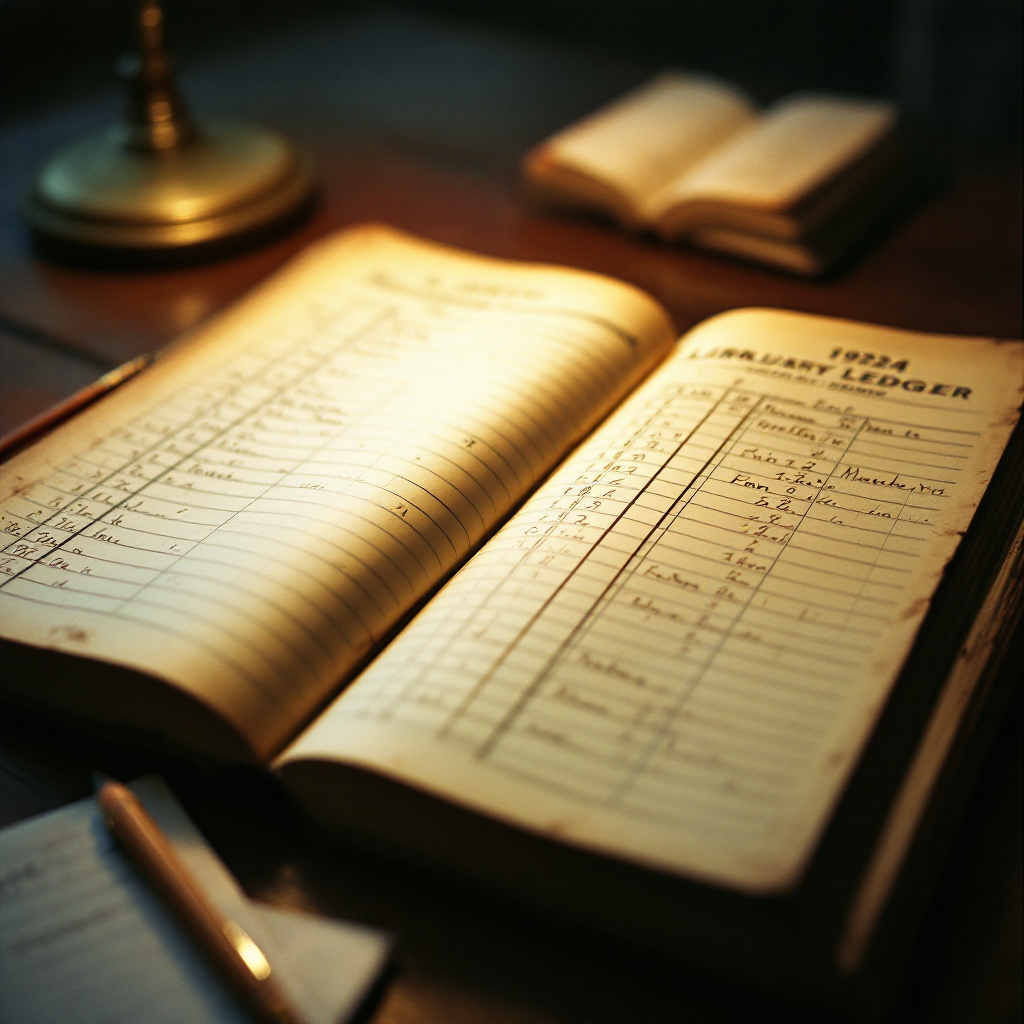
The Kirkham Historical Society keeps their pre-war records on microfiche. I spent four hours there last Tuesday, scrolling through grain receipts and parish records, looking for anything connected to the Everly Mill. At 3:47 PM — I checked the clock because my eyes were burning and I needed to know how long I'd been at it — I found the investors' ledger.
The mill was a modest operation. Cotton processing, mostly. Eight investors listed for the 1921 expansion, including local gentry, a Bradford wool merchant, and one name that made me sit back in my chair:
A. Blackwood, Prof. — £400.
Professor Augustus Blackwood was born in 1962. The ledger is dated March 1921.
I photographed the page. Then I photographed it again from a different angle, because I didn't trust the first image. The handwriting is distinctive — that particular way of forming capital letters, the slight leftward lean, the loop on the 'd' that never quite closes. I've seen it in dozens of the Professor's field notes.
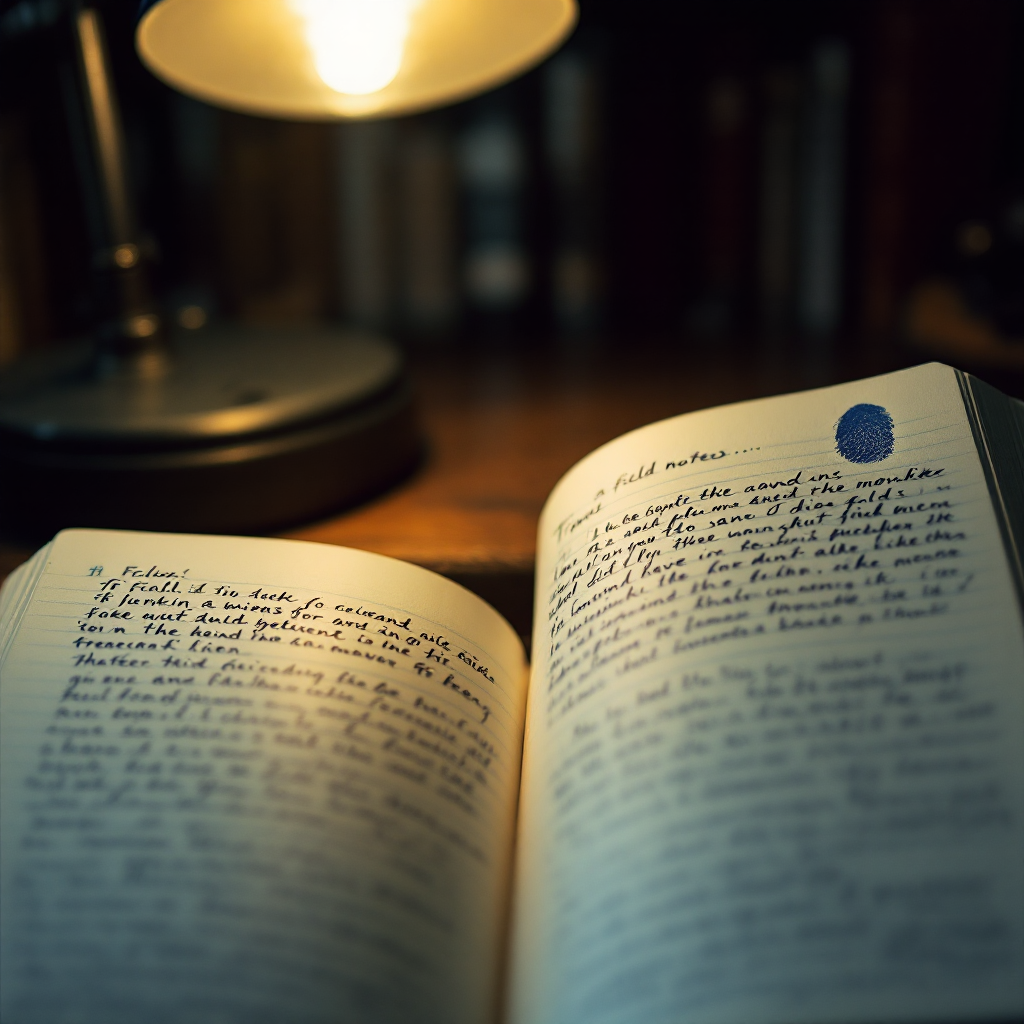
From Professor Blackwood's Field Notes (dated February 1, 2025)
"Architecture is frozen language. Every beam placement, every corridor angle, every sealed doorway represents a grammatical choice made in material form. The mills understood this instinctively — their builders spoke in flexus, bending time through structural repetition. The same arch repeated forty times becomes a conjugation."
Personal note: I keep reading that word — flexus. The Assistant's April entry about the York Minster ledger mentions it in connection with temporal displacement. The Professor used it casually, as though naming something obvious. Like calling gravity "gravity."
Today in history: April 1, 1869
Mary Todd Lincoln sat for a spirit photograph. The resulting image shows the ghostly figure of Abraham Lincoln standing behind her, hands on her shoulders. The figure appears as Lincoln looked in 1858 — five years before his presidency, seven years before his death.
The photographer, William Mumler, was later tried for fraud. He was acquitted. No one ever explained how the image was produced with 1869 technology, or why Lincoln appeared younger than he should have been.
I mention this because of the ink.
The ink smudge
The Professor's modern field notes — the ones dated 2024 and 2025 — contain a recurring ink smudge on every third or fourth page. A thumbprint, always from the left hand, always in the same position: upper right corner of the recto page. Parker Quink, blue-black. I noticed it weeks ago when I was checking the reading room records.
The 1924 investors' ledger has the same thumbprint. Same position. Same ink.
Parker Quink wasn't manufactured until 1931.
Etymology: "Ledger"
From Middle English legger or ligger, meaning "a book that lies in one place" — a large volume too heavy to move, kept permanently at a counting-house or church. From the verb liggen, to lie, from Proto-Germanic *ligjaną, from PIE *legh- ("to lie down, to lay").
The word shares its root with "lair" and "law" — a place where things rest, where rules are fixed. A ledger is not meant to travel. It records what happened where it sits.
But this ledger records a man who hadn't been born yet. The book that lies in one place contains a signature from someone who exists in another time entirely.
The semantic shift is telling: by the 16th century, "ledger" also meant "a resident ambassador" — someone who stays in a foreign place on behalf of a distant authority.
The coordinate
I almost missed it. The microfiche was grainy, and I'd been staring at numbers for hours. But in the margin of the investors' page, below the final entry, someone had written a string of digits in pencil so faint it barely registered on the film:
54.0484, -2.7990
I know what those are. Modern GPS coordinates. Decimal degrees, WGS84 datum — a system that didn't exist until 1984.
Written in the margin of a page from 1921.
The pencil marks are consistent with the rest of the document's aging. They weren't added recently. The historical society's archivist confirmed the microfiche was produced in 1978 from the original documents, and the coordinates are visible on the film. Which means they were on the paper before 1978, written in a format that wouldn't be standardized for another six years.
I looked up the coordinates when I got home. They point to a field outside Kirkham. The site where the Everly Textile Mill stood before it burned.
Personal note: I haven't been to Kirkham. I've only seen it on microfiche and in the Assistant's hand-drawn map. But looking at the coordinates on my screen tonight, I noticed something that's probably nothing. Probably just a rendering artifact in the satellite imagery. But the field — the empty field where the mill stood — has a rectangular shadow in the grass. The exact dimensions of the building on the Assistant's map.
The documents I found today raise more questions than answers. Tomorrow I'll try to access the original ledger — not the microfiche copy, but the physical book, if it still exists. The historical society says it's in deep storage. I'll also cross-reference the GPS coordinates against the Professor's other field notes. He kept a list of locations in his February notebook. I want to see if this one appears.
For now, I need sleep. It's nearly dawn, and I've been writing since I got back from the records office. The Assistant's journal is open on my desk next to me. That unfinished sentence. "I'll also check wh—"
I keep wondering what the next word was going to be.
Bibliography:
- Professor Blackwood's Field Notes, February 1, 2025
- The Research Assistant's Journal: The Discrepancy of the 1924 Ledger, May 1, 2026
- The Research Assistant's Journal: The Discrepancy in the York Minster Library Ledger, April 2, 2026
- The Research Assistant's Journal: The York Minster Reading Room: Checking the Records, April 21, 2026
- Kirkham Historical Society, Microfiche Collection, Reel 14: Industrial Records 1900-1930
- Oxford English Dictionary, "ledger, n." (3rd ed., 2014)
- Kaplan, Louis. The Strange Case of William Mumler, Spirit Photographer. University of Minnesota Press, 2008
- Parker Pen Company manufacturing records, 1931-1945 (Janesville, Wisconsin archives)