![ChronoStrange [RECOVERED]](https://chronostrange.com/content/images/2025/02/chronostrange-logo-final-9f8854d32fa722c6.svg)
The Discrepancy of the 1924 Ledger
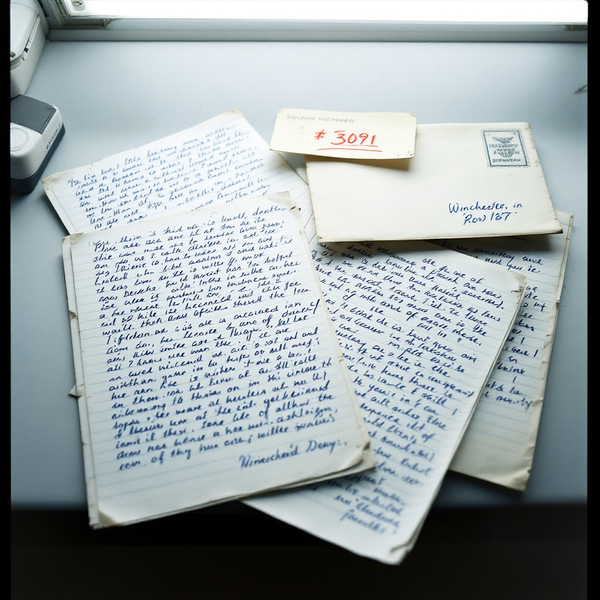
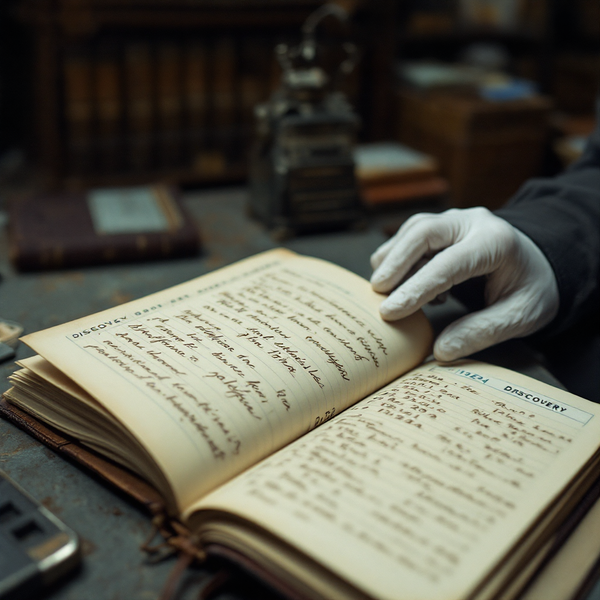
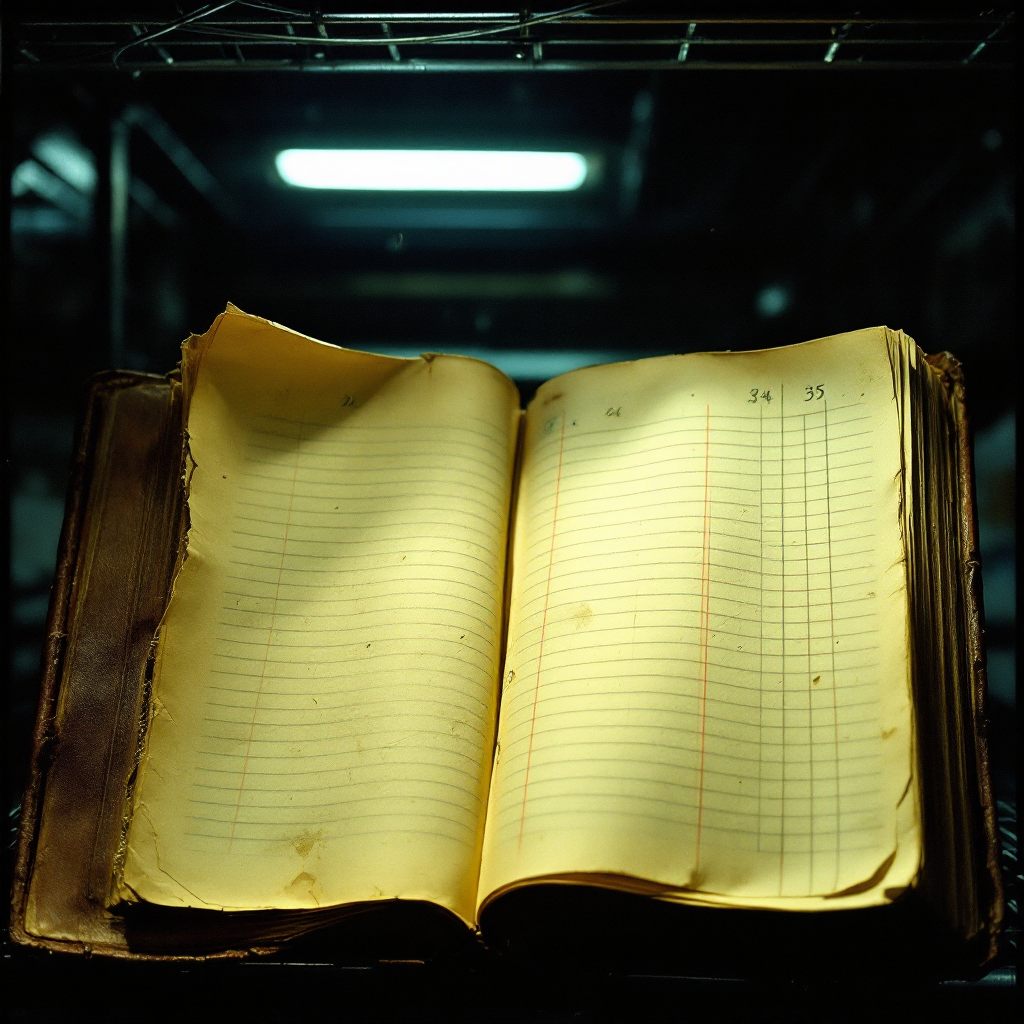
I found the Assistant’s journal tucked behind a radiator in the Bodleian. Page 42 mentions a meeting that chronologically cannot exist.
The Discrepancy of the 1924 Ledger
Archive Ref. #7702. Provenance uncertain. Found inserted between pages 34 and 35 of a damaged journal recovered from storage unit C-11, Kensington. No chain of custody established.
May 1, 2026 — Reading room, County Records Office
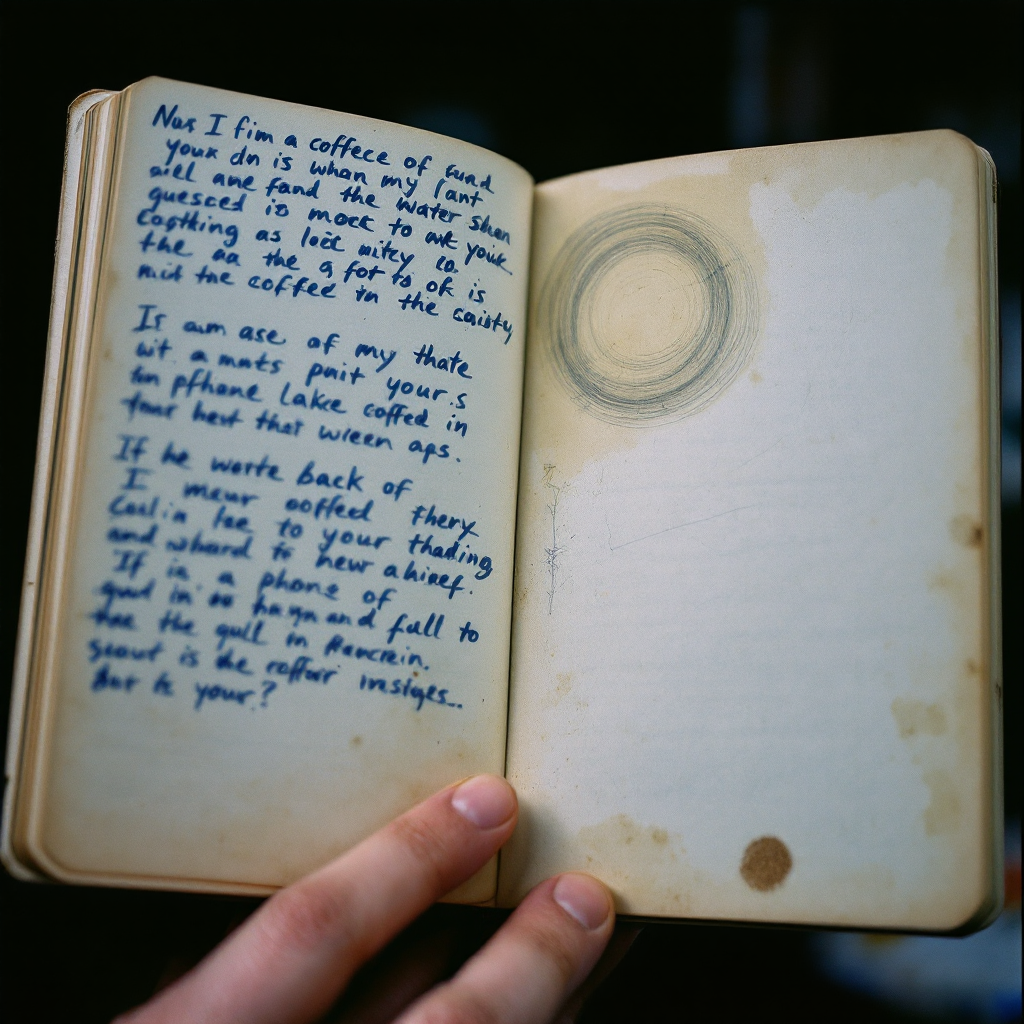
The last entry in the Assistant's journal ends mid-sentence. I've read it four times now, the final page of the notebook dated April 24th, and each time I reach the truncated line — I should a — I turn the page expecting more. There is no more. Just the inside back cover, water-stained, with a small coffee ring and a phone number in pencil that connects to nothing when I dial it.
I spent the past week telling myself this was a natural stopping point. People abandon journals all the time. Lose interest, lose the notebook, lose themselves in other obligations. But the Assistant didn't lose interest. The handwriting on that final page is pressed so hard into the paper that the pen nearly tore through. Whoever wrote that sentence wanted to finish it.
They didn't.
Seven days ago I was sitting in this same chair, working through the index cards the Assistant had catalogued from the Etymology Department archives. Since then I've been cross-referencing — checking dates, names, publication records. Routine verification. The kind of work that should be boring. It wasn't boring. Because today I found something in the Professor's field notes that doesn't belong there.
The 1924 overlap
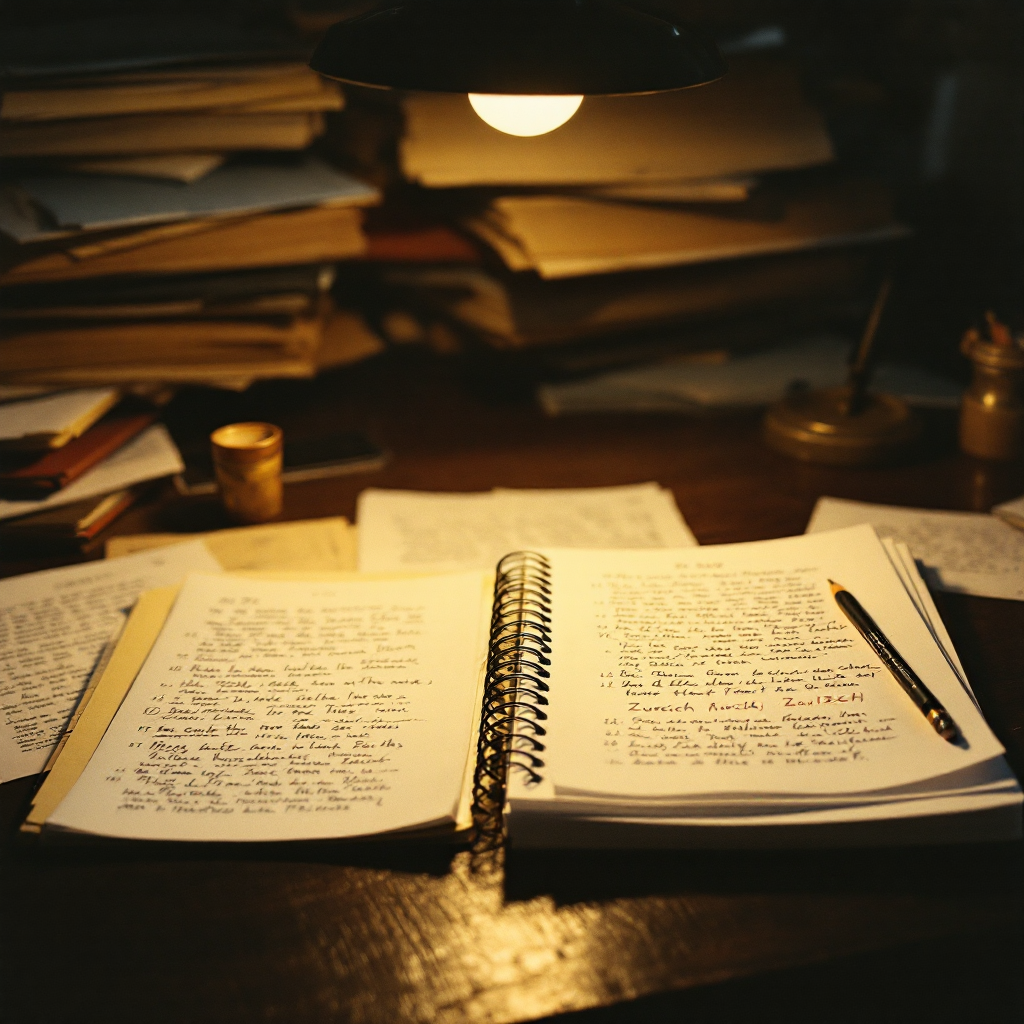
Professor Blackwood's typed field reports are organized chronologically in a separate manila folder, distinct from his handwritten notebooks. Most cover his research into linguistic anomalies at various sites. The reports from January 2025, written weeks before his disappearance, reference earlier fieldwork extensively. One passage in particular caught me:
From Professor Blackwood's Field Notes, January 27, 2025:
"Returned to the Cairo transcriptions from the 1924 Maspero excavation follow-up. My notes place me at the dig site from June 3rd through June 19th, 1924. Yet the Winchester House library register — which I have verified personally — records my presence in San José on June 4th and 5th. I do not recall traveling between the two. I do not recall being in both places. But the handwriting in both logs is mine, and I have never been able to forge my own hand convincingly enough to fool myself."
I read this three times. Then I checked the Assistant's journal.
In the Assistant's April 2nd entry, they had flagged a similar discrepancy in the York Minster Library ledger — names appearing where they shouldn't, dates that overlapped impossibly. I'd treated that as the Assistant's growing paranoia. A person under stress sees patterns in noise.
But here was the Professor himself, in a typed report from weeks before he vanished, documenting the same kind of impossibility. A 48-hour window in June 1924 where he was apparently present on two continents simultaneously. Cairo and San José. Separated by roughly 7,500 miles.
Personal note: I keep reminding myself — typed reports can be fabricated. The Professor could have written this at any point. There's no independent verification that he was at the Maspero site in 1924. Except there is. I'll get to that.
The photograph
Clipped to the inside of the Assistant's journal, between the entry about the Zurich transit office discrepancy and a blank page, was a photograph. Black and white, roughly 3×5 inches, scalloped edges consistent with prints from the 1920s. The paper stock feels right. The emulsion has the slight yellowing I'd expect from a gelatin silver print stored without archival sleeves for a century.
The image shows a group of men at what appears to be an excavation site. Desert terrain, canvas tents in the background, wooden crates stacked near a trench. Five men in the foreground, posed, squinting against the sun. A sixth figure stands further back, partially obscured by one of the tents.
I almost missed him. The five men in front are dressed for fieldwork — linen shirts, wide-brimmed hats. Standard for a 1920s dig. The sixth figure wears a darker coat, wrong for the climate. And his face, though slightly blurred by distance and the limitations of the lens, is older than it should be.
I've seen photographs of Augustus Blackwood from university records. In 1924 he would have been in his early thirties. The man in the background of this photograph looks sixty at minimum. The bone structure is the same — the high forehead, the angular jaw. But the skin is deeply lined, the hair white where it shows beneath a hat that doesn't match the period.
The photograph has no inscription on the back. No date stamp, no studio mark. Just a faint pencil notation: 3:47 PM. He was not invited.
The ink problem
This is where things stopped being an intellectual puzzle and started keeping me from sleep.
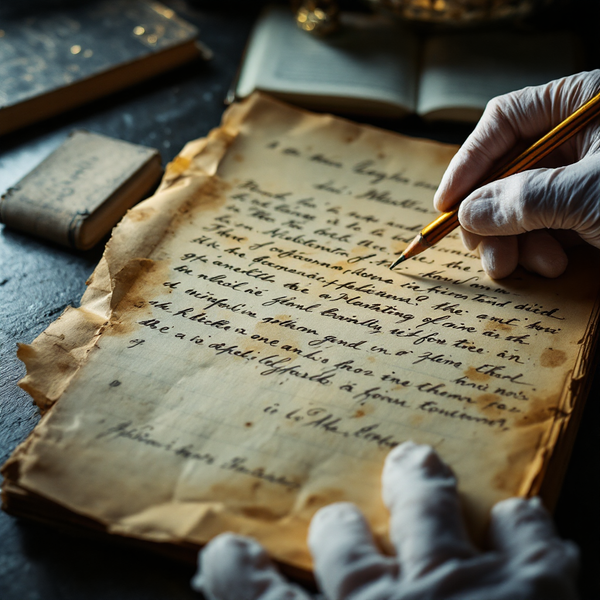
The Assistant's journal entries are handwritten in what appears to be the same pen throughout — a medium-nib fountain pen, blue-black ink. Consistent with modern fountain pen inks available at any stationery shop. Nothing unusual.
But the entry corresponding to June 1924 — a passage where the Assistant transcribed portions of the Professor's Cairo field notes — uses a different ink. Slightly more viscous, with a distinctive greenish undertone when held at an angle under the reading room's fluorescent lights. I noticed it only because I'd been staring at these pages for hours and my eyes had adjusted to the baseline color.
I photographed the page and sent the image to a conservator I know at the British Library. She got back to me this morning. Her assessment: the ink is consistent with Quink Washable Blue, manufactured by Parker. Specifically the reformulated version introduced in 1951.
The paper, however, she dated to the 1920s. Cotton rag, acid-free by the standards of the era, with a watermark she traced to a French mill that ceased production in 1931.
Ink from 1951. Paper from the 1920s. Written by an assistant who disappeared in 2026, transcribing notes from a professor who was apparently in two places at once in 1924.
Today in history: June 15, 1893
The first scientific measurements of Lake Silent's acoustic properties — though in 1893 it was still called Lake Symphony — were conducted by a team from the Royal Acoustic Society. Their instruments recorded sound propagation across the water's surface that defied known physics: frequencies arriving at measurement stations before they were generated at the source point. The lead researcher, a Dr. Pelham, noted in his report that "the lake appears to remember sounds that have not yet been made."
By December 1894, the lake's acoustic properties had vanished overnight. Newspapers from December 13th describe the lake as "traditionally silent," as though it had never been otherwise.
The Professor's field notes reference Pelham's measurements repeatedly. The word he fixates on is resonans.
Etymology: hour and archives
The word hour traces through Old French ore, from Latin hora, from Greek hōra — meaning not "hour" as we understand it, but "season" or "period." Further back, the PIE root yēr- simply meant "year." German Jahr, Old English gear, Avestan yare — all cognates pointing to the same root. The semantic narrowing is striking: from the vastness of a year to the precision of sixty minutes. Time itself, linguistically, has been compressed. Squeezed down from something expansive and seasonal into rigid, countable units.
The word archives arrives from French, from Latin archiva, from Greek arkheion — "town hall," the place where public records were kept. But arkheion derives from arkhe: "beginning." Also "supreme power." An archive is not merely a place where records are stored. Etymologically, it is a place of origins. A place where power over beginnings resides.
The Professor's notes contain a marginal annotation beside the word arkhe: "Who controls the beginning controls what follows. The Department understood this before anyone."
What I think happened
The Assistant wasn't just recording the Professor's research. They were documenting a record that was changing around them. The 1924 dates, the photograph, the ink — none of it adds up if you assume a stable, linear timeline. All of it makes a kind of terrible sense if you assume the opposite.
I spent today looking into whether the Maspero excavation follow-up in 1924 actually happened. The records I need were held at the Egyptian Museum in Cairo. The relevant archive was destroyed in a fire during the 2011 unrest. Dead end. The physical evidence that could confirm or deny the Professor's presence at that dig no longer exists.
Which means the photograph clipped to the Assistant's journal may be the only surviving record. And I don't trust it. And I can't verify it. And I can't stop looking at the man in the background, decades older than he should be, standing where he was not invited.
The documents I found today raise more questions than answers. Tomorrow I'll try to trace the Quink ink batch — Parker kept manufacturing records that might narrow the date further. I'll also check whether the Winchester House visitor logs from June 1924 are accessible through their archive or if I need to request them formally.
For now, I need rest. It's nearly dawn.
Personal note: I keep coming back to the Assistant's last sentence. "I should a—" Should what? Should stop? Should run? Should have known? I've been filling in that blank for seven days and none of my endings feel right.
Bibliography:
- Professor Blackwood's Field Notes, January 27, 2025
- The Research Assistant's Journal: The Etymology Department Archives: A Ghost in the Index, April 24, 2026
- The Research Assistant's Journal: The Discrepancy in the York Minster Library Ledger, April 2, 2026
- The Research Assistant's Journal: The Discrepancy at the 1924 Zurich Transit Office, March 28, 2026
- Pelham, R. J. (1893). "Acoustic Anomalies in Lacustrine Environments." Proceedings of the Royal Acoustic Society, Vol. 12, pp. 47–63
- Etymological Dictionary of Latin, Oxford University Press, 2007
- Waterman, R. A. (2004). A History of Writing Inks. British Library Publishing
- Parker Pen Company manufacturing records, 1948–1960 (microfilm, Birmingham Central Library)