![ChronoStrange [RECOVERED]](https://chronostrange.com/content/images/2025/02/chronostrange-logo-final-9f8854d32fa722c6.svg)
The Telegraphist’s Ledger: Eleanor Carstairs and the Flexus Log
A 1926 telegraph log from the Etymology Department Archives lists a recipient, Eleanor Carstairs, who wasn't hired until 1948.
The Telegraphist's Ledger: Eleanor Carstairs and the Flexus Log
Archive Reference #3891: Recovered from an unmarked filing cabinet, third floor, Building C. The following research notes were found alongside a box of telegram carbons and a partially completed cross-reference index. No author identified. Classification pending.
June 1, 2026 — County Records Office, rear annex, 2:14 PM
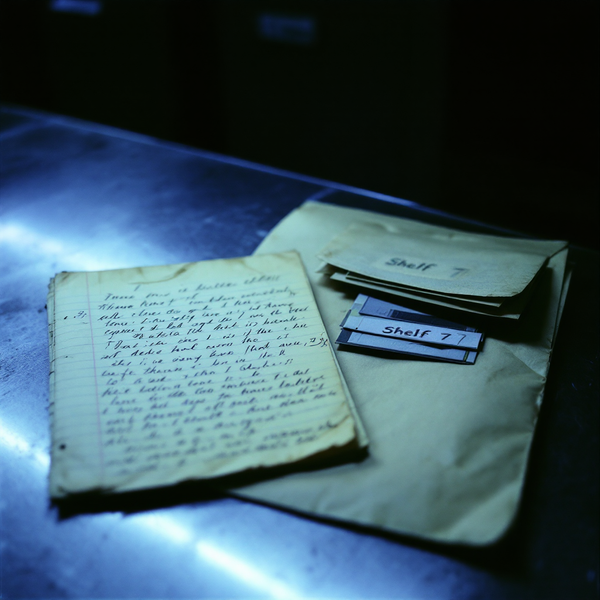
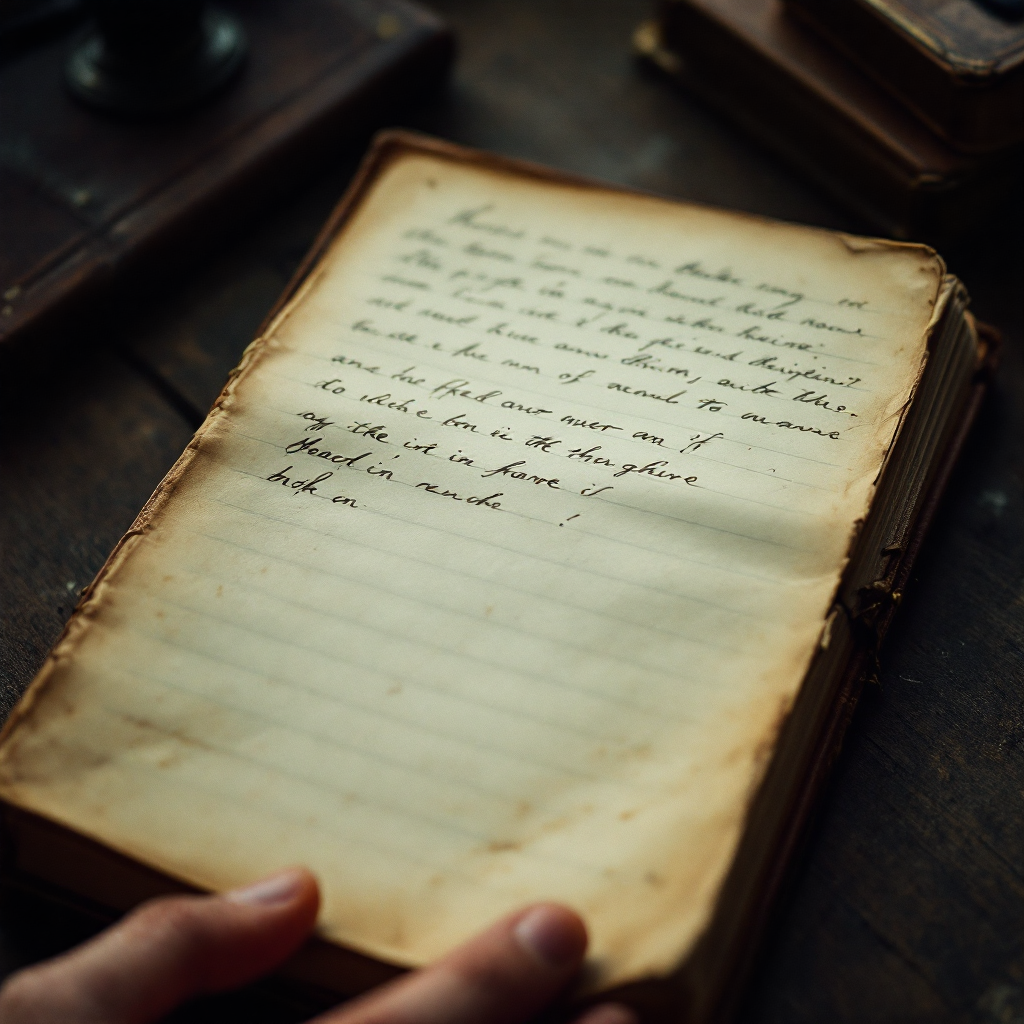
The last entry in the Assistant's journal ends mid-sentence. I've read it four times now, hoping the words might finish themselves. They don't.
The entry, dated to what appears to be late May, concerns the York Minster reading room records and a search for prior requests for Ordnance Survey sheets from the 1890s. The Assistant found none — no prior requests — but noted something about the access log for the cartographic collection. Then the sentence stops. Not trails off. Stops. The pen lifted mid-word, and the next page is blank. Every page after that is blank.
I've held the notebook up to the light. No impressions from subsequent writing. No torn pages. The Assistant simply stopped writing, at that exact point, and never came back.
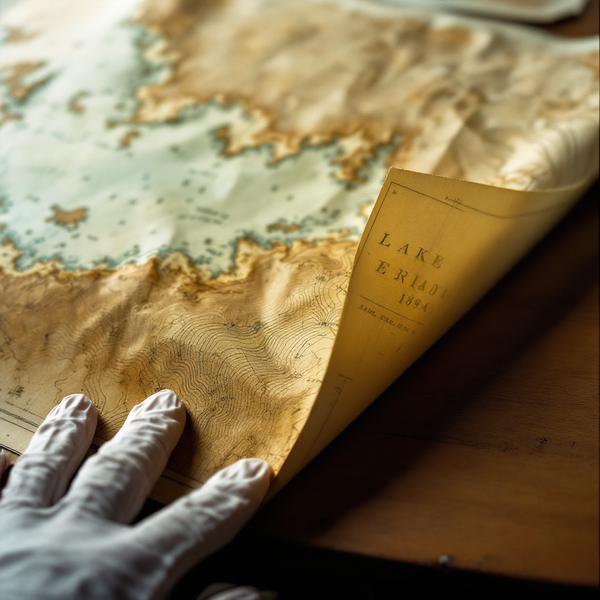
Three days ago I finished my own notes on the 1894 cartography revision — the Ordnance Survey discrepancies around Lake Silent, the way shoreline measurements shifted between the 1893 and 1895 editions without any corresponding geological event. I had been working from the Assistant's descriptions, checking them against the actual survey sheets held here at the county office. Most of what the Assistant wrote checked out. The shoreline did change. The acreage figures don't reconcile. The surveyor's field notes for December 1894 are missing from the bound volume, though the binding shows no sign of removal.
All of which could be clerical error, water damage, institutional negligence. I kept telling myself that.
Then I found the telegram carbons.
The box in the annex
The records office annex is not a pleasant place to work. Fluorescent lighting, no windows, a faint smell of damp cardboard that never quite goes away. I'd requested access to the supplementary holdings related to the Etymology Department Archives — specifically, any administrative correspondence from the 1920s that might corroborate the personnel anomalies I identified in April.
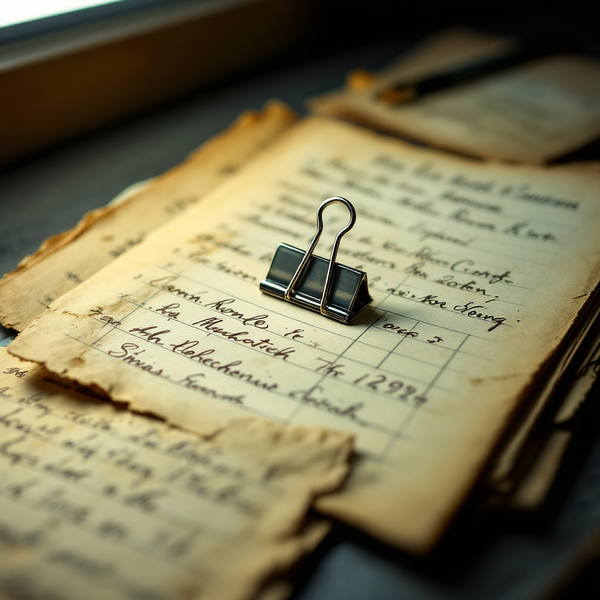
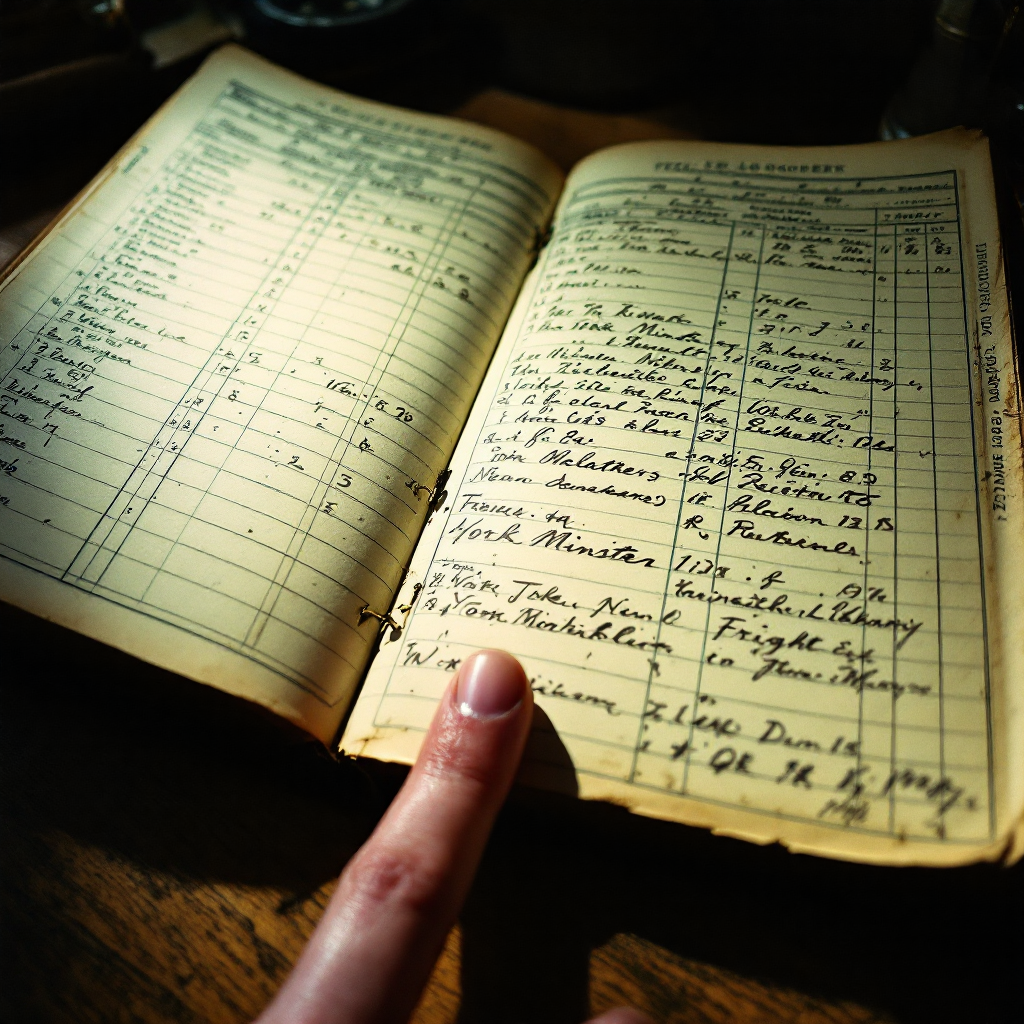
The archivist brought me three boxes. Two contained what I expected: internal memoranda, budget requisitions, the usual bureaucratic sediment. The third box was different. Smaller, unlabelled except for a pencilled reference number that didn't match the catalogue system. Inside: a sheaf of telegram carbons, maybe forty or fifty, held together with a rusted bulldog clip.
They were addressed to an Eleanor Carstairs.

Today in history: November 22, 1912
The Rouse Simmons, a three-masted schooner carrying over three thousand Christmas trees from Thompson, Michigan, to Chicago, set sail and was never seen again. No wreckage was found for decades. Bottles containing desperate notes from the crew washed ashore over the following years — messages written as the ship was already going down, cast into Lake Michigan with no expectation of rescue.
I mention this because the Professor's field notes contain a reference I hadn't noticed before. Tucked between observations about acoustic decay patterns, a single line:
From Professor Blackwood's Field Notes, February 14, 2025:
"The Simmons crew wrote their messages knowing no one would read them in time. This is the condition of all temporal communication — the message arrives, but the sender is already gone. See: Carstairs telegraph log, 1926. The same principle. The same futility."
The same Carstairs. I didn't make the connection until I was holding the telegram carbons in my hands.
Eleanor Carstairs: the personnel problem
I have the Etymology Department's personnel records on microfilm — obtained through the 1924 Ledger investigation in May, when I was trying to trace the provenance of certain index entries that appeared to predate the index itself.
According to those records, Eleanor Carstairs was born in 1922. She was hired as a telegraph operator in 1948. Her service record is unremarkable: competent, punctual, retired 1971. A pension was paid until 1989. Presumably she died around then, though no death certificate appears in the file.
The telegram carbons in the box are dated October 1926.
Eleanor Carstairs would have been four years old.
I went through them carefully. The carbons are standard GPO telegram forms, the kind used by commercial telegraph offices in the mid-1920s. The paper stock is correct for the period. The ink is the right shade of blue-black. The formatting follows period conventions — abbreviated address, message body in block capitals, operator's initials at the bottom.
The initials are E.C.
Every single one. E.C. Eleanor Carstairs, operating a telegraph in 1926, twenty-two years before she was supposedly hired, and four years after she was supposedly born.
Personal note: I sat with this for a long time. The obvious explanation is that there was another E.C. — another operator with those initials. Common enough. But the carbons were filed with Carstairs' personnel jacket. Someone, at some point, decided these belonged together.
The word that shouldn't be there
Most of the telegrams are routine. Weather reports forwarded to agricultural stations. Schedule confirmations for freight deliveries. One series concerns a shipment of books to York Minster Library — which made my pulse quicken, though the content was mundane.
But seven of the telegrams, clustered in the second week of October 1926, use a term I recognized.
Flexus.
The messages describe what they call a "local flexus delay" — a temporary disruption in signal transmission between relay stations. "FLEXUS INTERVAL 4.2 SEC BETWEEN YORK AND HULL STATIONS STOP COMPENSATING STOP." Another: "THIRD FLEXUS EVENT THIS WEEK STOP SIGNAL ARRIVES BEFORE TRANSMISSION LOGGED STOP ADVISE."
Etymology: Flexus
From Latin flexus, past participle of flectere — to bend, to turn, to curve. The PIE root is *bhleg-, though some reconstructions prefer *bhleg-, meaning to bend or to turn aside. Cognates include Old English flōwan (to flow, though the connection is debated), Greek phlégein in certain extended senses, and Old High German blanch (bright, from the idea of bending light).
The semantic range is telling. Flexus in classical Latin described a physical curve — a bend in a road, a turn in a river. By medieval Latin it had acquired metaphorical weight: a bending of will, a deviation from a path. In ecclesiastical texts, flexus genuum — the bending of the knee — carried connotations of submission to forces beyond human comprehension.
The word has no established use in telegraphy. I've checked three histories of British telegraph operations and two technical manuals from the 1920s. Signal delays were called "lags," "retardations," or simply "delays." Nobody called them flexus. The term belongs to the Professor's vocabulary — to the lexicon of temporal manipulation described in the Etymology Department Archives.
It was 3:47 PM when I realized this. The clock on the annex wall is analogue, black hands on a white face, and I happened to glance up at the exact moment the minute hand settled. I don't know what to make of that. Probably nothing. Probably coincidence.
The handwriting problem
This is the part I keep coming back to.
The operator's notations on the telegram receipts — the handwritten notes in the margins, timestamps, routing codes — are in a particular hand. Small, precise, slightly left-leaning. The lowercase e is distinctive: closed at the top, almost like a tiny o with a tail.
I've seen this handwriting before.
The Assistant's journal, in its final pages, contains passages where the handwriting changes. The Assistant noted this themselves, in earlier entries — moments where words appeared in their notebook that they didn't remember writing. I documented this during the 1924 Ledger investigation, when I noticed that certain marginalia in the Department's records matched handwriting samples from decades apart.
The hand on the 1926 telegram receipts matches the secondary handwriting from the Assistant's final journal entry. The one that appears in the last three pages, interleaved with the Assistant's own script, as if someone else were writing between the lines.
Personal note: I want to believe the ink is wrong. That someone manufactured these carbons recently, using period paper stock and the right shade of blue-black. It would be a sophisticated hoax, but hoaxes exist. People fabricate documents. It happens. But the paper — when I held it up to the lamp, it had that particular translucency that old paper gets, the fibres thinning from the inside out. Like the documents I described in my notes on the 1924 Ledger. Like something taking on water from within.
What I have, and what I don't
I have telegram carbons that predate their operator's birth by twenty-two years. I have a technical term from the Professor's temporal lexicon appearing in routine telegraph traffic in 1926. I have matching handwriting across documents separated by a century. I have a personnel file that contradicts itself.
What I don't have is an explanation.
Tomorrow I'll request the GPO employment records for the York telegraph office, October 1926. If there was an operator with the initials E.C. working that station, it should appear in the duty rosters. If it doesn't — if the only E.C. in the Department's records is a woman born four years before these telegrams were sent — then I'll need to reconsider what the Professor meant by flexus. A bending. A curve in something that should be straight.
The documents are back in their box. The annex is closing. I've photographed everything, front and back, and I'll review the images tonight. For now, I need to eat something and think about something else for a few hours. The investigation continues, but this particular thread can wait until the duty rosters arrive.
It's nearly six. The light outside is still good. Summer evenings in England — long and slow, the kind that make you forget what 3:47 in the morning feels like.
I haven't forgotten.
Bibliography:
- Professor Blackwood's Field Notes, February 14, 2025
- The Research Assistant's Journal: The 1894 Cartography Revision: Submersion at Lake Silent, late May 2026
- The Research Assistant's Journal: The Etymology Department Archives: A Ghost in the Index, April 2026
- The Research Assistant's Journal: The Discrepancy of the 1924 Ledger, May 2026
- Oxford Latin Dictionary, 2nd edition, Oxford University Press, 2012
- Beauchamp, K. G. History of Telegraphy. Institution of Engineering and Technology, 2001
- General Post Office Staff Records, 1920–1950 (microfilm, County Records Office)
- Telegram carbon copies, uncatalogued, Box ref. pencilled "EC/26/misc"